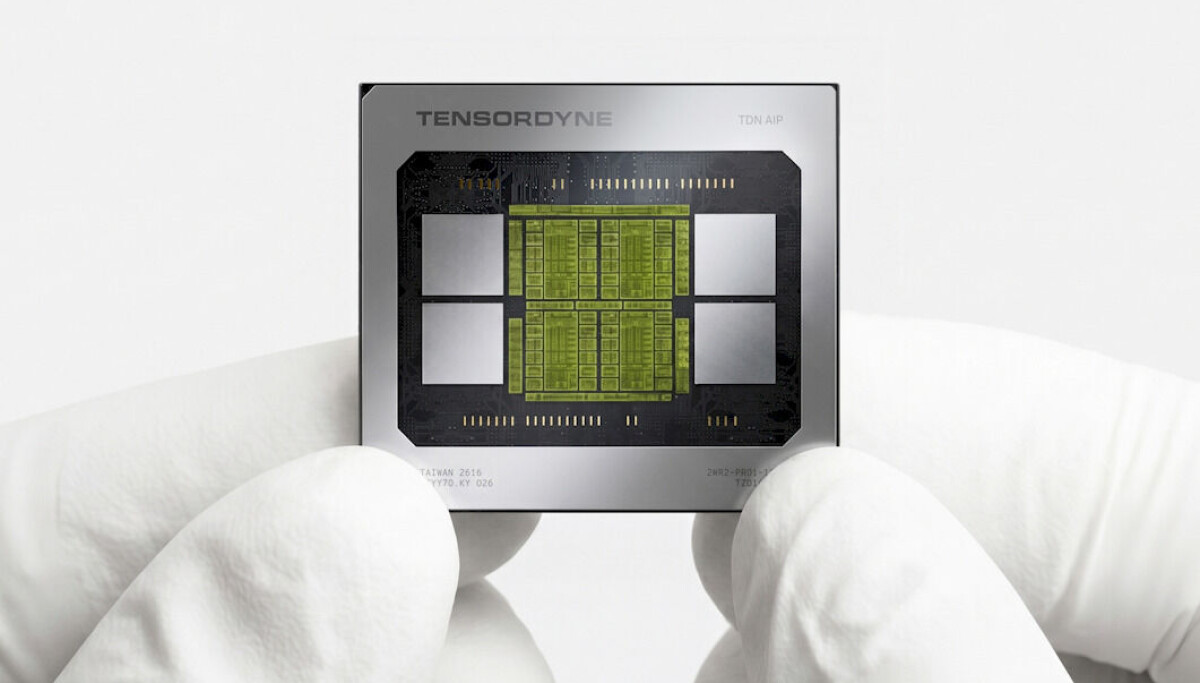
Startup Tensordyne has announced its new Napier chip, which utilizes a logarithmic mathematical approach to radically increase the efficiency of AI computations. Instead of resource-intensive matrix multiplications, the architecture converts data into a logarithmic format, replacing complex operations with simple addition.
What Happened
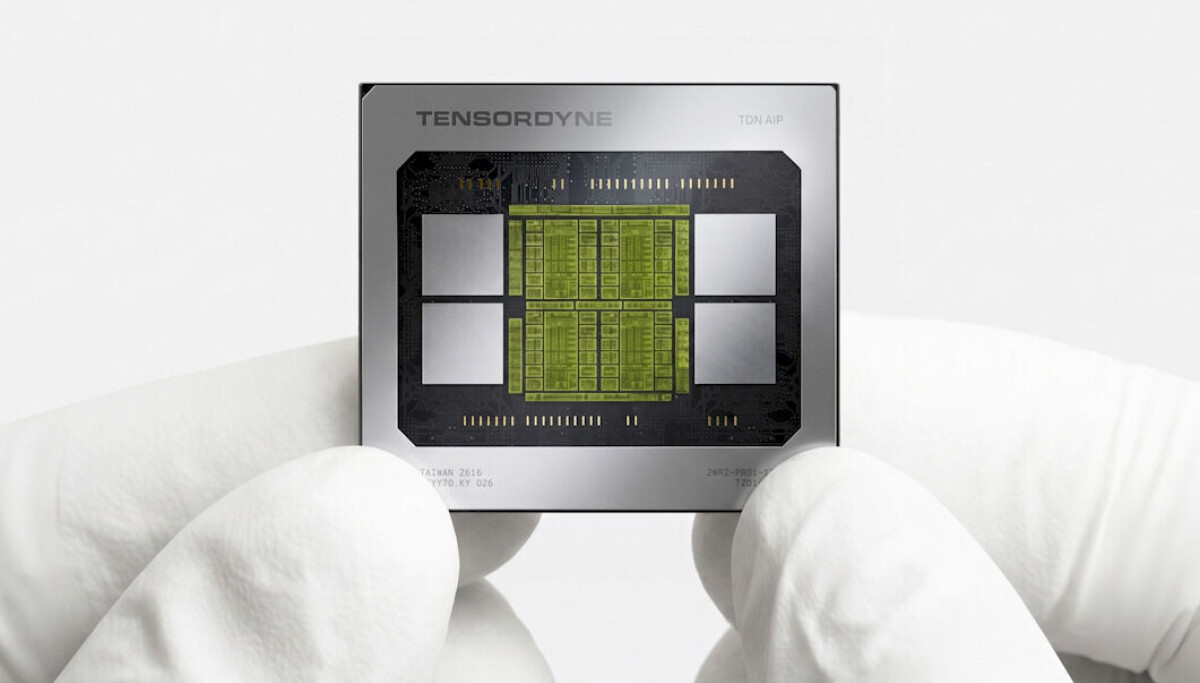
Tensordyne has introduced the Napier chip, built on TSMC's 3nm process and containing 138 billion transistors. The architecture supports NVFP4, FP8, and FP16 formats, delivering performance levels of 2.1 Petaflops in FP8 mode. The key feature is the use of logarithmic arithmetic, which allows core computations to be performed via addition operations instead of standard matrix multiplication.
Context
Traditional computation methods in modern AI accelerators rely on intensive matrix multiplication, which requires massive computing power and high energy consumption. Tensordyne's new architecture offers an alternative path, reducing computational complexity by changing the mathematical representation of data.
Why It Matters for the Industry
This technology has the potential to significantly change data center economics. The Napier chip consumes only 300W, which is four times less than the Nvidia Blackwell B300 (1200W). This not only radically reduces electricity costs but also allows for the use of air cooling instead of expensive liquid cooling, increasing the overall compute density in server racks.
Why It Matters for Users
For end users, this represents a path toward the democratization of AI. Reducing the cost of model inference through cheaper and more energy-efficient hardware could lead to lower prices for using Large Language Model APIs. Furthermore, it makes running powerful neural networks on local hardware and private servers economically viable and technically feasible.
What Is Not Yet Known / Limitations
Mass adoption of this technology requires confirmation of real-world latency metrics and software stability. At the current stage, the emergence of benchmarks and specialized SDKs for developers is expected.
Sources
Author
Look at AI, Editorial Staff