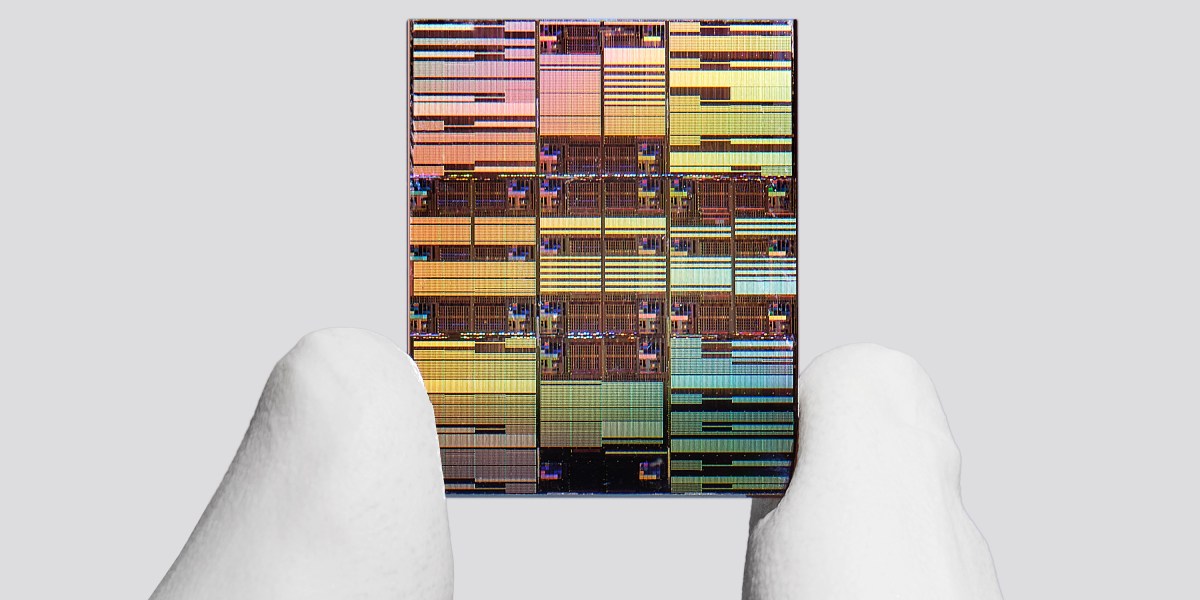
IBM has demonstrated a chip prototype using vertical transistor stacking technology (CFET/nanostack), which allows for a manifold increase in component density and semiconductor performance.

What Happened
IBM has developed a chip prototype with a nanostack architecture that utilizes vertical transistor stacking (CFET). This new technology allows for approximately 100 billion transistors to be placed on an area the size of a fingernail, which is double the component density of 2021 technologies. Additionally, it claims a 50% performance increase and a 70% improvement in energy efficiency while maintaining process temperatures below 400 °C.
Context
Traditional semiconductor development has relied on the horizontal shrinking of transistor sizes; however, the physical limits of silicon electronics are gradually constraining this path. The transition to vertical integration (nanostack) allows these limitations to be bypassed, maintaining the exponential growth of computing power.
Why It Matters for the Industry
For the semiconductor industry, this represents a fundamental shift from horizontal scaling to vertical scaling, potentially extending the lifecycle of Moore's Law by 10–15 years. This reduces the long-term risks of slowing progress in chip manufacturing and changes approaches to designing specialized accelerators.
Why It Matters for Users
For end users and developers, this paves the way for the creation of the next generation of ultra-powerful and energy-efficient processors. The technology will find applications in high-load inference for data centers, as well as in Edge AI devices, providing a manifold increase in performance without a critical increase in power consumption.
What Is Not Yet Known / Limitations
At this stage, a working prototype demonstration has been presented, which does not yet affect hardware available in production. Further confirmation of the technology's scalability in industrial volumes and details regarding the mass production roadmap are required.
Sources
Author
Look at AI, Editorial Staff