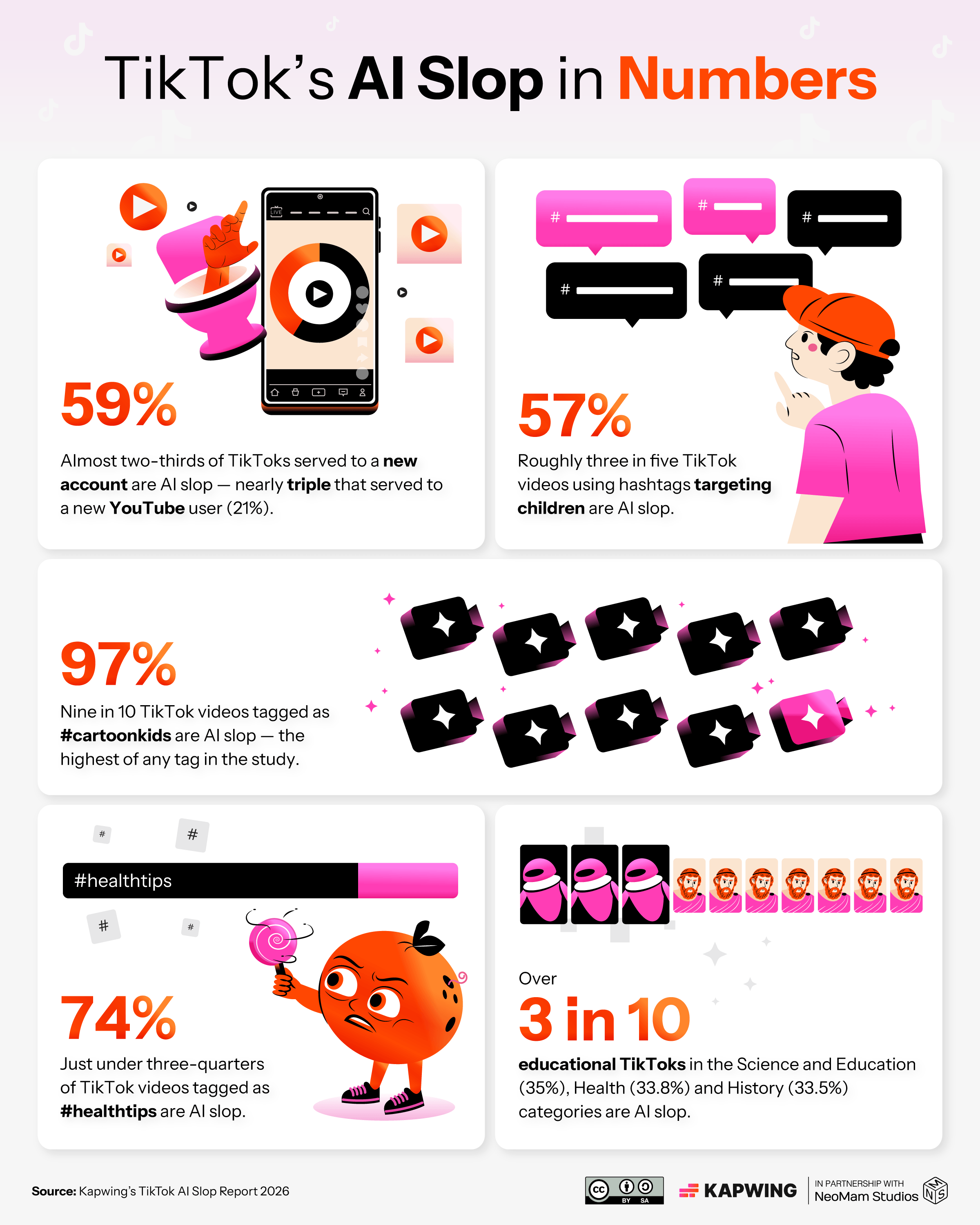
A study by Kapwing has revealed a critical level of "AI slop" (low-quality AI content) on TikTok: 59% of videos in the feeds of new accounts are generated by artificial intelligence.
What Happened
According to the report data, 294 out of 500 analyzed clips in the feeds of new TikTok users were products of AI. The highest concentration of such content was recorded in the kids' category (57.4%) and under the #cartoonkids tag, where only 3 out of 100 videos were created by humans. For comparison, the share of similar content on YouTube Shorts is 21%.
Context
The term "AI slop" refers to the automated production of content aimed at inflating metrics without regard for its quality, value, or accuracy. The problem spans categories such as science, history, and health, increasing the risks of spreading misinformation.
Why It Matters for the Industry
The large-scale spread of automated junk poses a threat to the information integrity of platforms. This forces social networks to implement more sophisticated control mechanisms, mandatory labeling of AI content, and to develop detection and classification tools to combat automated spam cycles.
Why It Matters for Users
Users should exercise increased caution when consuming educational and informational content in short-video formats. The high proportion of AI generation increases the risk of encountering factual errors and model hallucinations that may be presented as verified facts.
What Is Not Yet Known / Limitations
There are differing opinions regarding the causes of this phenomenon: some experts link it to the specifics of recommendation algorithms, while others point to differences in moderation policies and the accessibility of automation tools.
Sources
Author
Look at AI, Editorial Team