
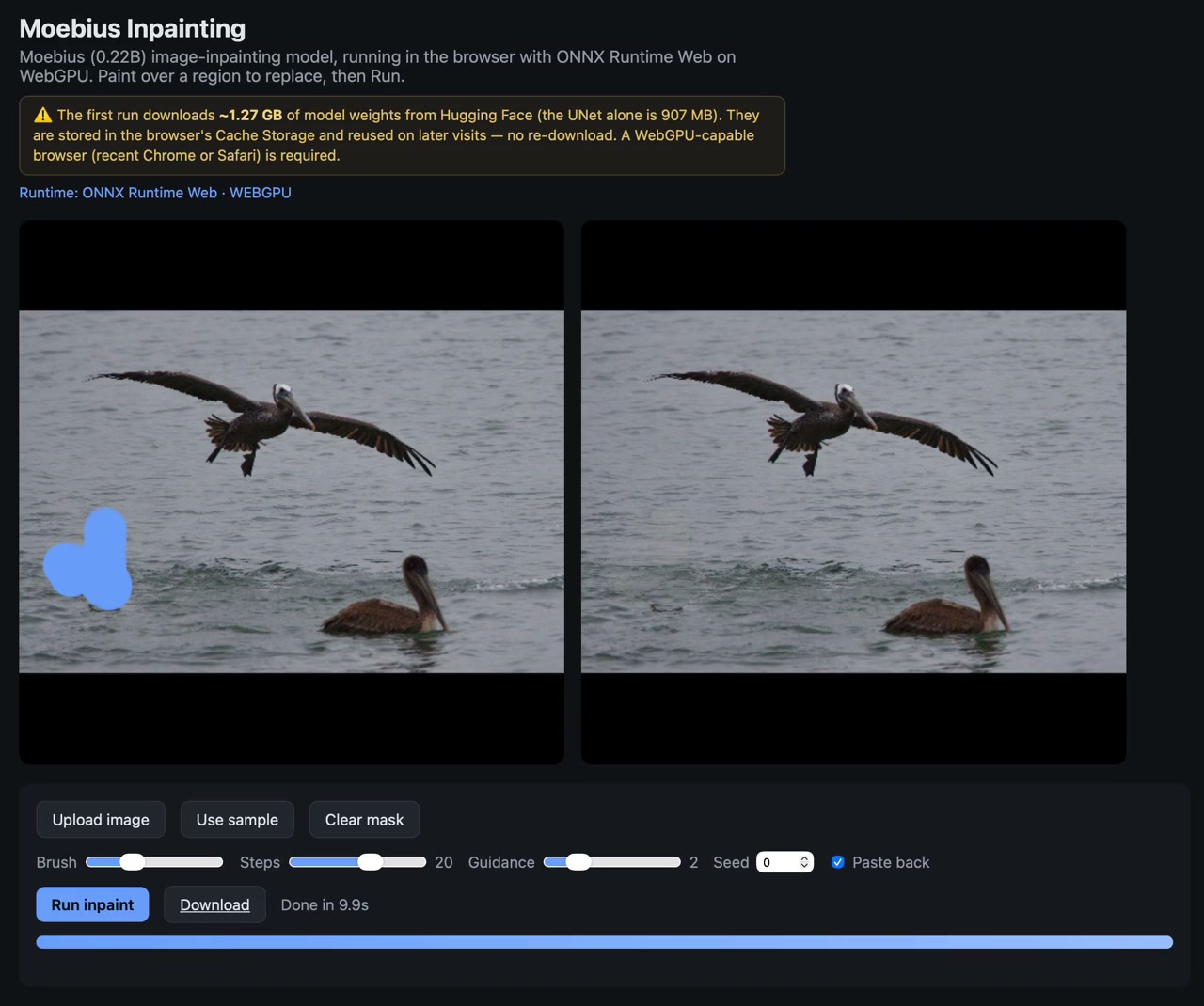
Developer Simon Willison demonstrated the capabilities of the Claude Code terminal AI agent by successfully porting the Moebius 0.2B image inpainting model to run directly in the browser via WebGPU.

What Happened
Using Claude Code, a complex engineering chain was completed: converting model weights from PyTorch to ONNX format, configuring WebGPU usage via ONNX Runtime Web, and deploying the application via GitHub Pages. The model weights, totaling approximately 1.24 GB, are now available on Hugging Face, and the CacheStorage API is used for efficient caching of heavy files in the web environment.
Context
The implementation process relies on the concept of "vibe coding," where AI agents take on deep technical tasks—from research and format conversion to final infrastructure deployment—minimizing direct human involvement in writing code.
Why It Matters for the Industry
This case confirms that AI agents are transitioning from simple script-writing tools to full participants in engineering pipelines. This paves the way for automated model porting to browser environments and accelerates the creation of edge solutions, reducing the need for complex server infrastructure.
Why It Matters for Users
Complex neural networks for photo editing can now be run locally in the browser without the need to install Python or possess a powerful GPU. This makes AI-based tools more accessible, private, and cheaper to operate by leveraging the user's local hardware via WebGPU.
What Is Not Yet Known / Limitations
Experts point to the need for critical evaluation of performance (latency) and security issues when executing code on the client side before large-scale deployment of such solutions in production.
Sources
Author
Look at AI, Editorial Team