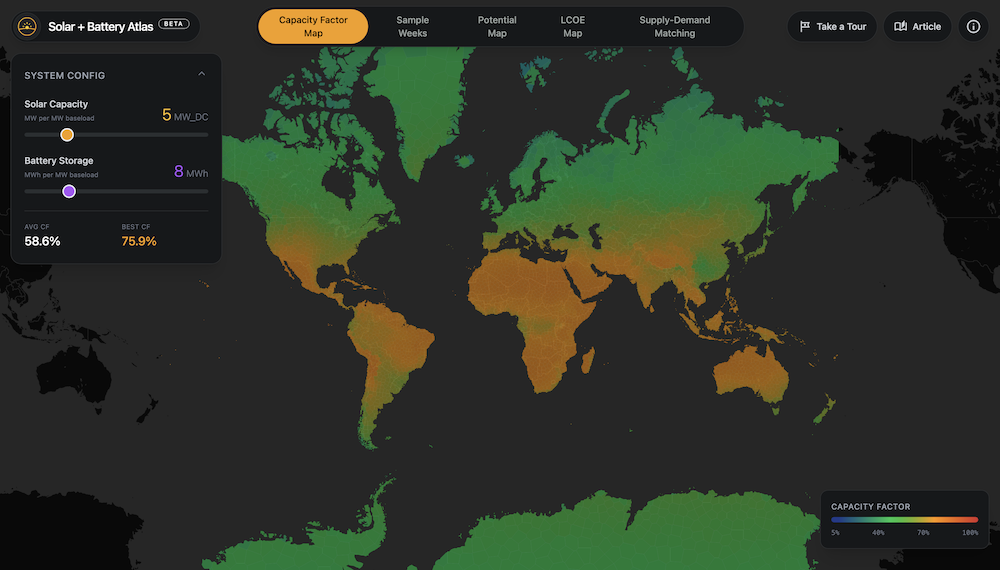
Energy organization Ember is demonstrating a new approach to specialized software development, using AI to rapidly turn research questions into functional web interfaces. Using the Solar + Battery Atlas project as an example, they showed how automated prototyping can radically accelerate the creation of analytical tools.
What Happened
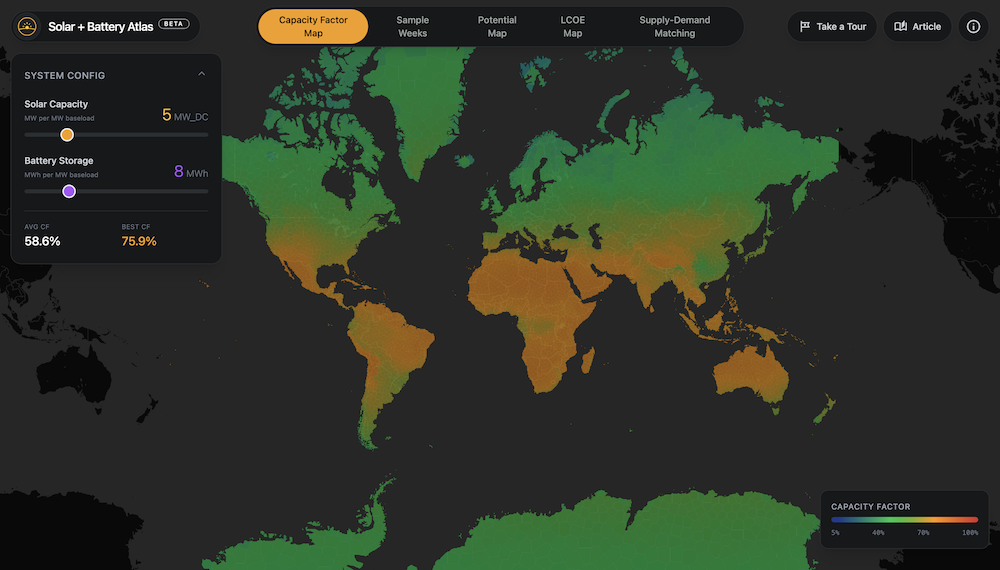
Energy organization Ember successfully applied an AI-based low-code/no-code approach to develop the Solar + Battery Atlas analytical tool. This allowed them to scale energy system modeling from 12 to 5,000 global locations. The tool confirmed that the combination of solar energy and storage systems (batteries) can meet more than 80% of annual electricity needs for 90% of the world's population at a cost of less than $100/MWh.
Context
The traditional development cycle for specialized data analysis software requires significant time and human resources. In Climate Tech and Energy tasks, where hypotheses require constant verification against massive datasets, classical development can become a bottleneck that slows down decision-making and research scaling.
Why It Matters for the Industry
For the development industry and AI startups, this case confirms the transition from simple text generation to the creation of complex data visualization and analysis tools. Using AI for prototyping reduces the Time-to-Market for vertical SaaS solutions, allowing teams to test hypotheses and receive feedback faster, shifting the focus from writing code to designing analytical logic.
Why It Matters for Users
For analysts and researchers, this means a lower barrier to entry for creating complex dashboards and research tools. The emergence of "Natural Language to Data Tooling" patterns will allow users to describe necessary functions in natural language, after which the system will automatically deploy the corresponding interface and data processing logic.
What Is Not Yet Known / Limitations
No explicit technical disagreements were identified in the materials; the discussion serves to supplement professional perspectives—ranging from product to architectural.
Sources
Author
Look at AI, Editorial Staff