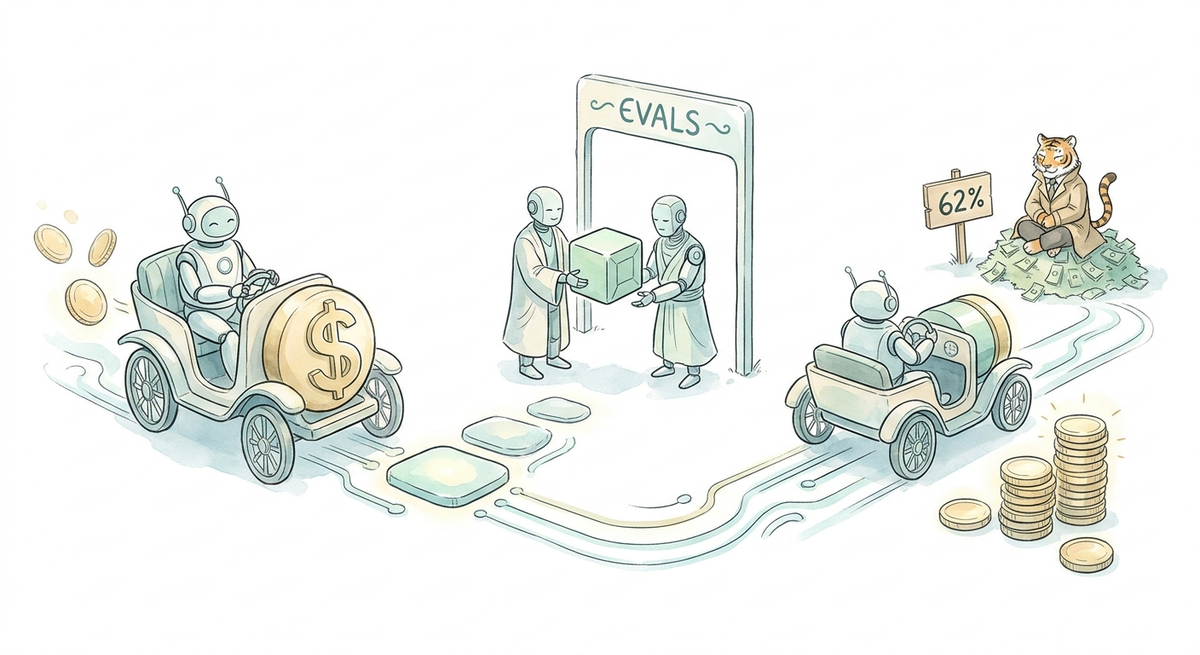
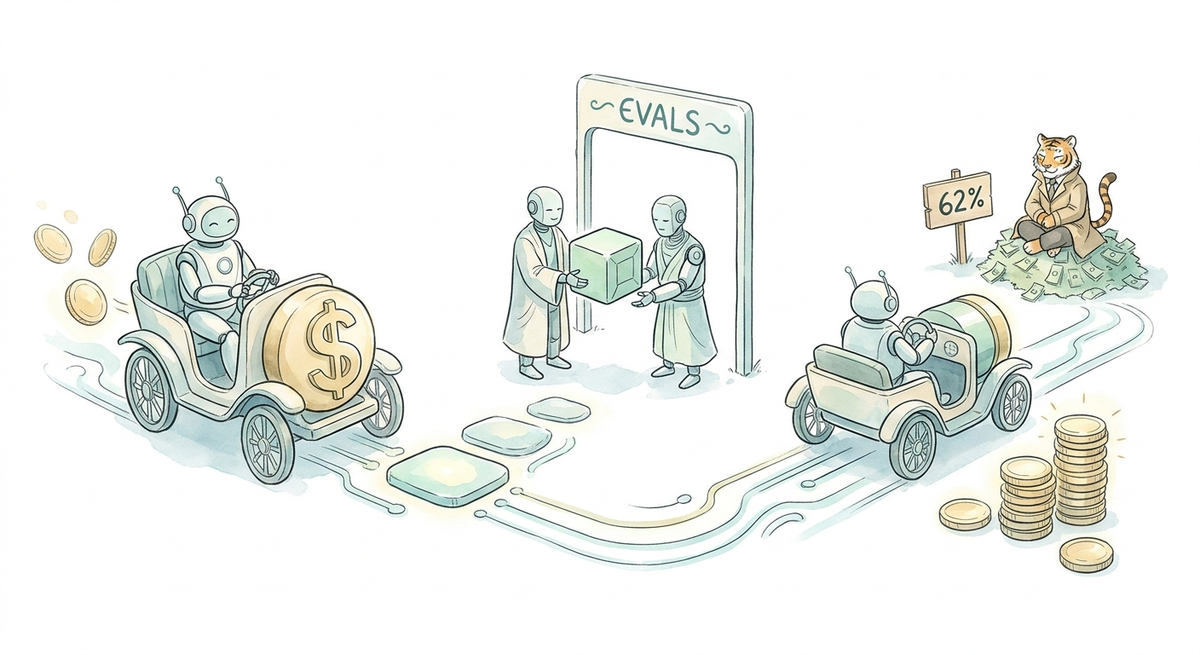
Firetiger has successfully migrated its agentic workflows from Claude models to DeepSeek, achieving a 62% reduction in operational expenses—dropping from $606k to $231k per year. Despite differences in baseline quality, developers maintained high system performance through deep prompt optimization.
What Happened
During the migration of agentic processes to DeepSeek v4 Pro (using reasoning), developers encountered issues with context ignoring and loss of focus when searching for incident root causes. The solution involved specialized prompt engineering and the implementation of rigorous evaluation processes (evals). As a result, task execution accuracy rose to 92%, bringing the new model's performance very close to the 94% level of Claude Sonnet 4.6.
Context
The migration process serves as an example of implementing an LLM arbitrage strategy. Instead of using expensive flagship models for all tasks, the company switched to more efficient and cheaper alternatives, compensating for architectural differences through instructions and system quality checks.
Why It Matters for the Industry
This case proves the viability of optimizing COGS (cost of goods sold) by replacing models in production. For the industry, this signifies a shift from a "choose the strongest model" strategy to creating adaptive layers (prompt/eval layers) that allow for the effective use of less powerful but cheaper open-weight or specialized models for complex agentic tasks.
Why It Matters for Users
Businesses and developers gain a ready-made pattern for optimizing the unit economics of AI products. It demonstrates that significant reductions in infrastructure costs are possible without catastrophic loss of quality, provided sufficient attention is paid to automated testing and model comparison tools before migration.
Sources
Author
Look at AI, Editorial Team