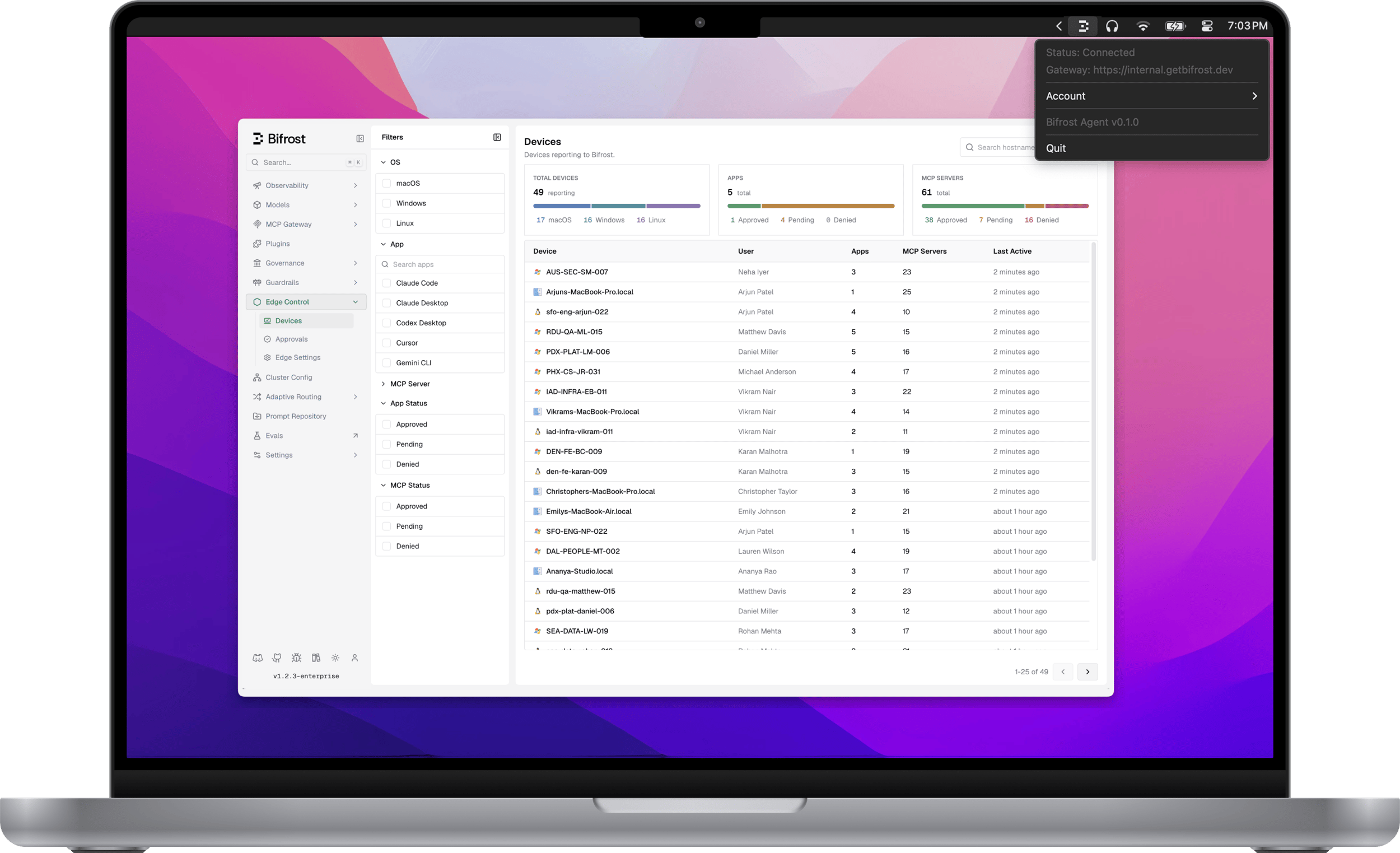
Bifrost has introduced its Bifrost Edge solution in alpha, designed for the centralized management of AI traffic directly on an organization's employee workstations.
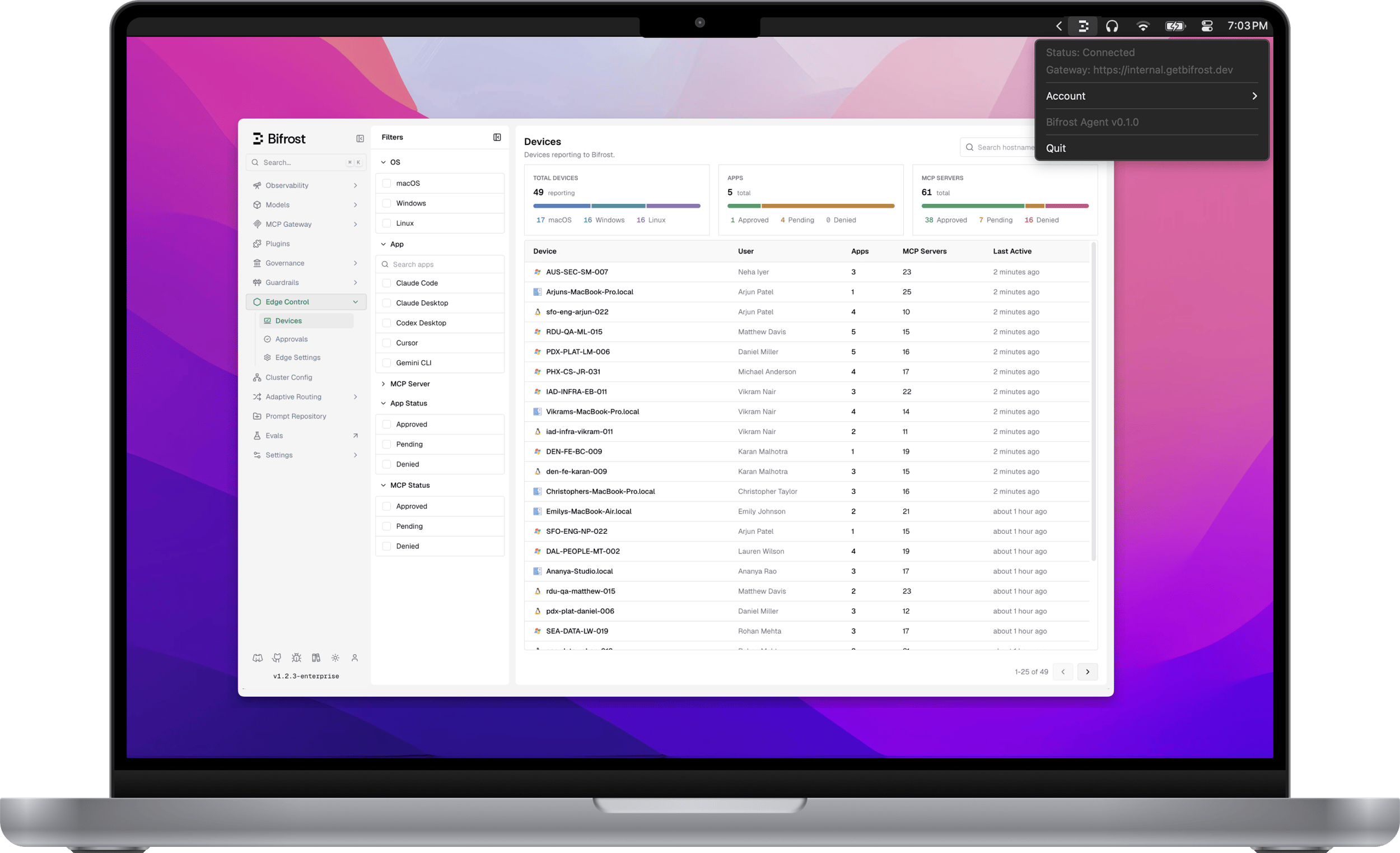

What Happened
Bifrost Edge allows for the local interception of requests from various AI tools, including browsers, desktop chat applications, terminals, IDEs, and MCP servers. The program supports cross-platform installation on macOS, Windows, and Linux, ensuring the application of unified corporate policies for budget management, auditing, and protection against PII (Personally Identifiable Information) and secret leaks without requiring manual configuration for each application.
Context
The "Shadow AI" problem arises when employees use AI tools that are not controlled by the corporation, creating security risks. Traditional management methods via central network gateways often fail to cover the full spectrum of desktop software used by users.
Why It Matters for the Industry
The solution shifts the focus of security and cost management from the central gateway level to the endpoints, providing full coverage of the corporate AI landscape. In the long term, this could contribute to the formation of an "Edge AI Governance" standard and the creation of a market for tools to control an organization's AI perimeter.
Why It Matters for Users
For companies, this offers an opportunity to begin safe AI implementation while minimizing the risk of data leaks through plugins and chat applications. Developers gain the ability to centrally control the use of MCP servers within the network, and regular employees do not need to change the settings of their familiar applications to comply with corporate rules.
What Is Not Yet Known / Limitations
The technical complexity and potential instability of intercepting traffic at the operating system level, as the product is currently in alpha.
Sources
Author
Look at AI, Editorial Staff