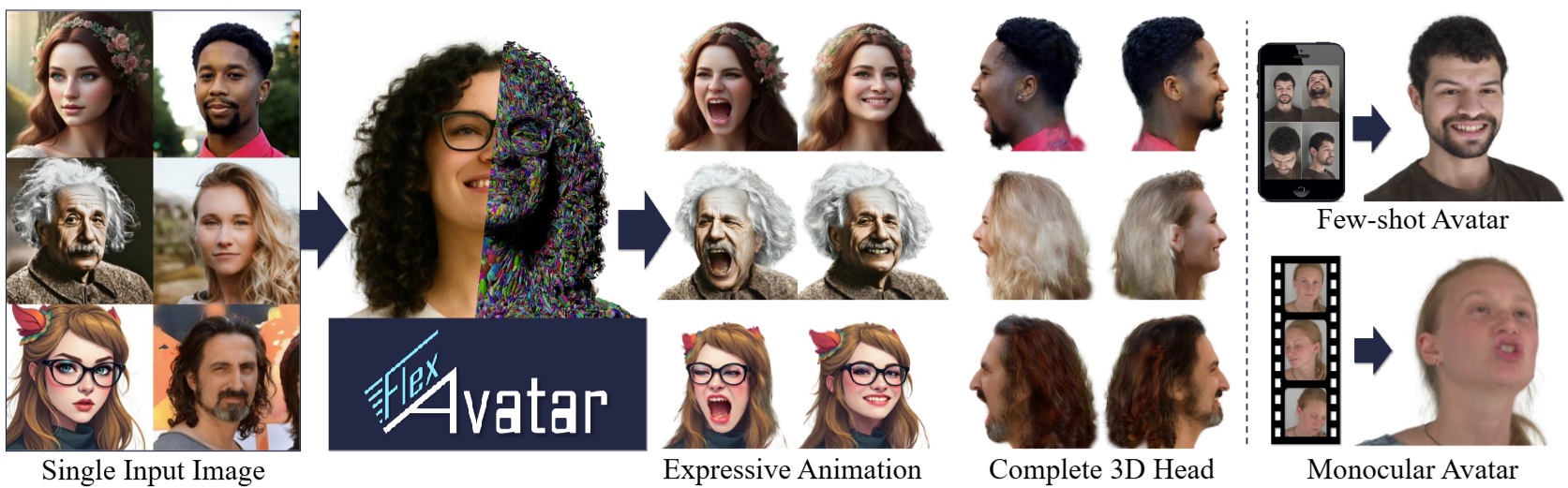
Developers have introduced FlexAvatar — an innovative method for training full 3D head avatars using a partial supervision approach. The project, accepted to the CVPR 2026 conference, is now open-source, including the original code and model weights.

What Happened
The FlexAvatar project has been officially released as open-source. The technology enables the generation of animated 3D portraits based on ordinary static images or videos. The tracking process is implemented via Pixel3DMM, and facial expression control is available through an interactive graphical user interface (GUI). All necessary files are hosted on GitHub.
Context
Traditional methods for creating digital twins often require the use of expensive and labor-intensive full-supervision datasets. FlexAvatar changes this approach by introducing a partial supervision method, which allows for high quality while using less detailed input data.
Why It Matters for the Industry
For the AI industry and developers, the shift toward partial supervision significantly lowers the barrier to entry and the cost of data preparation. This simplifies the creation of pipelines for digital twin generation and opens opportunities for rapid prototyping of facial animation systems without the need to collect massive datasets.
Why It Matters for Users
Regular users and content creators gain access to powerful tools for creating realistic 3D avatars from simple photos or videos using free software. This enables the automation of personalized content creation and animated character generation.
What Is Not Yet Known / Limitations
There are critical risks associated with the use of biometric data and copyright issues, which require additional legal analysis during mass implementation of the technology.
Sources
Author
Look at AI, Editorial Team