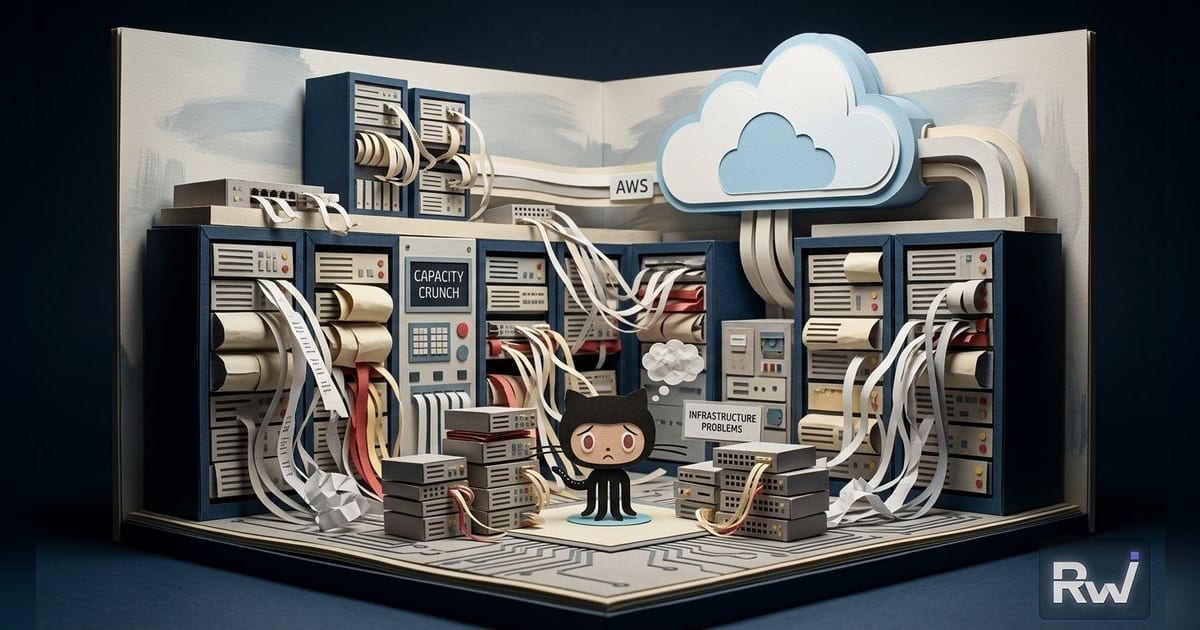
The development of autonomous AI agents has led to an unprecedented explosion in load on GitHub, forcing Microsoft to utilize the infrastructure of its main competitor, AWS, to ensure stable service operation.
What Happened
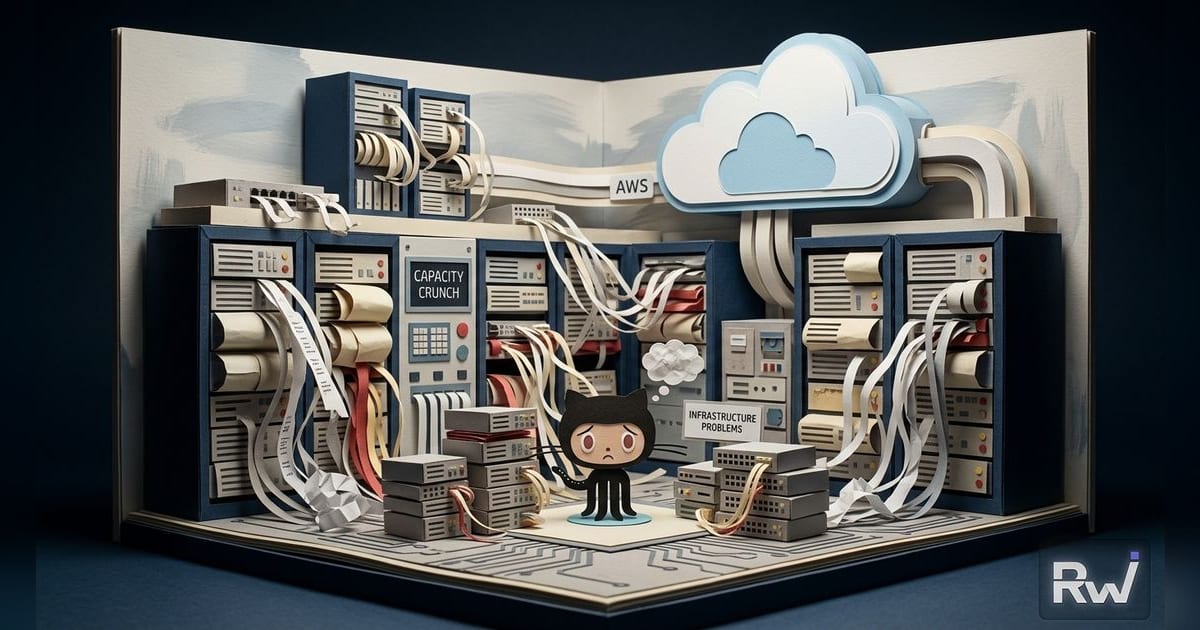
Microsoft has begun using AWS computing resources to support GitHub's operations. According to GitHub CTO Vlad Fedorov, due to the pace of "agentic development," infrastructure scaling plans have been revised: instead of the planned 10x growth, the company had to pivot toward a 30x increase in capacity. The number of commits in the system is projected to grow from 1 billion in 2025 to 14 billion in 2026.
Context
The explosive growth in the use of AI agents capable of writing code at machine speed is radically changing Git usage patterns. Traditional development cycles, oriented toward a human rhythm, are being replaced by industrial-scale code generation, creating a critical gap between existing cloud provider capacities and the speed of autonomous systems.
Why It Matters for the Industry
This situation confirms a systemic shortage of computing power to support the mass deployment of AI agents. Even the largest hyperscalers, such as Microsoft, are being forced to adopt multi-cloud strategies, utilizing competitors' resources to prevent downtime of critical infrastructure. This signals the collapse of infrastructure monopolies and the need to create new standards for AI-native development.
Why It Matters for Users
For developers and companies, this means a fundamental shift in how version control and CI/CD tools are used. The load on platforms is shifting from a human rhythm to a machine rhythm, requiring fundamentally different approaches to reliability, scalability, and the efficiency of managing agent-generated commits.
What Is Not Yet Known / Limitations
There are varying assessments of the consequences: some experts view this purely as an infrastructural challenge, while others see it as the beginning of the end for infrastructure monopolies and a forced industry transition toward multi-cloud architecture.
Sources
Author
Look at AI, Editorial Staff