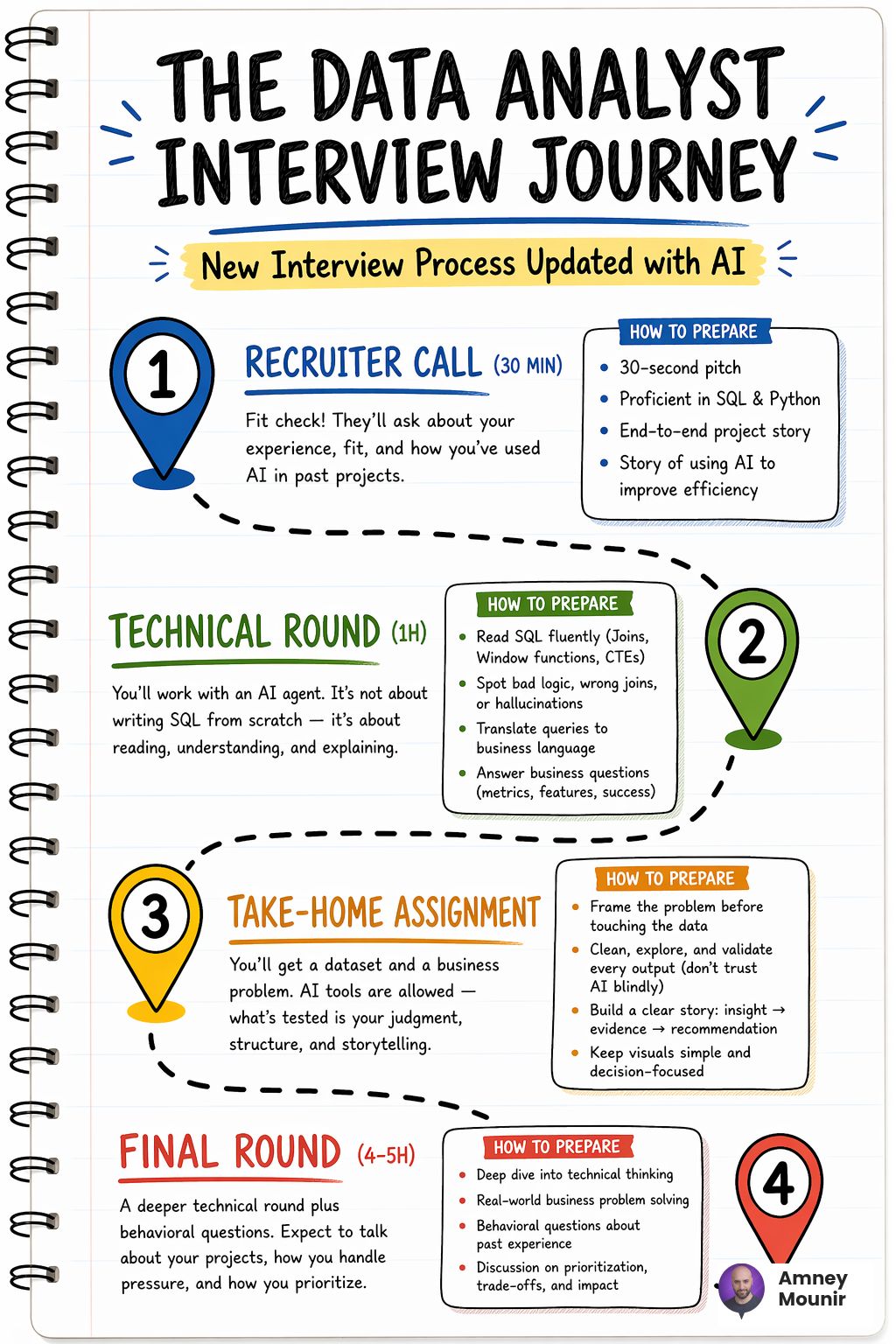
The hiring process for data specialists in 2026 is undergoing fundamental changes: the focus is shifting from writing code to verifying it and strategically managing AI tools.

What Happened
In technical interview stages, candidates are now permitted to use AI agents. The primary task is no longer generating code from scratch, but rather its verification—the ability to identify "hallucinations" in generated SQL, check query logic, and interpret the resulting data.
Context
The traditional paradigm of competency assessment, based on knowledge of syntax and visualization tools, is giving way to the "Auditor-in-Chief" model. In an environment where routine tasks are automated, a specialist's value lies in their ability to translate complex business problems into effective prompts and act as the lead auditor of AI solutions.
Why It Matters for the Industry
Companies are revising hiring criteria, prioritizing analytical thinking and AI management skills. This opens opportunities for creating AI output verification tools and new automated technical interview systems featuring AI agents.
Why It Matters for Users
Analysts need to adapt their skill sets by developing prompt engineering, statistical validation, and business intuition. The ability to manage agents is becoming a baseline requirement rather than an advantage, and the capacity to audit AI solutions is becoming the key differentiator in the labor market.
What Is Not Yet Known / Limitations
There are differing views on the consequences of this shift: while some see opportunities for increased personal leverage, others highlight risks related to intellectual property, privacy, and governance standards.
Sources
Author
Look at AI Editorial Team