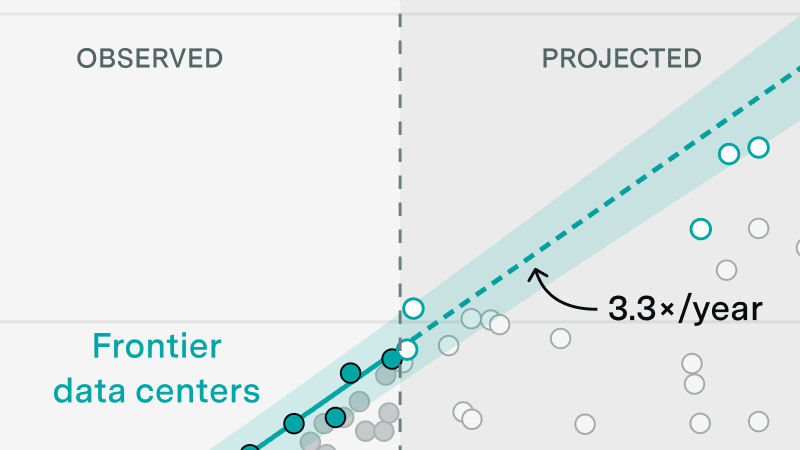
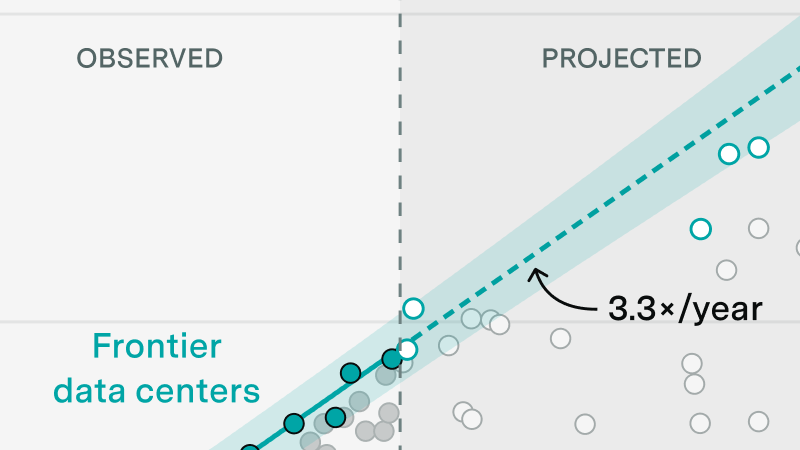
According to a new study by Epoch AI, the computing power of the largest AI data centers (frontier data centers) is demonstrating unprecedented growth, doubling every 7 months. This rate of infrastructure scaling directly impacts the speed of neural network model development and is shaping a new economy within the AI industry.

What Happened
Epoch AI's research revealed that the volume of computation in frontier data centers is growing by approximately 3.3 times per year. A striking example of extreme scaling is xAI's Colossus 1 project, launched in August 2024. The current growth rate is expected to persist until late 2027 or early 2028, when new large-scale facilities such as QTS Cedar Rapids and Meta Hyperion are commissioned.
Context
This process confirms the Scaling Laws hypothesis, which posits that the capabilities of AI models are directly dependent on the volume of available computational resources. Infrastructure growth is occurring in parallel with the race to create increasingly powerful Large Language Models (LLMs), necessitating a constant increase in physical capacity.
Why It Matters for the Industry
For the industry, this growth rate implies a critical dependence on specialized hardware supply chains (specifically NVIDIA H100 and similar chips) and a colossal demand for electricity. Infrastructure scaling dictates market conditions, creating high barriers to entry and forcing companies to adapt their workflows to the rapidly changing availability of compute power.
Why It Matters for Users
For end users and application developers, this means that qualitative leaps in AI capabilities can occur extremely quickly and unexpectedly. Each successive doubling of capacity could lead to the emergence of new SOTA models and more powerful APIs, opening opportunities for creating applications that require massive compute resources.
What Is Not Yet Known / Limitations
There are varying assessments of the consequences: while researchers focus on confirming Scaling Laws, architecture experts and engineers point to risks of infrastructure dependency, supply chain complexities, and cost unpredictability.
Sources
Author
Look at AI, Editorial Team