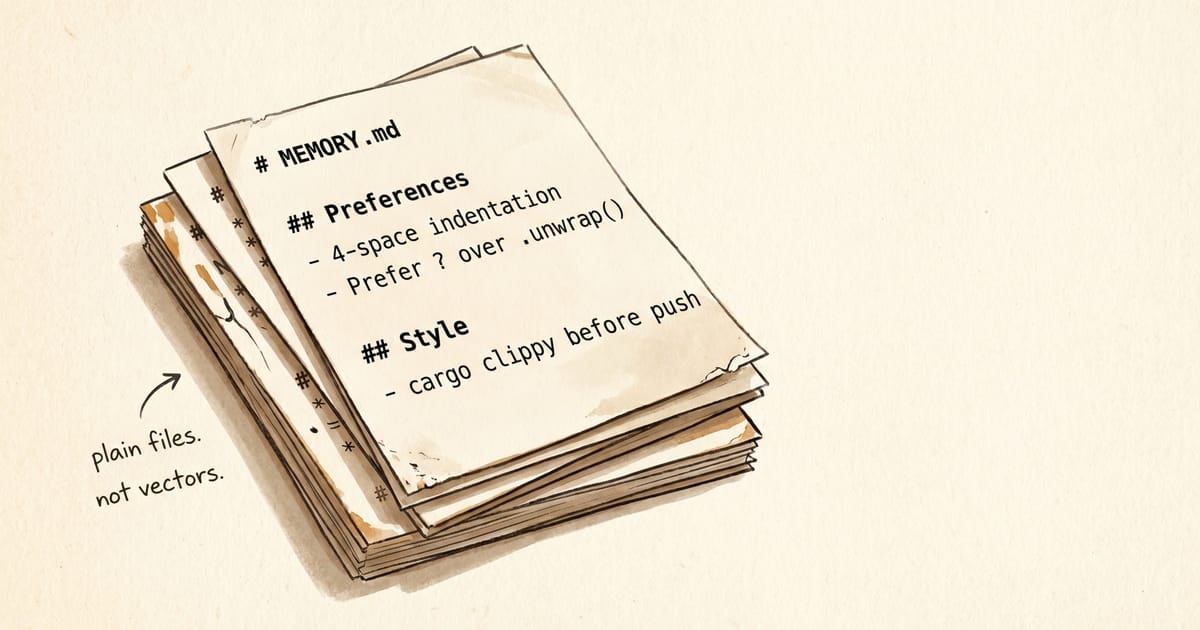
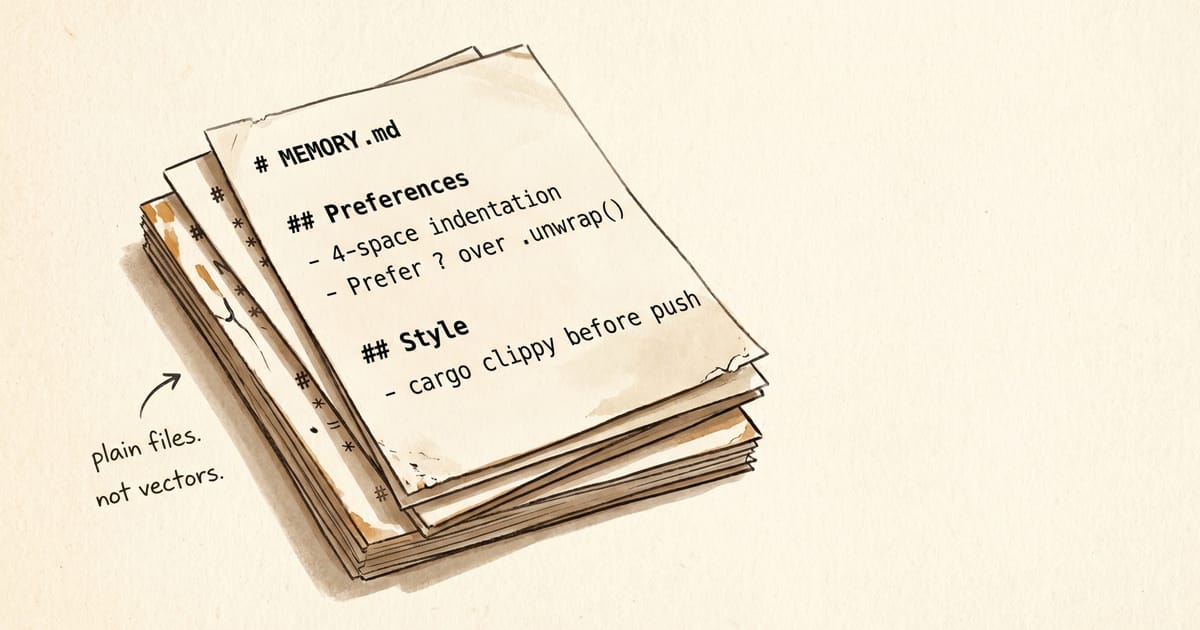
A developer has introduced zerostack—a lightweight AI coding agent written in Rust that eschews heavy vector databases in favor of a simple and efficient system based on Markdown files.
What Happened
The zerostack project has been presented, featuring a coding agent with a codebase of about 17k lines. Instead of resource-intensive vector stores, the system employs an architecture based on Markdown files and multi-term keyword search (multi-term OR matching). The agent's memory is divided into four levels: a global MEMORY.md, a project Scratchpad, daily logs, and notes.
Context
Traditional AI agents often rely on complex vector databases and embeddings to manage context, which requires significant computational resources. zerostack offers an alternative path, demonstrating that specialized tasks (such as programming) can be effectively handled using structured text search.
Why It Matters for the Industry
The project demonstrates the possibility of creating highly efficient AI agents with a minimal footprint, suitable for operation in resource-constrained environments and on edge devices. This paves the way for developing autonomous tools that are independent of heavy cloud embedding providers and complex state management infrastructure.
Why It Matters for Users
For developers, this means the ability to run powerful local AI assistants with extremely low RAM consumption (only 16–24 MB). Using plain text files instead of databases makes the context debugging process transparent and simple, while deployment remains as lightweight as possible.
What Is Not Yet Known / Limitations
The provided materials do not specify technical limitations regarding the system's scalability when working with extremely large codebases, where text search might lose accuracy in finding relevant fragments compared to vector search.
Sources
Author
Look at AI, Editorial Staff