Yandex's ML infrastructure team has developed Dev Cluster—a service for dynamic GPU resource management that allows engineers to instantly switch between different computing power configurations without losing progress.

What Happened
Yandex has launched Dev Cluster, a service built on a stack of Go, gRPC, and PostgreSQL, which automates quota distribution and GPU resource management. The system implements a Suspend mechanism, allowing the working environment state to be saved when switching between CPU development and various GPU configurations (ranging from a single card to an entire cluster) in just a few clicks.
Context
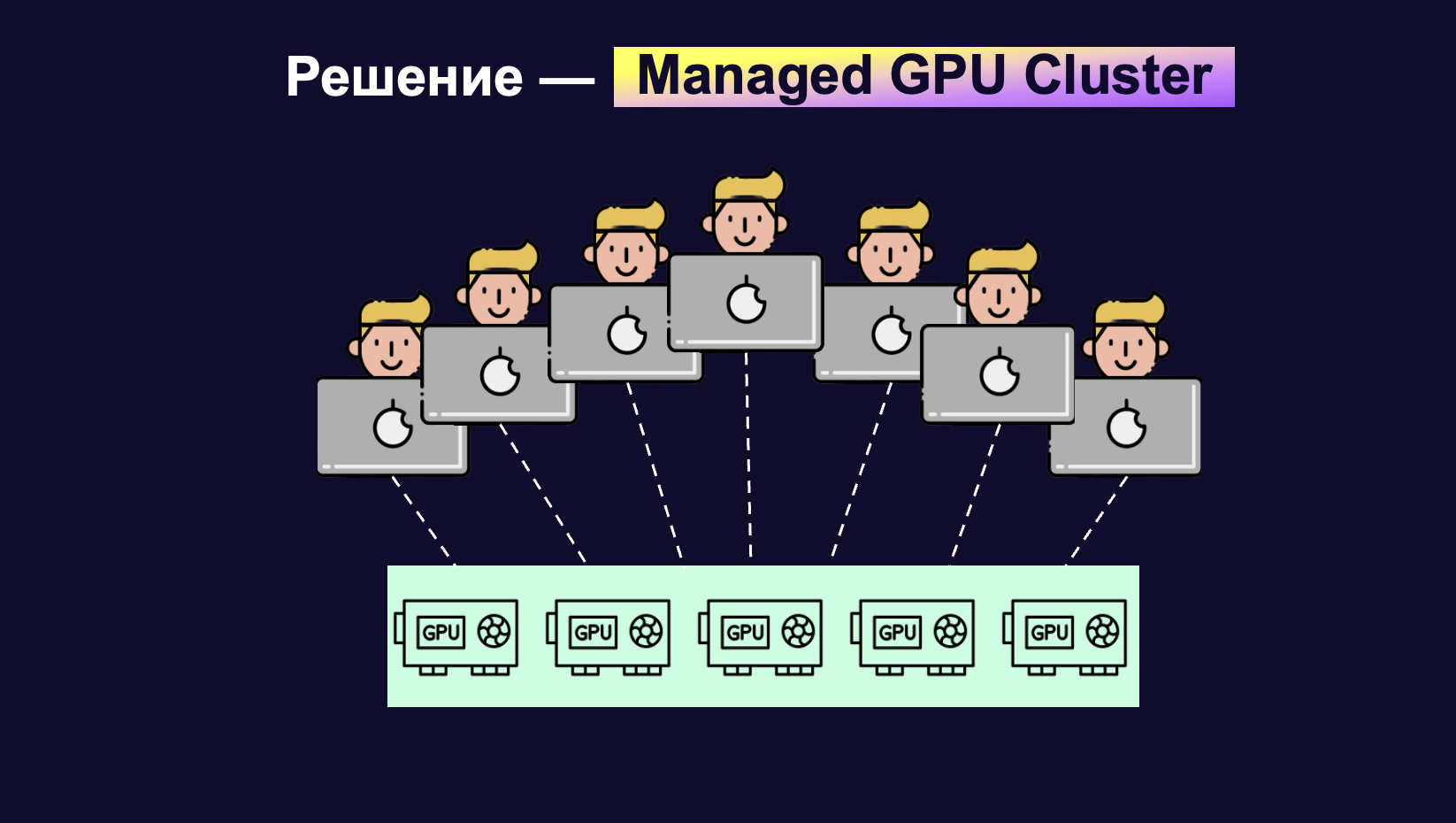
Traditionally, resource management in ML teams often boils down to manual distribution of shared virtual machines (a "cohabitation" model), which leads to hardware downtime and scaling difficulties. Dev Cluster moves this process into the realm of automated, containerized, on-demand resource management.
Why It Matters for the Industry
For the industry, this means optimizing the use of expensive hardware and reducing the cost of AI product development. The transition to an "on-demand resources" model and infrastructure abstraction allows for efficient scaling of LLM experiments and reduces operational costs for maintaining GPU parks.
Why It Matters for Users
ML engineers gain the ability to quickly test hypotheses on a small number of GPUs and instantly scale up to a cluster without wasting time on complex environment setup or negotiating resources with colleagues. The Suspend mechanism ensures experiment continuity, preserving all code progress when changing hardware.
What Is Not Yet Known / Limitations
Questions remain regarding the assurance of full security and data isolation during such dynamic resource distribution, which is a critical aspect for corporate environments.
Sources
Author
Look at AI, Editorial Team