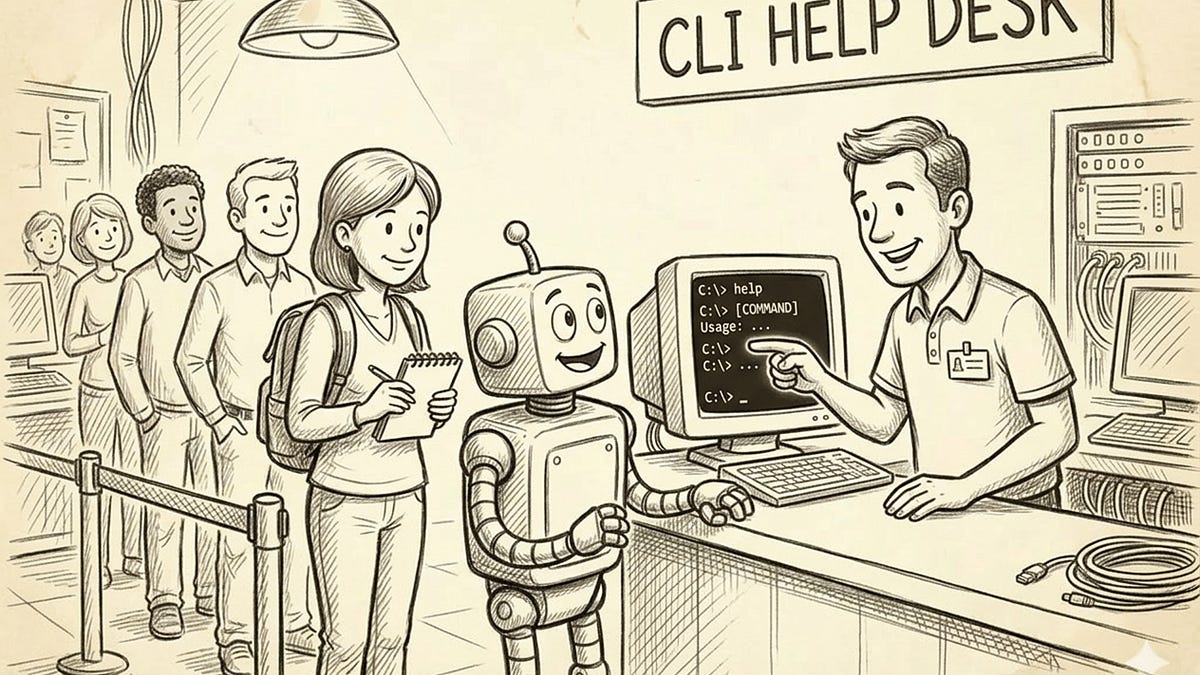
Trevin Chow has introduced the concept of Agent-Native CLI — a new approach to designing command-line interfaces oriented not toward humans, but toward autonomous AI agents.
What Happened
Developer Trevin Chow has formulated 10 key principles for creating interfaces that will be effectively understood and used by large language models. Key recommendations include mandatory support for non-interactive mode via a --force flag, standardized machine-readable output in --json format, providing informative error messages that list valid values, and using JSON schemas for introspection mechanisms.
Context
Traditional CLI interfaces are designed for human readability, which creates barriers for AI agents due to unstructured output and the need for interactive action confirmation. With the development of agentic workflows, there is a growing need for tools that function like predictable and strictly typed APIs.
Why It Matters for the Industry
For the industry, this signifies a paradigm shift: CLIs are ceasing to be mere user shells and are becoming functional APIs for autonomous systems. Implementing standards such as idempotency, structured error handling, and asynchronous task control will reduce token costs and significantly increase the reliability of automation across the entire industry.
Why It Matters for Users
Developers and engineers need to rethink their approaches to creating command-line tools to ensure compatibility with new AI workflows. Utilizing profiles, bidirectional I/O, and self-documenting schemas will allow for the creation of more efficient and error-resistant agents working with existing software.
Sources
Author
Look at AI, Editorial Team