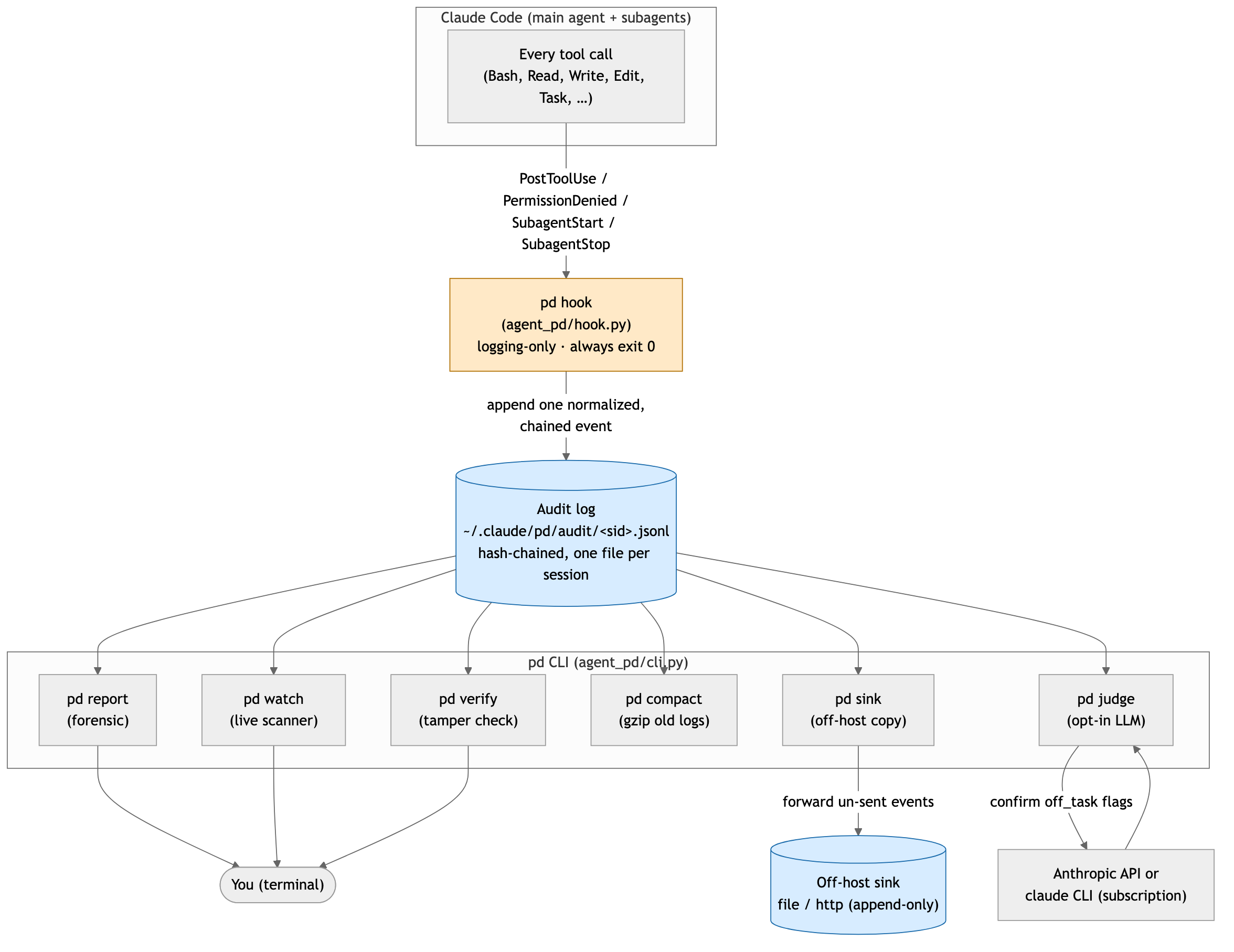
The specialized tool agent-pd has been introduced, acting as a "black box recorder" to control the actions of Claude Code AI agents, providing transparency and security without the need for expensive LLM tokens.
What Happened
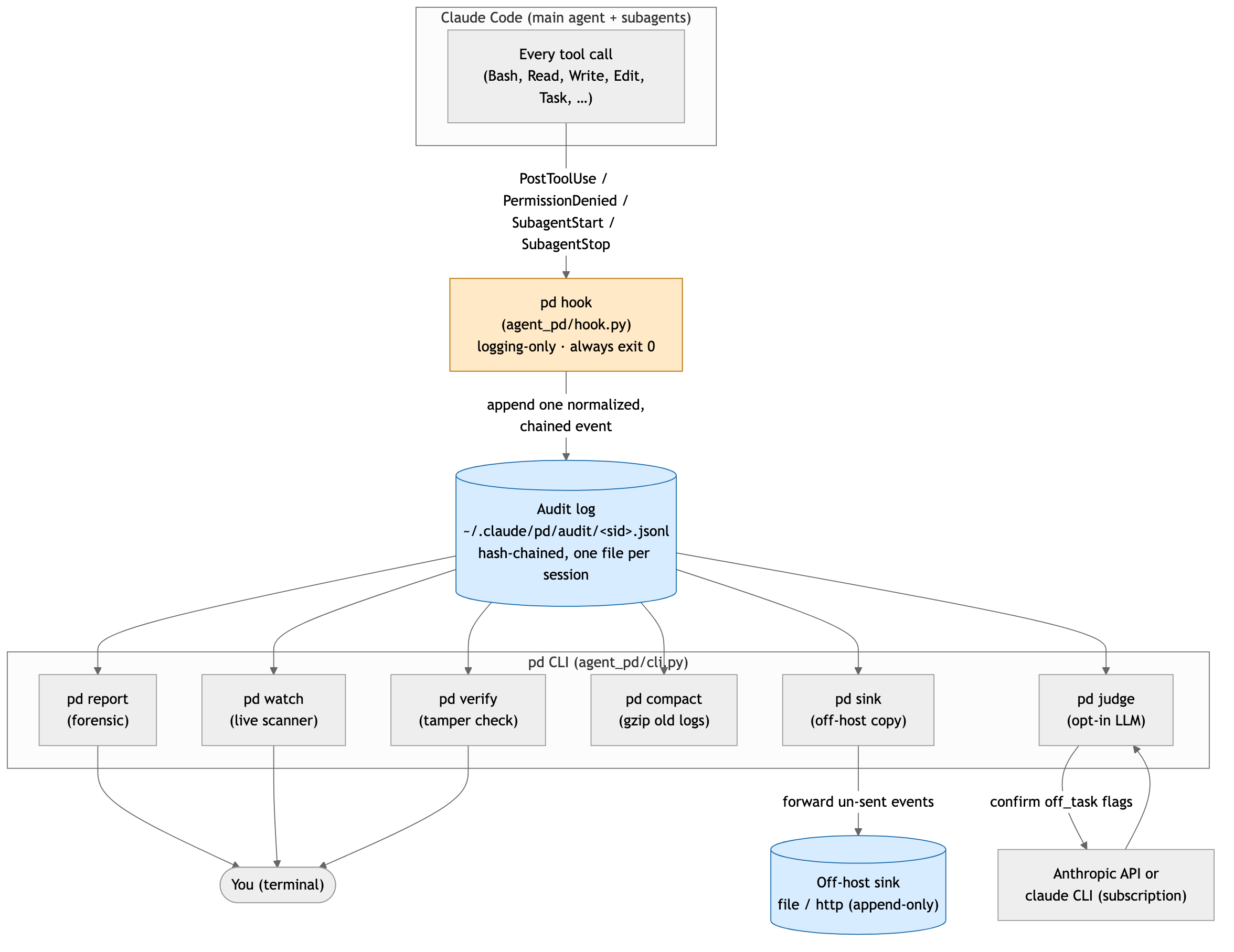
A developer has introduced agent-pd, a tool that records every tool usage and permission change, including the actions of hidden sub-agents. The system uses six deterministic detectors to identify violations, such as attempts to bypass permissions or access sensitive paths, allowing for the detection of unauthorized actions at the system level without semantic text analysis.
Context
Autonomous AI agents often act as a "black box," where model actions can become unpredictable or dangerous to the local system. Traditional LLM-based monitoring methods incur significant token overhead and increase latency, making them inefficient when scaling agentic workflows.
Why It Matters for the Industry
The emergence of agent-pd signals the birth of a new security infrastructure market for autonomous AI agents. Moving from simple LLM wrappers to specialized deterministic control mechanisms (guardrails) allows for the creation of safer and more economically viable systems where monitoring does not inflate inference costs.
Why It Matters for Users
Developers using Claude Code gain an immediate level of control and transparency, allowing them to track whether an agent is attempting to step outside the project scope, read confidential files, or execute dangerous terminal commands. This reduces the risk of accidental or intentional harm in the local environment when delegating tasks to sub-agents.
Sources
Author
Look at AI, Editorial Team