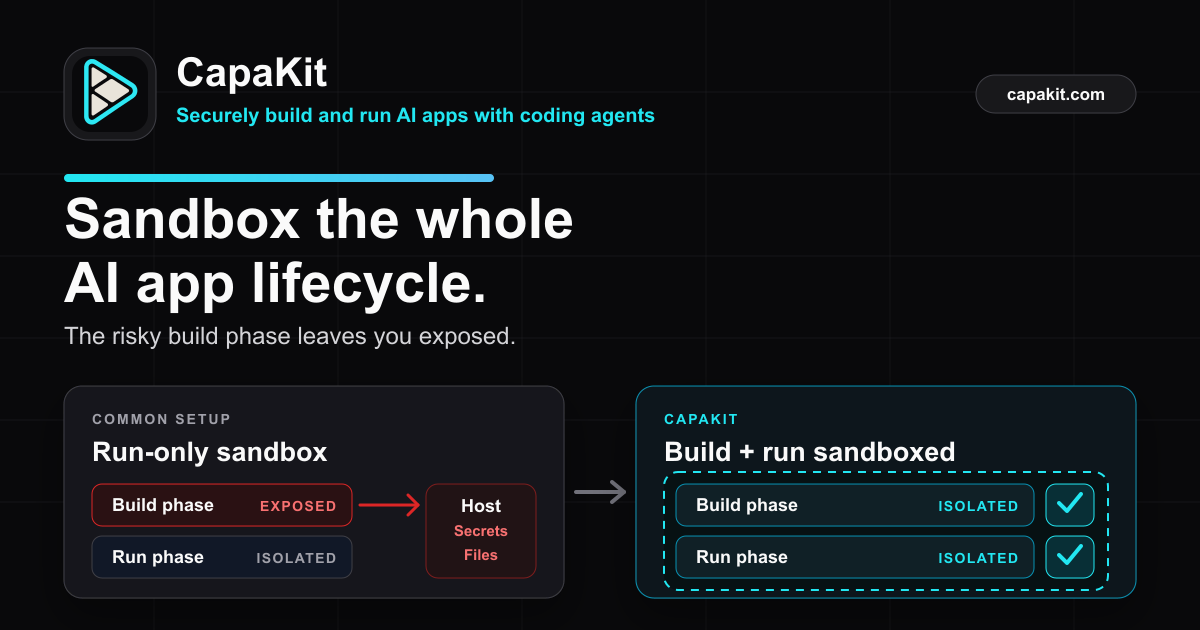
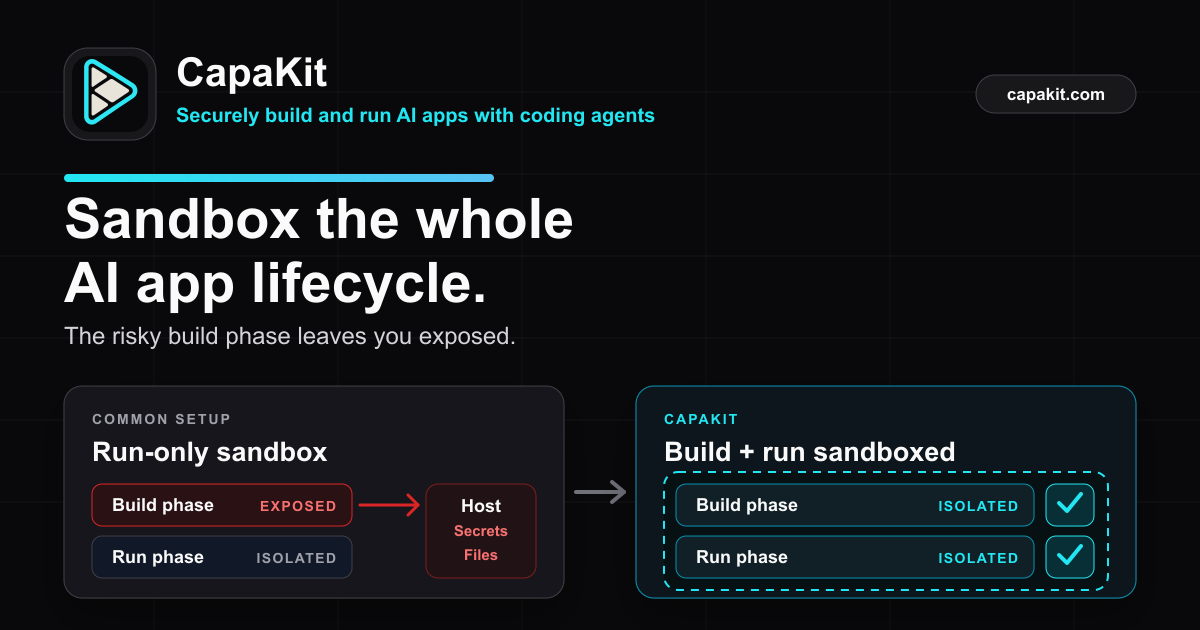
CapaKit (Public Alpha) has been introduced for macOS, providing secure isolation for AI applications throughout all stages of operation, including the build process and dependency installation.
What Happened
CapaKit developers have introduced a macOS tool that implements sandboxing mechanisms not only at runtime but also during the build phase. This prevents unauthorized access to the file system and network during operations such as npm install. The system utilizes ephemeral macOS sandboxes and supports MCP (Model Context Protocol) standards and OpenAI-compatible APIs.
Context
In the era of agentic programming, AI agents often execute arbitrary code to set up environments or install libraries. Traditional security tools are often limited to the runtime phase, leaving build processes vulnerable and opening doors for supply chain attacks.
Why It Matters for the Industry
CapaKit offers a solution to a critical security problem for the AI agent industry, allowing for the standardized transfer of "AI app Kits" without the risk of compromising the host system. This could become an important infrastructure layer for ensuring the security of autonomous coding in commercial development.
Why It Matters for Users
For developers using AI coding agents, CapaKit provides the ability to safely experiment with new libraries and scripts. This reduces the risk of secret theft and unauthorized access to local files, as any agent action is confined to a temporary sandbox.
What Is Not Yet Known / Limitations
The project is currently in Public Alpha and is platform-dependent, working only on macOS. Additionally, there is a lack of clear data regarding the solution's scalability for enterprise-level use.
Sources
Author
Look at AI, Editorial Team