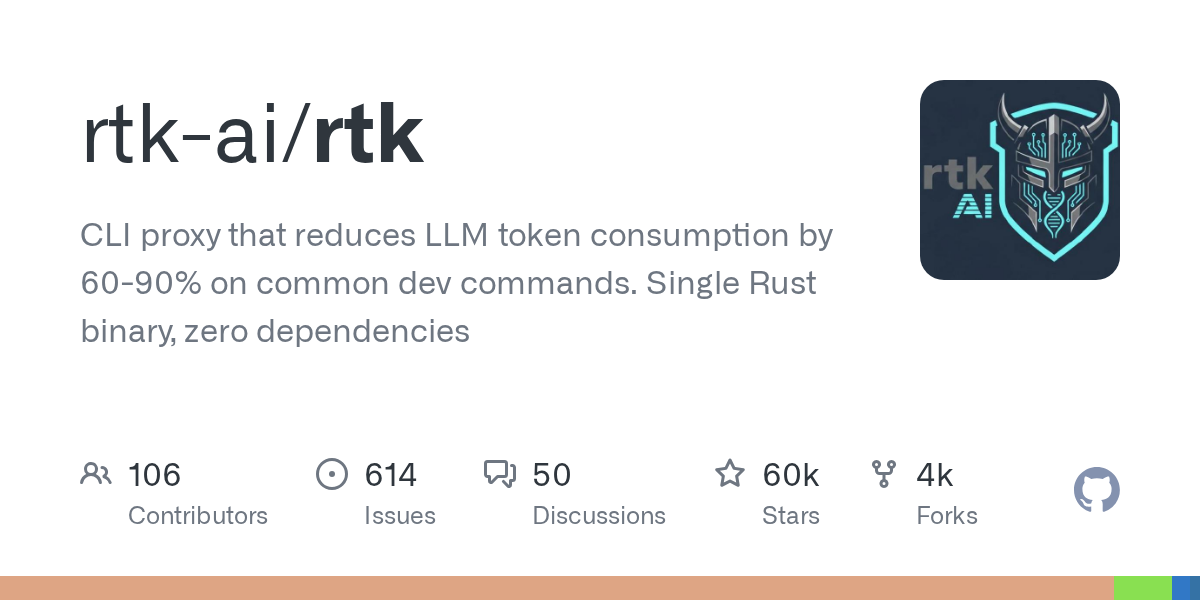
On Hacker News, developers discussed effective ways to reduce token costs for large language models in real-world applications. One of the most promising solutions identified was the RTK (Rust Token Killer) CLI proxy, which can save between 60% and 90% of tokens by filtering and compressing technical noise in command outputs.
What Happened
Developers on Hacker News highlighted the RTK (Rust Token Killer) tool as an effective method for context optimization. The proxy layer intercepts the output of system commands, such as git, ls, and cargo, cleans it of redundant information, and passes only the necessary data to the LLM.
Context
When using agentic workflows and complex CLI tools, the volume of transmitted context can grow rapidly, leading to a sharp increase in API request costs. Specialized proxy layers solve the problem of data redundancy—information that carries no semantic weight for the model but occupies space in the context window.
Why It Matters for the Industry
Implementing such proxy layers allows for a significant reduction in operational expenses when deploying large-scale agentic systems. In the long term, this could lead to the formation of a new architectural norm where smart context filtering becomes a mandatory component of high-load AI infrastructures.
Why It Matters for Users
Developers using coding automation tools or terminal-based AI assistants (such as Claude Code) can radically reduce their API bills. Using RTK allows for the removal of "noise" from terminal responses, providing immediate savings without sacrificing the quality of the agent's performance.
What Is Not Yet Known / Limitations
An assessment of security risks and compliance with API provider terms of service is required when implementing third-party proxy layers for data processing.
Sources
Author
Look at AI, Editorial Team