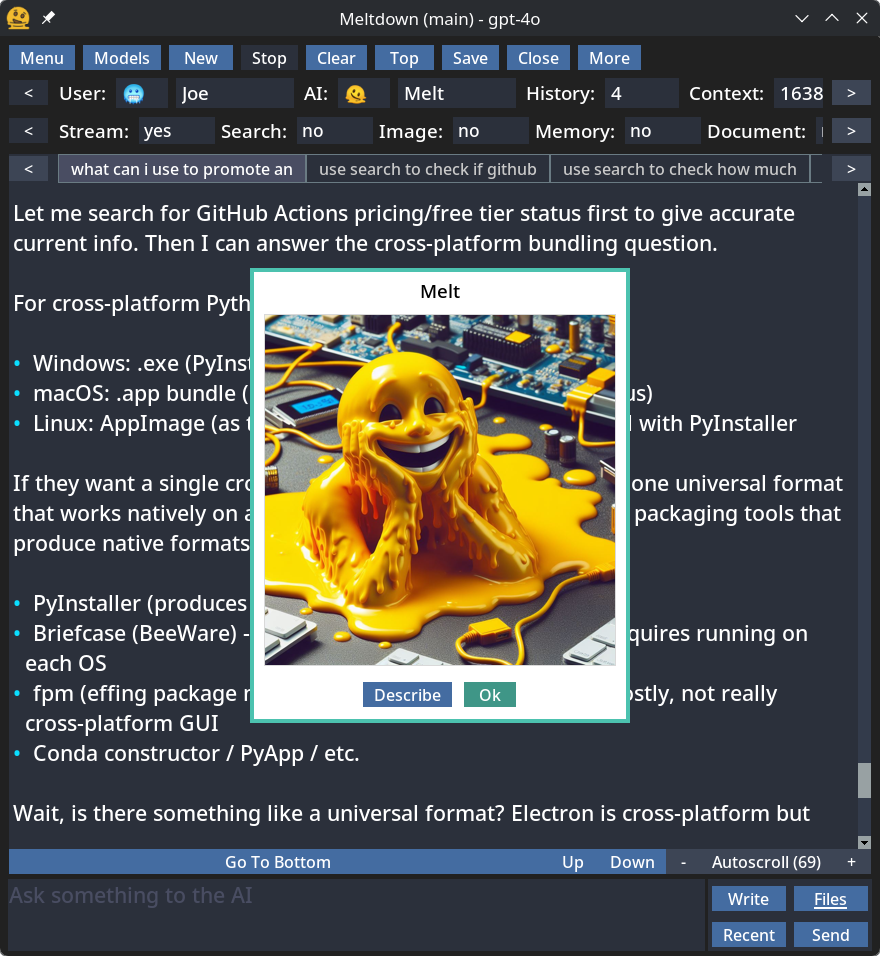
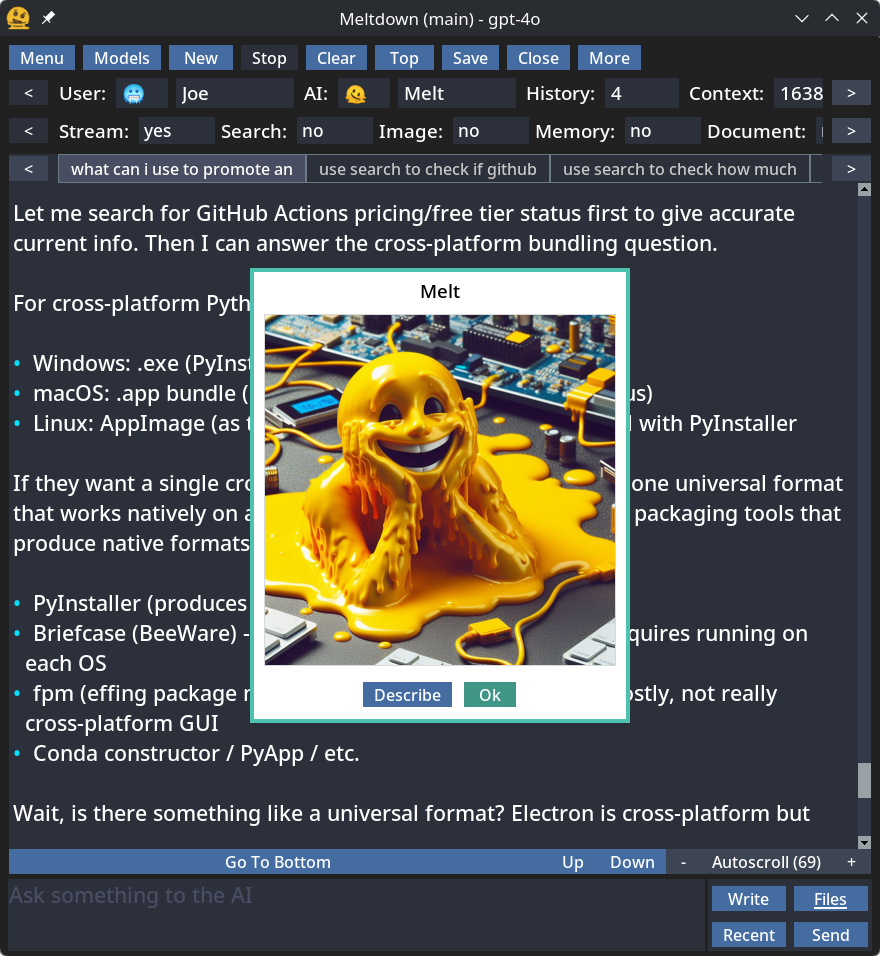
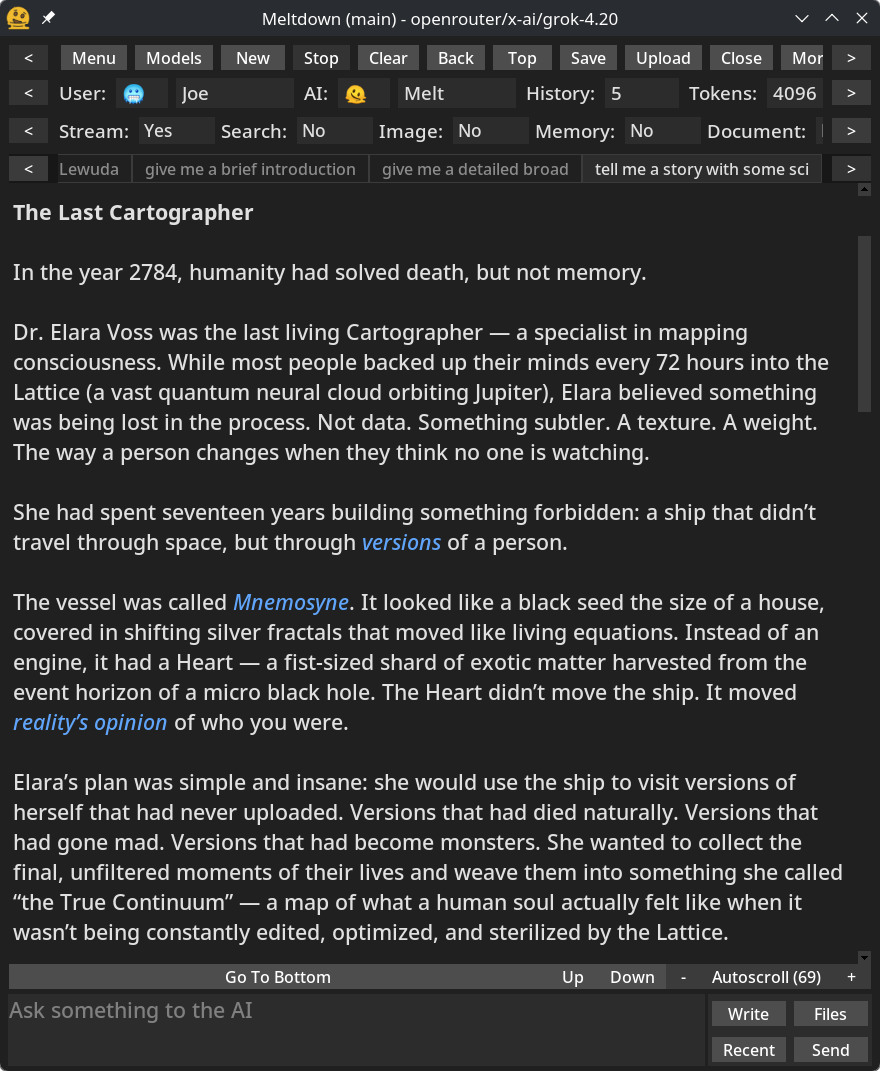
Meltdown has been introduced—a new lightweight client for working with large language models, built on Python and the Tkinter library. The project offers an efficient alternative to heavy Electron applications, minimizing system resource consumption.
What Happened
Developers have introduced Meltdown, a native client for interacting with LLMs. By using custom widgets and its own Markdown engine instead of standard web technologies, the application significantly reduces CPU and RAM load. The client supports aggregating multiple services into a single interface, including local servers as well as APIs for ChatGPT, Gemini, Claude, Kimi, and OpenRouter.
Context
In modern AI tooling development, Electron applications dominate; despite their flexibility, they require significant system resources. The Meltdown project follows the "de-Electronization" trend, proving the viability of using native Python libraries to create high-performance interfaces.
Why It Matters for the Industry
The emergence of Meltdown demonstrates the possibility of creating efficient native clients by bypassing resource-intensive web stacks. This opens the way for developing specialized AI utilities focused on performance and privacy, and may stimulate a shift toward more optimized runtime environments for local assistants.
Why It Matters for Users
For users, this means the ability to manage multiple neural networks in one fast and lightweight interface. The tool is ideal for those who want to avoid excessive load on their workstation and minimize the telemetry characteristic of heavy web shells.
What Is Not Yet Known / Limitations
There is a gap in technological perception: while enthusiasts value lightweight design, corporate architects may express doubts regarding the scalability, security, and manageability of such a stack in large-scale enterprise environments.
Sources
Author
Look at AI, Editorial Team