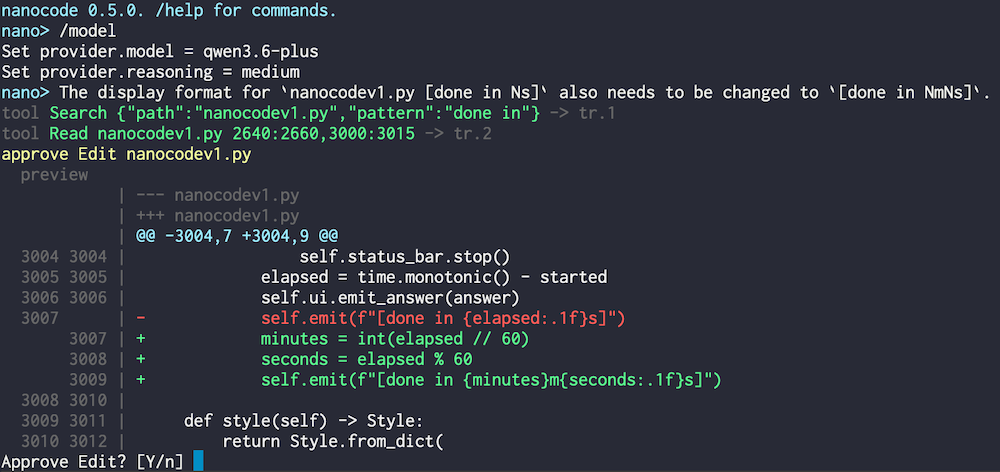
Nanocode-CLI has been introduced—a compact Python-based tool that allows you to leverage the capabilities of large language models directly in the terminal, while ensuring high edit accuracy and efficient context management.
What Happened
Developers have released Nanocode-CLI, a specialized CLI agent for integrating AI into workflows via the command line. The tool supports various providers, including DeepSeek, OpenCode, and Alibaba Cloud, and also allows running models locally via llama.cpp. Key technical features include a `line:hash` mechanism to prevent outdated edits and the separation of working memory (Note) from execution logs to optimize the LLM context window.
Context
Unlike heavy solutions like Cursor or GitHub Copilot, which are oriented toward full IDEs, Nanocode-CLI focuses on a terminal-first paradigm. The project's primary technical value lies in the UX engineering of terminal interaction and mechanisms for ensuring code integrity, rather than creating new machine learning architectural solutions.
Why It Matters for the Industry
The emergence of such specialized CLI agents expands the AI assistant ecosystem beyond the IDE, lowering the barrier to entry for development automation. This contributes to the formation of new standards for interaction between the terminal and LLMs and allows for the integration of AI tools directly into existing CI/CD and local pipelines.
Why It Matters for Users
Developers can accelerate code writing without changing their familiar environment or switching to heavyweight editors. The tool provides control over the process through edit confirmation mechanisms, allowing for the effective use of AI for routine tasks directly in the console.
What Is Not Yet Known / Limitations
There is a difference in the assessment of novelty: ML experts emphasize the lack of fundamental architectural innovations, while product developers highlight the significance of the specialized CLI agent concept itself.
Sources
Author
Look at AI, Editorial Team