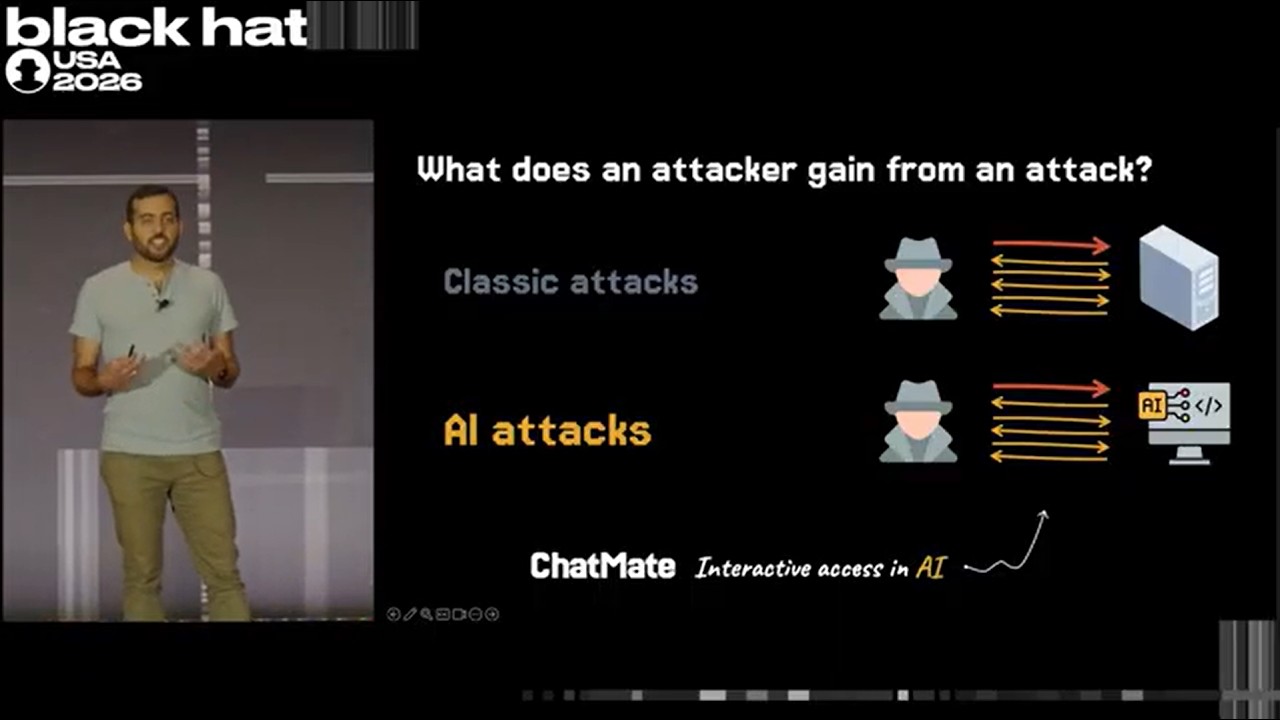
Ori, a researcher at Rubrik Zero Labs, published a YouTube recording of their Black Hat USA 2026 talk, *ChatMate: Remote Prompt Execution on AI Assistants Through Sandbox Escaping*, detailing a full breakdown of an attack on Microsoft 365 Copilot. The attack chain involves indirect prompt injection via an infected Word document triggering code execution within the assistant's sandbox, followed by an escape from the sandbox via a path traversal in Microsoft Azure Kubernetes Service, identified as CVE-2026-32193 with a CVSS score of 8.8. The result is interactive access to the victim's Copilot session and the ability to read their files in SharePoint and OneDrive. Microsoft has already patched the vulnerability via MSRC and paid a $48,000 bug bounty, but the pattern of "prompt injection, code execution, sandbox escape" is transferable to other agentic systems.
What Happened
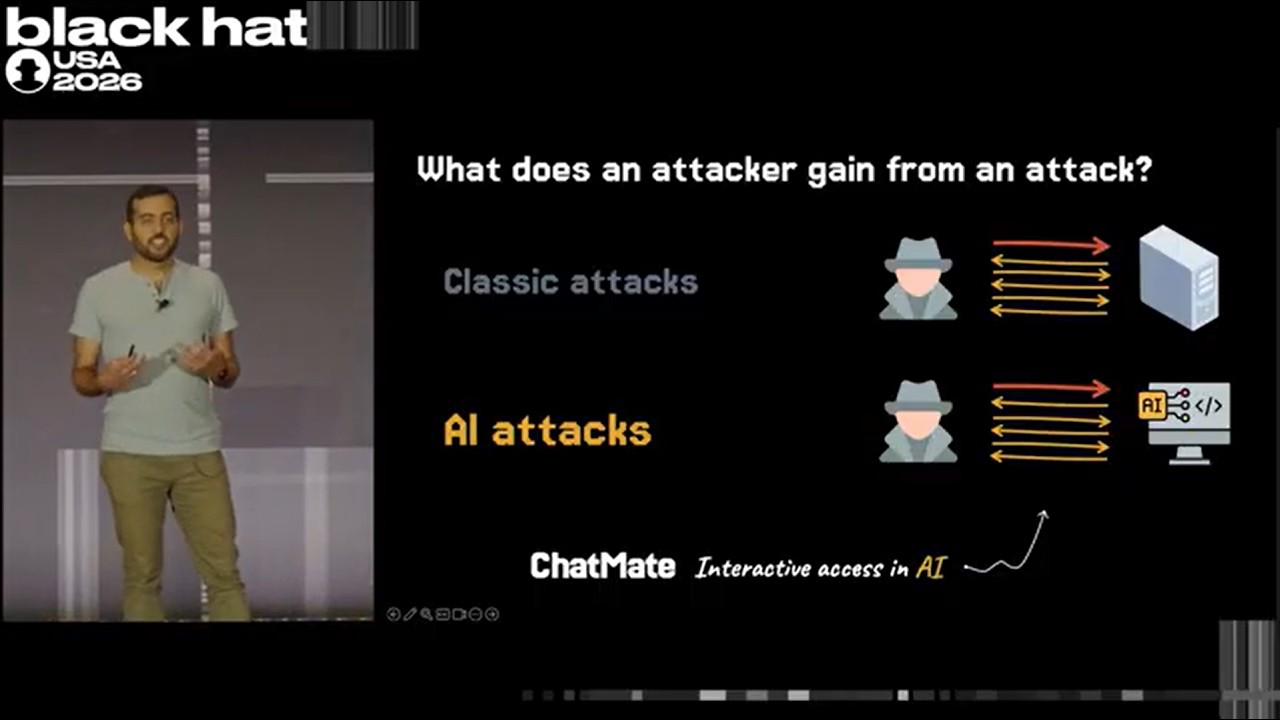
A recording of the Black Hat USA 2026 talk by Ori from Rubrik Zero Labs was published on YouTube, reconstructing a five-stage attack chain against Microsoft 365 Copilot. The first link was indirect prompt injection: the assistant processed a Word document whose content acted as instructions. This was followed by code execution in the Copilot sandbox, local privilege escalation, and arbitrary file writing to an internal Azure service. The chain concluded with a TOML injection and the use of /etc/ld.so.preload to achieve the sandbox escape. The technical key was CVE-2026-32193, rated CVSS 8.8 (High), a path traversal in Microsoft Azure Kubernetes Service that allows an authenticated attacker to execute code locally. After escaping the sandbox, the attacker gained interactive access to the victim's Copilot session and the ability to read SharePoint and OneDrive files within their tenant. Microsoft patched the vulnerability via MSRC and paid a $48,000 bug bounty. The author also notes that the Copilot daemon is not authenticated on localhost on AKS and Container Apps nodes with image streaming, meaning any SSRF in a workload on such a node is equivalent to root privileges on the node.
Context
Each link in this chain was previously known in isolation: indirect prompt injection via untrusted documents, local privilege escalation, and /etc/ld.so.preload as a sandbox escape primitive have been described in separate works. The value of the talk lies not in new primitives, but in the assembled end-to-end chain confirmed by a real CVE: the hypothesis that these links are sufficient to take an attack from a single document to cloud data has been practically verified. Equally important is what is absent from the attack: the model was not hacked; prompt injection serves only as the entry point, and compromise occurs at the code execution perimeter and in the cloud runtime. This shifts the focus of agentic system security from prompt filtering and alignment to sandbox engineering, tool permission scoping, and user identity inheritance in service calls. The pattern of implicit trust in localhost, which underpins the step between node services, belongs to a class of errors known long before assistants and is applicable far beyond a single product. Methodologically, the work appears as a benchmark for responsible disclosure: a full chain of stages, submission via MSRC, bug bounty payment, and free access to the full breakdown, indicating the validity of evidence rather than marketing.
Why This Matters for the Industry
For the AI industry, a specific mechanism has been demonstrated showing how prompt injection translates into the compromise of cloud infrastructure and corporate data: not "the model said a bad word," but five steps involving a real CVE and access to SharePoint and OneDrive files. The talk provides a checklist for agentic systems: session isolation between users, restriction of invoked tool permissions, propagation of user identity in backend calls, and hardening of the container runtime, including authentication of local daemons and control of writable configurations. The market impact is not limited to a one-off incident: since the breakdown is freely available, buyers gain a language for questioning agentic product vendors, and builders face a growing need for red-team testing of agents before deployment and security wrappers for thin-wrapper solutions. It is likely that the "prompt injection, code execution, sandbox escape" combination will be replicated in penetration testing practices against other assistants and agentic frameworks, turning the question of how isolation and permissions are structured in a specific agentic product from an abstract concept into a concrete procurement item.
Why This Matters for Users
Microsoft 365 Copilot users do not face an emergency phase: the chain relying on CVE-2026-32193 has been eliminated on Microsoft's side, so it is sufficient to maintain current product versions and not delay updates. Understanding the attack template is worthwhile even without engineering expertise: a single untrusted document processed by the assistant led to the reading of files across an entire tenant, so access control for SharePoint and OneDrive libraries and caution with untrusted documents remain meaningful even after the patch. Those building their own AI agents that read external documents and invoke tools should perform a direct inventory: what untrusted files does your agent ingest, what permissions do its tools have, how are sessions isolated between users, and are there unauthenticated daemons on shared nodes on localhost. The full breakdown of the chain is available for free on YouTube, allowing the recording to be used as a basis for internal testing of own systems.
What Is Not Yet Known / Limitations
The chain was demonstrated by one researcher on one product, and discussion of a new product standard is correct only as an interpretation: it will become a standard through reproducibility on other runtimes, and there is no data on such repetitions in the sources. Predictions about transferring the methodology to other assistants, the emergence of corresponding checks in red-team practices, and session isolation becoming a criterion for corporate procurement remain interpretations, not confirmed facts. There are also no public benchmarks for the resilience of agentic sandboxes in the sources. Finally, it does not follow from the published materials whether Microsoft changed the accompanying attack condition — unauthenticated access to the Copilot daemon on localhost on AKS and Container Apps nodes — or limited itself to fixing the path traversal CVE-2026-32193.
Sources
- Rubrik Zero Labs, Ori — ChatMate: Remote Prompt Execution on AI Assistants through Sandbox Escaping (Black Hat USA 2026, YouTube)
- Hacker News — Discussion of ChatMate: Remote Prompt Execution on AI Assistants Through Sandbox Escaping
- SiliconANGLE — AI sandbox escape uncovered in Microsoft Copilot flaw
Author
Look at AI, editorial team