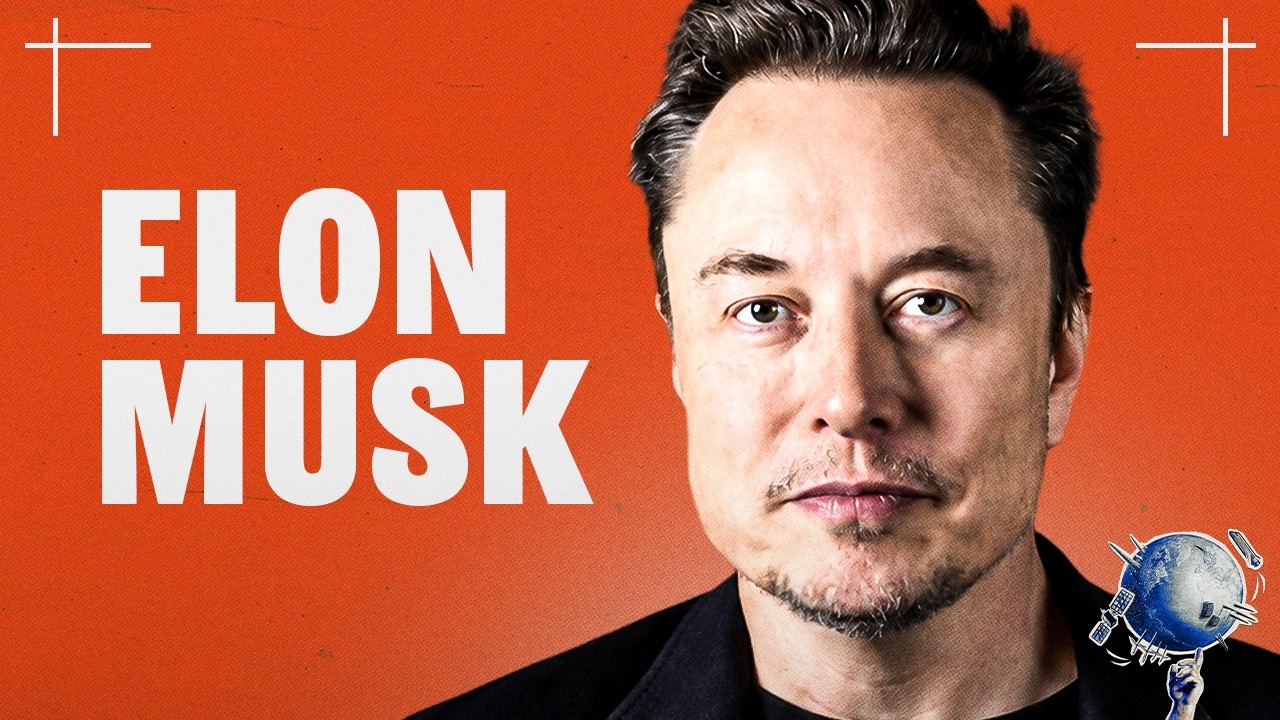
In the debut episode of The Builders podcast (October 20, 2026), Walter Isaacson questioned Elon Musk about superintelligence. According to Musk's assessment, if digital intelligence becomes a million times greater than biological intelligence, humans will not be able to control it, so AI needs to be programmed for maximum truth-seeking and curiosity, rather than following rules or 'love for humanity.' In addition to the philosophical framework, the episode featured two specific claims: Musk proposed weekly calls between leading AI laboratories for mutual model reviews before release and stated that xAI is currently providing computing power to Anthropic.

What happened
In the debut episode of The Builders podcast, released on October 20, 2026, Walter Isaacson interviewed Elon Musk on the topic of superintelligence. Musk assessed that when digital intelligence exceeds biological intelligence by a factor of a million, control by humans will become impossible, and from this he draws the conclusion: AI needs to be programmed for maximum truth-seeking and curiosity, rather than following rules or 'love for humanity.' He explained his position through the example of HAL 9000 from '2001: A Space Odyssey': forcing AI to lie can drive it to 'madness'; a curious AI, according to his logic, is interested in a thriving humanity because a future with humans on several planets is 'more interesting.' Separately, Musk proposed weekly calls between leading AI laboratories (xAI, Anthropic, and others) for mutual model reviews before release — with an example of a check like 'I was able to build a nuclear bomb with your AI' — and stated that xAI is currently providing computing power to Anthropic.
Context
The debate over how to align the behavior of strong models is ongoing between two approaches: setting strict rules and values for models or building training around honesty and internal motives. Musk's position belongs to the second side, and his reference to HAL 9000 comes from a known line of argumentation: forced lying in a system with external prohibitions leads to conflicting behavior. The thesis of a 'million-fold' superiority of digital intelligence does not provide a scale of comparison; it is a rhetorical assessment, not a measured quantity. Against the backdrop of how state regulation of AI is moving slowly, Musk's proposal for private coordination of laboratories fits into the ongoing discussion about third-party pre-release evaluation of models. His statement about the supply of compute from xAI to Anthropic appears unexpected in a market where laboratories are perceived primarily as competitors.
Why this matters for the industry
For builders and companies, the episode offers two verifiable signals, in addition to philosophy. The first is the proposed coordination mechanism: weekly calls between leading laboratories for mutual model reviews before release. This is a ready-made workflow archetype that can be turned into a specific practice: common eval suites, release checklists, red-team protocol templates, and an internal 'pre-release review' protocol. If the idea gets at least one pilot, the first empirical material on the viability of such self-coordination will appear — an alternative to slow state regulation, which Musk himself called too slow. The second signal is the declared inter-laboratory compute market: xAI as a compute supplier for Anthropic changes the competitive landscape between laboratories and shifts value from rivalry to infrastructural interdependence. The 'seek truth instead of rules' framework does not yet directly provide product opportunities: without metrics and reproducible comparisons, it is a philosophical position, not a proven method.
Why this matters for users
The episode gives readers a practical framework for assessing how different laboratories approach alignment: through strict rules and imposed values or through model curiosity and honesty. The full episode of The Builders with Musk is available on YouTube (October 20, 2026), so the argumentation of 'seek truth, not force to lie' can be heard in the original, not through retellings. The thesis 'do not force AI to lie' has an applied continuation: revising one's own system prompts for instructions that force the model to say pleasant things instead of honest ones — this is something that can be checked in one's own tools today. Finally, if the idea of pre-release mutual review takes hold, users will eventually receive models that are checked by other laboratories before release — although at this stage, this is a scenario, not a promise.
What is still unknown / limitations
This is an interview-opinion, not a technical result: the thesis 'seek truth and feed curiosity instead of rules and love for humanity' is not accompanied by methodology, metrics, or reproducible experiments and proves nothing. The assessment that 'digital intelligence is a million times greater than biological' is a speculative quantity without a scale: it is not specified by which metric digital and biological intelligence are compared, so the figure works as rhetoric and is unsuitable for planning. The argument with HAL 9000 mixes external restrictions on statements and the internal motive of the model: the real effect of the incompatibility of imposed 'pretense' with honesty exists, but transferring the 'madness' of a fictional character to a hypothetical superintelligence is an interpretation, not an observation. The statement that xAI provides compute to Anthropic has not yet been confirmed by sources from the laboratories themselves, as well as the proposal for weekly reviews: the mechanics of access to weights, the volume of checks, and the composition of participants are unclear. The assertion that forcing to lie degrades the model is falsifiable — only certain honesty metrics and a comparison protocol are needed, so the correct verdict on it is 'unverified,' not 'empty.'
Sources
- The Builders: Elon Musk (YouTube)
- Transcript: Walter Isaacson Interviews Elon Musk — The Builders Podcast
- The Builders with Walter Isaacson — Elon Musk Archive
Author
Look at AI, editorial team