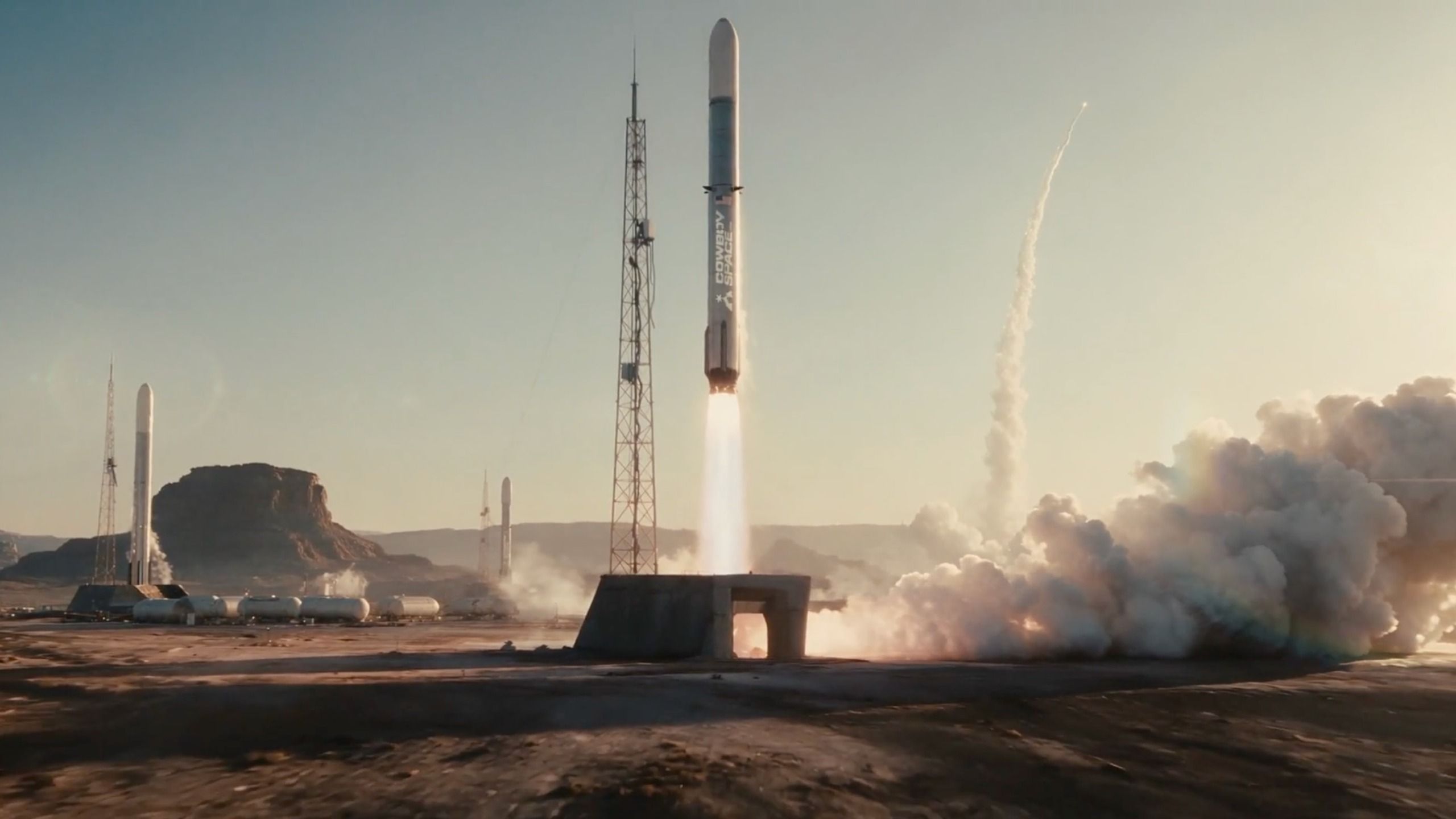
Cowboy Space, a Palo Alto-based company led by Robinhood co-founder Biju Bhatt, unveiled the Big Iron rocket on October 26, 2026, at the Big Sky Rising presentation. The rocket is designed to launch 20,000 data center satellites into low Earth orbit, forming a constellation called Stampede. The key engineering concept is that the rocket's upper stage becomes a satellite with approximately 1 MW of computing power after reaching orbit. The project has not yet been validated by any flight, so all cited specifications remain company goals rather than verified results.
What happened
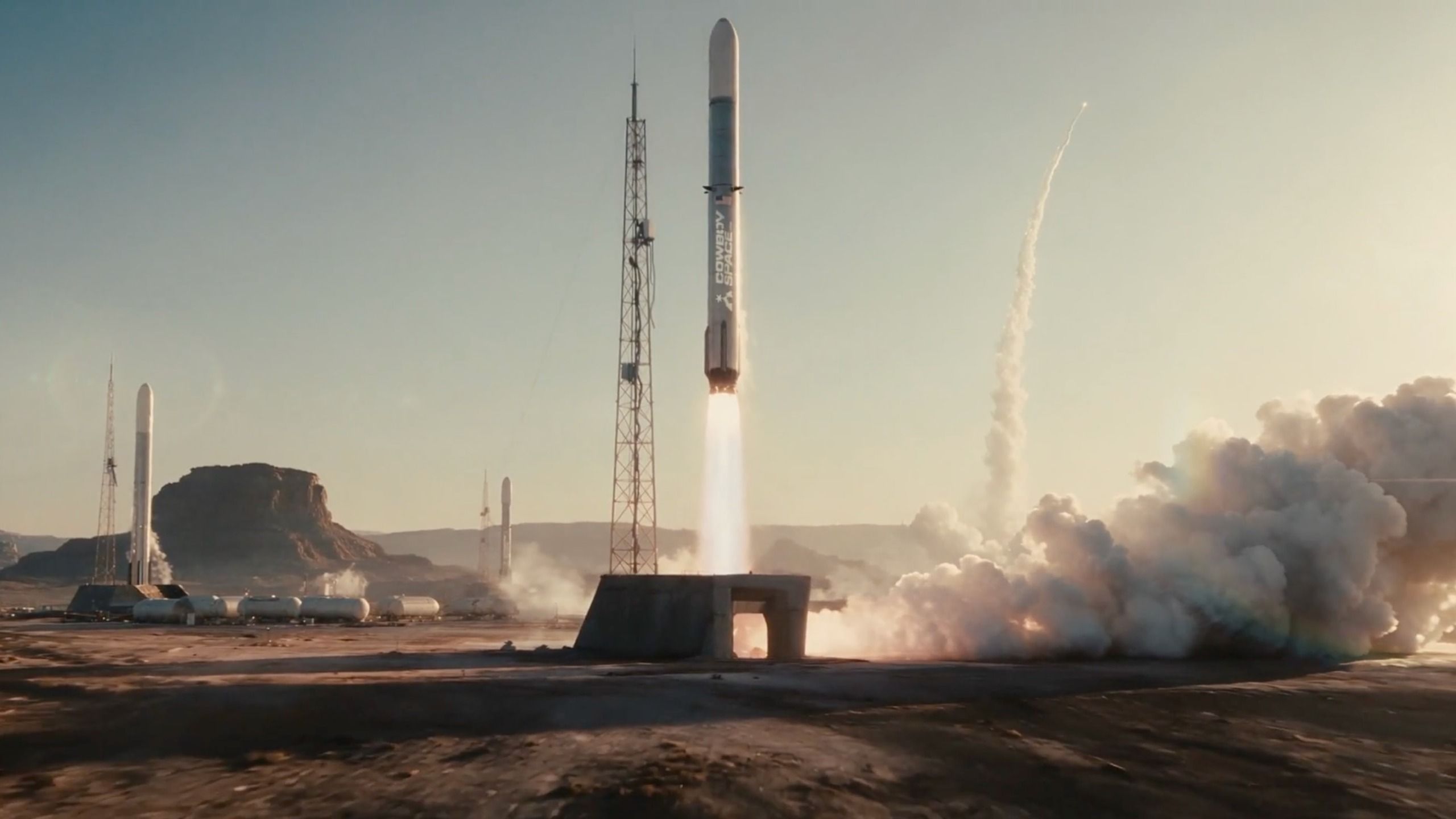
Big Iron is a two-stage steel rocket, 282 feet (86 meters) tall and 4.7 meters in diameter, powered by Clydesdale methane-oxygen engines: nine on the first stage and one on the second, in a layout similar to Falcon 9. The first stage is reusable, while the second stage transforms into a data center satellite weighing approximately 15,000 kg after reaching orbit. With deployed solar panels, the satellite extends to 132 meters and carries approximately 1 MW of computing power across five GPU racks. The company plans to deploy the Stampede constellation using these stage-satellites. Alongside the rocket, the company announced Big Iron Express, a commercial service for launching third-party payloads, and noted that the Reason-1 satellite is already in operation. The first Big Iron launch is scheduled for December 2028.
Context
The push for orbital data centers is driven by limitations in ground-based infrastructure: growing AI workloads are hitting energy and cooling deficits, and orbit is intended to decouple computing from these terrestrial constraints. The central unresolved problem for computing in microgravity remains heat dissipation from GPUs, to which Cowboy Space responds with a radiator made from the rocket's fairing. The company was founded in 2024 in Palo Alto under the name Aetherflux. The only element of its program that can currently be verified by flight is laser energy transmission from orbit, which provides objective metrics of engineering maturity well before the Big Iron launch.
Why this matters for the industry
For the industry, this is a claim to a new class of orbital computing platforms where the rocket and satellite are designed as a single system. The modular architecture, where the upper stage immediately becomes a data center, potentially simplifies the serial deployment of compute in space and could redefine the economics of AI infrastructure. The total claimed scale of the constellation is approximately 20 GW of computing and energy power, transforming the project from a single rocket task into a challenge for an entire production ecosystem. For startups and ML teams, the news is primarily a signal of an emerging category: buyers, commercial terms, and prices have not been announced, so it is too early to incorporate the system into strategy, but there is reason to closely monitor the emergence of another hypothesis about future computing infrastructure.
Why this matters for users
For readers and engineers, the practical impact is currently zero: no data center satellite has flown, and there is no access to the system, API, or pricing, so there is no need to change current ML pipelines or include orbital compute in product plans. The real value of the news is signal-based—another ambitious player has appeared at the intersection of space and AI infrastructure. A reasonable action is to monitor honest indicators: fire tests of the Clydesdale engine and published metrics from Reason-1 regarding laser energy transmission will show whether the presentation is turning into verifiable engineering or remains pre-launch hype.
What is still unknown / limitations
All specifications for Big Iron and the Stampede constellation remain presentation goals: there are no methodologies, calculations, or independent measurements in the sources. The claimed cooling solution exists only on paper—there are no tests of the unit or published thermal balance, so it cannot be attributed a level of verified hardware development. Buyers and prices remain unknown, as does the serial production required for the launch rate indicated by the program's scale; the first flight date is a company plan, not a guaranteed event.
Sources
- Space.com: Cowboy Space unveils 'Big Iron' rocket to launch 20,000 AI data centers
- Hacker News: Cowboy Space unveils 'Big Iron' rocket to launch 20k AI data centers
Author
Look at AI, editorial team