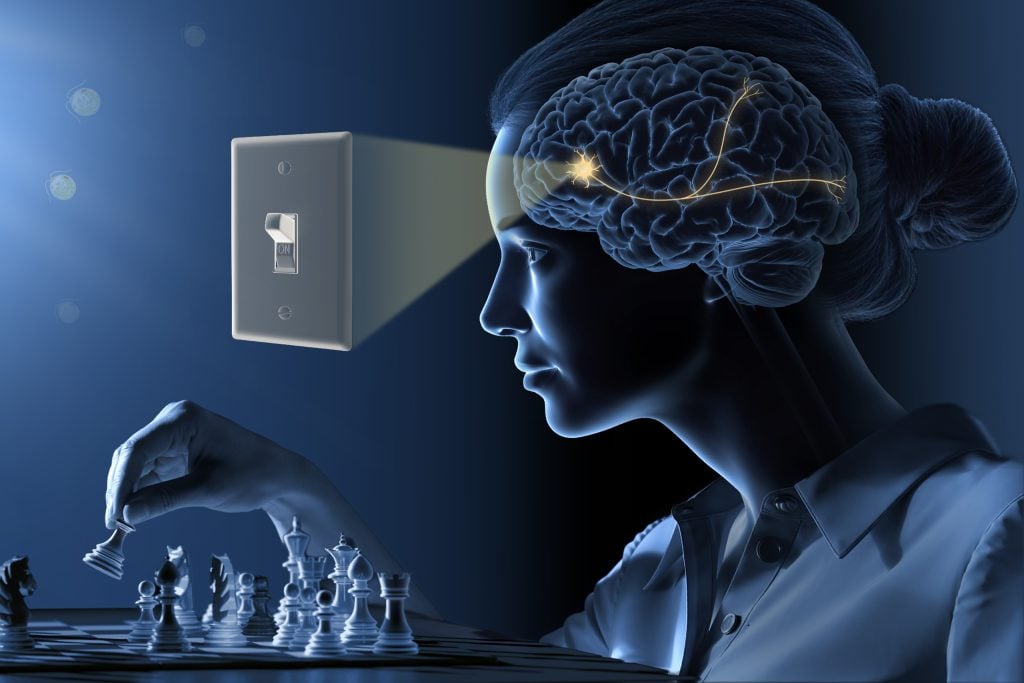
The 2026 Nobel Prize in Physiology or Medicine was awarded to Karl Deisseroth (Stanford/HHMI), Peter Hegemann (Humboldt-Universität zu Berlin), and Georg Nagel (Universität Würzburg). The award was based on their work on light-gated ion channels, from which optogenetics grew — the ability to start and stop the activity of selected neurons with a flash of light. The road of this technology began with a single-celled alga and, over two decades, went from basic biology to clinical trials.

What happened
The Nobel Committee honored the trio of scientists “for discoveries in the field of light-gated ion channels and optogenetics.” The prize fund of 12 million Swedish kronor is divided equally among the laureates. Behind the formulation lies a specific chronology: in the early 2000s, Peter Hegemann and Georg Nagel found channelrhodopsins in the single-celled alga Chlamydomonas, in 2005 Karl Deisseroth introduced the channelrhodopsin gene into rat neurons and triggered a nerve impulse with a flash of light, and in 2007 this “light switch” worked in the brains of live mice. The prize marks a mature technology, not a new development.
Context
Channelrhodopsins are protein channels that open from blue light and allow charged ions to pass through. Algae need this mechanism to find illuminated areas, but it turned out to be transferable to neurons: it is enough to build a channel gene into a cell to make it controllable by light. The significance for science is that the way of working itself changed: previously, neuroscience mainly observed and mapped which brain areas are active, now it is possible to precisely turn on and off specific types of neurons with millisecond precision and immediately check what really changes in behavior. Today, optogenetics has become a standard laboratory standard, so the award confirms the maturity of the field, not reopens it.
Why this matters for the industry
There is no direct effect for AI builders: the sources do not mention a public API, SDK, or open datasets, and optogenetics is a wet-lab technology without a product surface, there is nothing to integrate and no production pipeline changes. The significance of the prize for the industry is methodological: it authoritatively confirms the value of causal interventions and long-term replication before rapid validation, mirroring the same logic that distinguishes causal experiments from observational data in model evaluations. The nearest practical effect is educational: reviews, updated courses, conference reports, and explanatory content are likely, the cost of which is reduced by the free materials of the Nobel Committee. On the horizon of a couple of years, the working hypothesis is the growing demand for hybrid teams at the intersection of ML and neurophysiology, if clinical work on optogenetics continues to move.
Why this matters for users
The easiest way to imagine the effect is this: one short blue pulse causes the needed neuron to fire, while neighboring cells are not affected. On this principle, optogenetics is already studying depression, addictions, epilepsy, and Parkinson's disease, and clinical trials are trying to restore vision in some forms of hereditary blindness. This is also a reminder of where big technologies come from: the entire chain of “build in a light-sensitive protein — control with light” grew out of curiosity about how the alga Chlamydomonas swims toward the light. Those who want to understand more deeply will find an entry into the topic in the nine official illustrations of the Nobel Committee, free for non-commercial use, and in the scientific backgrounds of the committee.
What is still unknown / limitations
The timing and results of clinical work are unknown: the sources have no data on when the trials to restore vision in hereditary blindness will give a readable result. The expected surge of attention to optogenetics is a cautious interpretation: no measurable shifts in funding or publication dynamics are visible from the available data, and it needs to be checked in fact. There is no direct transfer to ML methods from the input data, and reasoning about the “biological plausibility” of AI architectures based on this prize is not supported by data.
Sources
Author
Look at AI, editorial team