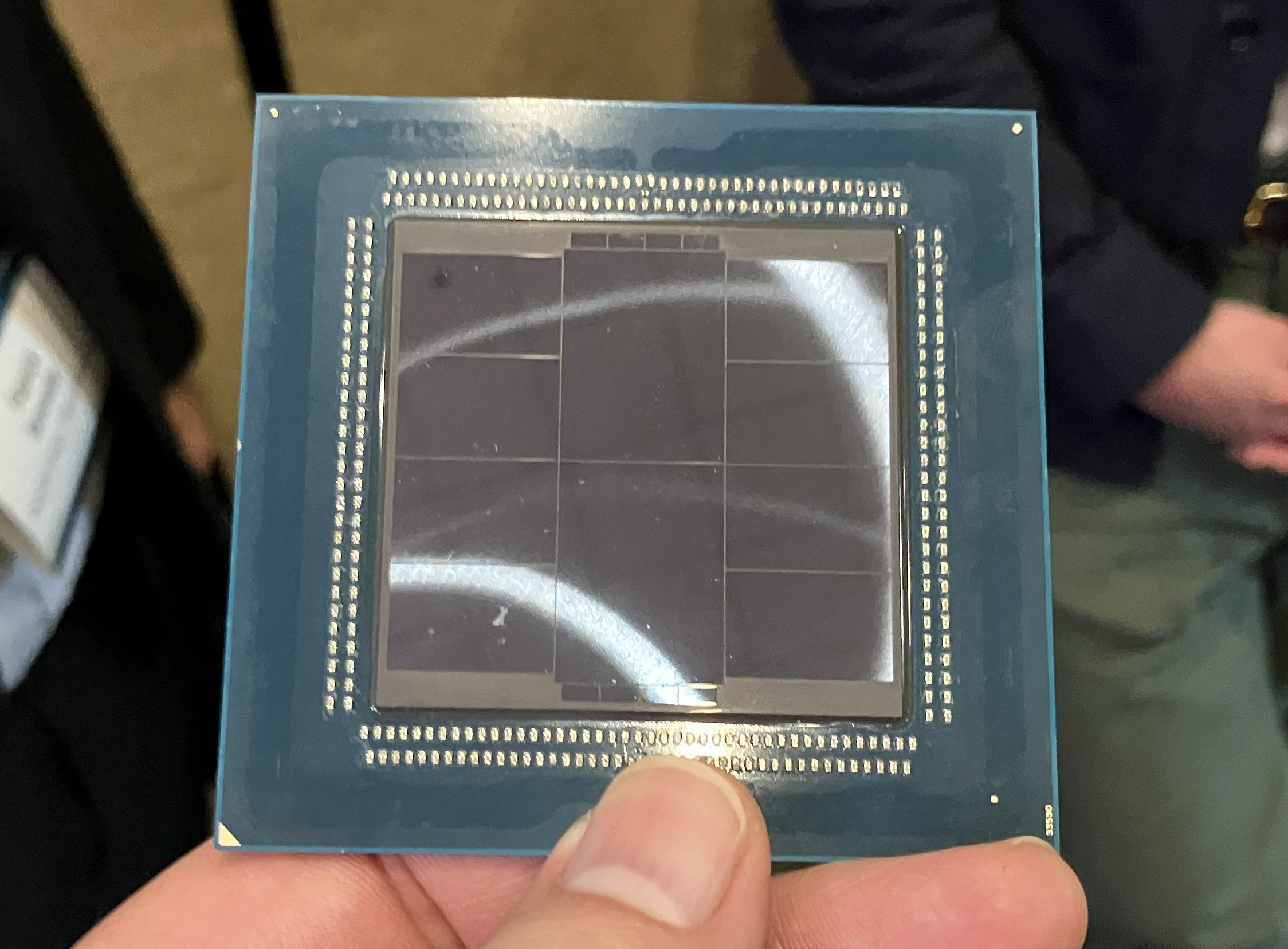
ServeTheHome published a detailed breakdown of the upcoming AMD EPYC 9006 “Venice” server lineup on Zen 6 cores (TSMC, 2 nm) on September 29, 2026, organizing the processors by agentic AI workload types; key specifications are also confirmed by AMD’s official blog. The higher-end SP7 socket delivers up to 256 cores and 512 threads in a 600 W package and up to 1.6 TB/s of memory bandwidth via 16 channels of DDR5 MRDIMM 12800 MT/s, while the new SP8 socket covers a range from 8 to 128 cores at 130–400 W. The lineup also includes special variants: the 9006X for HPC with a record 1.1 GB L3 cache and the 9006 LP — the first server EPYC with LPDDR5X for AI racks. AMD promises up to a +174% geomean win in an agentic pipeline benchmark against the flagship Intel Xeon, but this is a vendor methodology without independent verification, and the lineup has not yet reached mass availability.

What happened
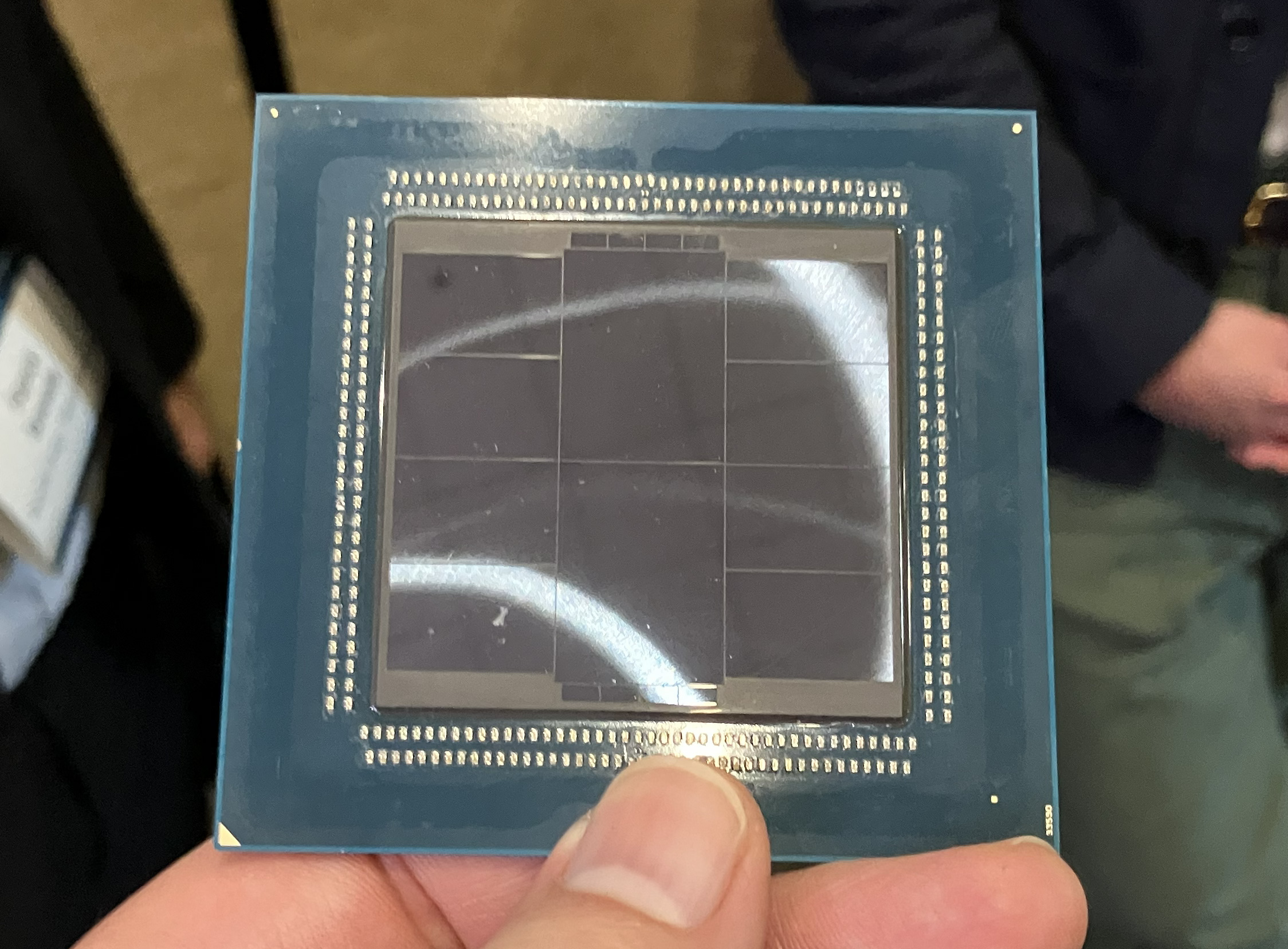
On September 29, 2026, ServeTheHome published an in-depth analysis of the AMD EPYC 9006 server processor lineup under the codename “Venice” — the first EPYC generation based on Zen 6 cores, manufactured on TSMC’s 2 nm process. The authors mapped the upcoming SKUs to agentic AI workload types. The higher-end SP7 socket accommodates chips with 256 cores and 512 threads at a 600 W limit; the 500 W version is claimed to have 96 cores at up to 5 GHz and 1.6 TB/s of memory bandwidth across 16 channels of DDR5 MRDIMM 12800 MT/s. The new SP8 socket covers a range from 8 to 128 cores at 130–400 W power consumption. Two specialized directions are highlighted separately: the EPYC 9006X for HPC with a record 1.1 GB L3 cache for server processors, which will ship later than the other SKUs, and the EPYC 9006 LP — the first server EPYC with LPDDR5X memory, formally belonging to the “Verano” platform rather than “Venice.” AMD’s official blog (July 2026) confirms the key specifications — 256 cores, PCIe Gen 6, MRDIMM 12800 MT/s — and publishes agentic pipeline benchmarks showing the flagship EPYC 9996 beating the Intel Xeon 6980P by 174% in geomean. Starting with the sixth generation of EPYC, AMD is also dropping the term TDP in favor of “Default CPU Power.”
Context
Background: agentic AI has been formally recognized for the first time as a “system-level” CPU workload. In an agent pipeline, orchestration, vector retrieval, API gateways, and databases load the processor no less than generation on accelerators, so the real news is not about GPUs but about the CPU layer of agentic pipelines. The pipeline in AMD’s benchmark — NGINX, vLLM Llama-3.1-8B, FAISS, TPx-AI, TPC-H/TPC-C — essentially provides a reference map of an agent’s product architecture: web gateway, model generation on vLLM, vector search, orchestration, and transactional tests. The special variants of the lineup have direct predecessors: the 9006X with record L3 continues the line of Milan-X from 2022 and Genoa-X from 2023, while the 9006 LP with LPDDR5X brings the server CPU closer to the concept of NVIDIA Grace/Vera nodes, where memory is placed next to the processor; the AI rack Helios is built on this architecture, and it is with this that ServeTheHome compares the LP variant. Against this backdrop, segmentation of server portfolios is no longer a question of clock speed but becomes a question of whole-rack architecture.
Why this matters for the industry
A structural signal for the industry is more reliable than any individual benchmark: the market is converging on a “two-socket” model of the server portfolio, where the dense high-end segment is covered by SP7 with maximum cores and memory bandwidth, and typical racks by the energy-efficient SP8. AMD is mirroring Intel’s division into Xeon 6700P and 6900P, meaning competition is already being waged not by individual chips but by comparable lineups in logic. Data centers and OEMs are already using this segmentation as a framework for planning server purchases for agentic pipelines and comparing them with Xeon 6900P/6700P, even though mass availability of the chips is still ahead. The second front — AI racks: if the LPDDR5X variant 9006 LP takes hold as an alternative to NVIDIA Grace/Vera, a three-way competition among AMD, Intel, and Arm will emerge, which in the long term could drive prices down and raise memory bandwidth per watt. The third — product unit economics: as the number of active agents grows, the share of CPU stages (gateway, orchestration, vector databases) in the infrastructure bill is rising, and companies now have a formalized metric by which this part of spending can be planned.
Why this matters for users
The analysis gives readers a map of which EPYC configurations to expect for which tasks: for dense clouds and heavy databases — SP7 processors with hundreds of cores and huge memory bandwidth; for energy-efficient racks — SP8; for HPC and latency-sensitive tasks — the cache-heavy 9006X; for AI racks with accelerators — the 9006 LP with LPDDR5X. Immediate practical benefit is possible even without a purchase: the list of stages in AMD’s agentic benchmark should be taken as a checklist and used to profile your own system — to see what share of spending goes to the CPU parts of the product (gateway, retrieval, orchestration, databases) and to recalculate instance choices and limits in advance. For those running self-hosted RAG or inference of small models, the appearance of server LPDDR5X hints that the CPU loop of agentic pipelines risks emerging as a separate class of nodes with its own economics. There is nothing to buy yet: the previous generation of EPYC 9005 continues to work in production, so the decision to migrate is best postponed until independent measurements and the appearance of the first serial systems on SP7 and SP8 from OEMs and in the cloud.
What is still unknown / limitations
The main weakness is the quantitative promises. The claimed +174% geomean against Xeon 6980P is a vendor benchmark: software versions, context length, batching, parallelism, and per-stage breakdown are not disclosed for it, and absolute metrics are not provided, so until independent runs this is a classic cherry-picking risk. The choice of vLLM with Llama-3.1-8B strengthens doubts about the transferability of the result: this is a small model, and the flagship’s results are unlikely to transfer to large models and long context, where the bottleneck shifts from the processor to memory bandwidth. The sources do not provide prices or launch dates for most SKUs in the lineup: it is only known that the 9006X will ship later than the others, and the timing of mass availability for SP7, SP8, and the 9006 LP (“Verano”) variant is not specified. The comparison of 9006 LP with NVIDIA Grace/Vera is ServeTheHome’s assessment, not a measured comparison; the ServeTheHome article itself is a review of expected SKUs, so the layout may be refined before the official launch of the lineup.
Sources
- ServeTheHome — Where We Expect AMD EPYC 9006 CPUs in the Era of Agentic AI
- AMD Official Blog — Agentic AI: AMD EPYC 9005 CPUs Wins Today, EPYC 9006, formerly code-named Venice, Takes It to a New Level
Author
Look at AI, editorial team