Google is moving Gemini customization from Gems to a new 'skills' format: starting November 17, 2026, Gems in personal accounts will automatically be rebuilt as skills, remaining available until migration. Gems will be disabled for Workspace business and non-profit accounts in March 2027, for educational accounts in June 2027, and Opal mini-apps and Labs versions of Gems will be removed in November 2026. The new format is built around a declarative SKILL.md file and matches the description of Anthropic's Agent Skills approach, so it could become a common standard for describing repeatable operations across the two largest vendors.

What happened
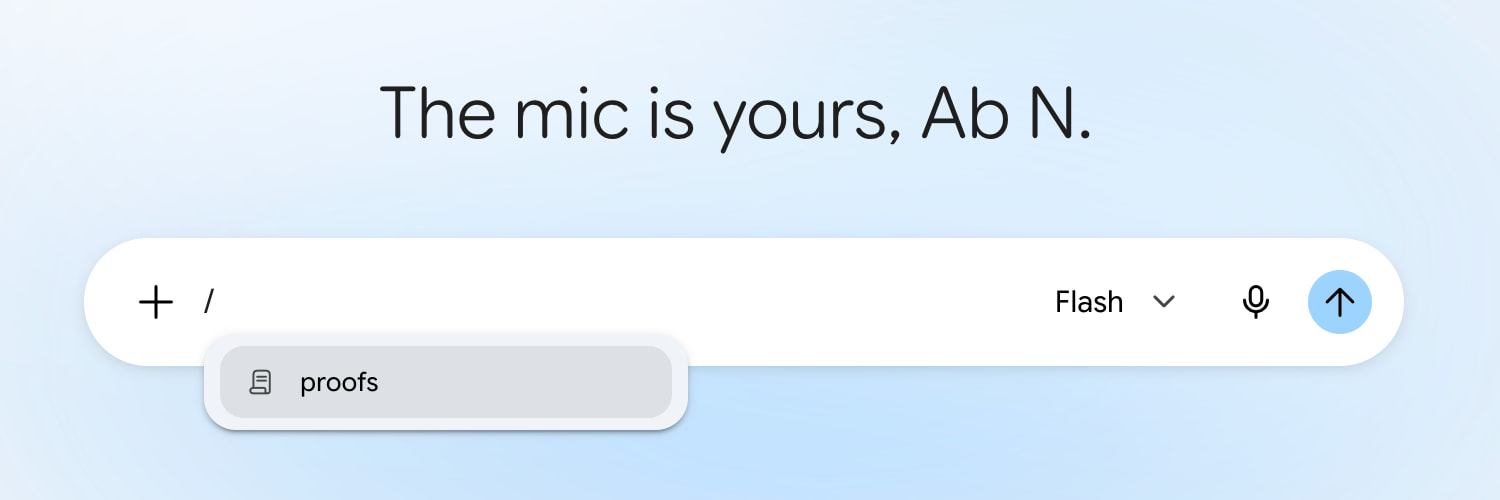
The company set a migration timeline: starting November 17, 2026, all Gems in personal accounts will automatically be rebuilt as skills, and until that date they can be used as before. Gems will be disabled for Workspace business and non-profit accounts in March 2027, for educational accounts in June 2027; in parallel, Opal mini-apps and Gems from Google Labs will disappear in November 2026. A skill differs from a Gem in mechanics: it is invoked with the '/' command directly in any chat, Google later promises support for the @ symbol, the model can connect a suitable skill on its own, multiple skills can be combined in one dialogue, and up to 100 skills can be active simultaneously. A skill can be created in a dialogue with Gemini, using a ready-made or empty template, or by uploading a SKILL.md file. Text, code, JSON, YAML, CSV, TOML, and SQL configs, PDFs, and images are accepted; Word documents, Excel spreadsheets, and scripts with calls to external sites are not supported. The total file limit for a skill is 100 MB.
Context
Gems appeared in 2024 as the main way to extend Gemini's behavior, and until now it was a closed mechanic of a single application. The new format reproduces the approach of Anthropic Agent Skills: a skill is described by a declarative SKILL.md file, the model finds it by name and description, and loading is lazy — only when the skill is actually needed. At the same time, this is a convergence with Gemini Spark's tasks and schedules: Google is bringing customization, automation, and planning to a single model for describing repeatable operations. The model's own capabilities are not changing — the work is on the layer above it, in the area of context management and agent orchestration, without scientific novelty, but with real systemic significance. The key consequence of the new format is that customization becomes a text-based versionable artifact that can be stored, reviewed, and reused, and skill selection is based on natural language triggers of the form 'Use when…' in the description.
Why this matters for the industry
For the industry, the convergence of formats is more important than replacing one feature with another: two largest vendors describe repeatable operations with a single declarative file, which establishes a potentially cross-vendor standard. For product builders, a portable layer appears: SKILL.md can be versioned in git, cataloged, and designed as an independent artifact, not as a setting within a single chat application. The cost of creating and porting repeatable operations drops to almost zero — it is a text file created directly in a dialogue — and within Gemini, a cheap channel for distributing skills opens up. The downside is that the channel is currently single and controlled by the platform itself, and this is a feature of a web and Mac application, not an open platform surface. Finally, the fact that Gems, Opal, and Labs versions of Gems are being removed in one migration cycle means that the ecosystem of ready-made Gem packs will require rebuilding — this opens a window for skill audit and conversion tools.
Why this matters for users
There is no need to do anything immediately: Gems will continue to work until they are disabled in your account type, and scenarios can be transferred either manually or automatically. For manual transfer, you need to download files from the 'Knowledge' of the desired Gem, create a folder with the skill name strictly in lowercase letters with hyphens, select 'Create manually' in Settings → Skills, download a zip with SKILL.md, and upload it along with the files using the 'Replace skill' option in the web version or Mac application. The second path is to wait for the automatic transition in November 2026, which will transfer both the Gem itself and supported files, after which it is worth checking that everything was transferred correctly and nothing was lost. When writing skills, Google advises starting the name with an action verb, for example plan-meal-from-recipe. It is reasonable to check the skill invocation with the '/' command and the behavior of multiple skills in one dialogue in advance, and to format new daily scenarios immediately as SKILL.md artifacts, not as new Gem settings.
What is still unknown / limitations
The thesis about portable skill libraries between Gemini and the Anthropic ecosystem is currently a hypothesis: the material only mentions that the SKILL.md format matches the description of Anthropic Agent Skills, and actual compatibility, including directory structure, is not confirmed. Automatic skill connection works on natural language triggers, but metrics for the accuracy and completeness of skill selection, as well as a scheme for resolving conflicts between multiple active skills, have not been published. The stated maximum of 100 simultaneously active skills raises the question of context budget: descriptions consume tokens, but the degradation threshold and the method of injecting descriptions into the prompt are not disclosed. The first iteration does not work with Canvas, Deep Research, Guided Learning, and built-in video and music generation; skill sharing and support for files from Google Drive are promised later, meaning there is no full functional parity with Gems yet. Finally, at the start of the automatic transition, there is a risk that not all files will be considered supported and some configured scenarios will be lost.
Sources
Author
Look at AI, editorial team