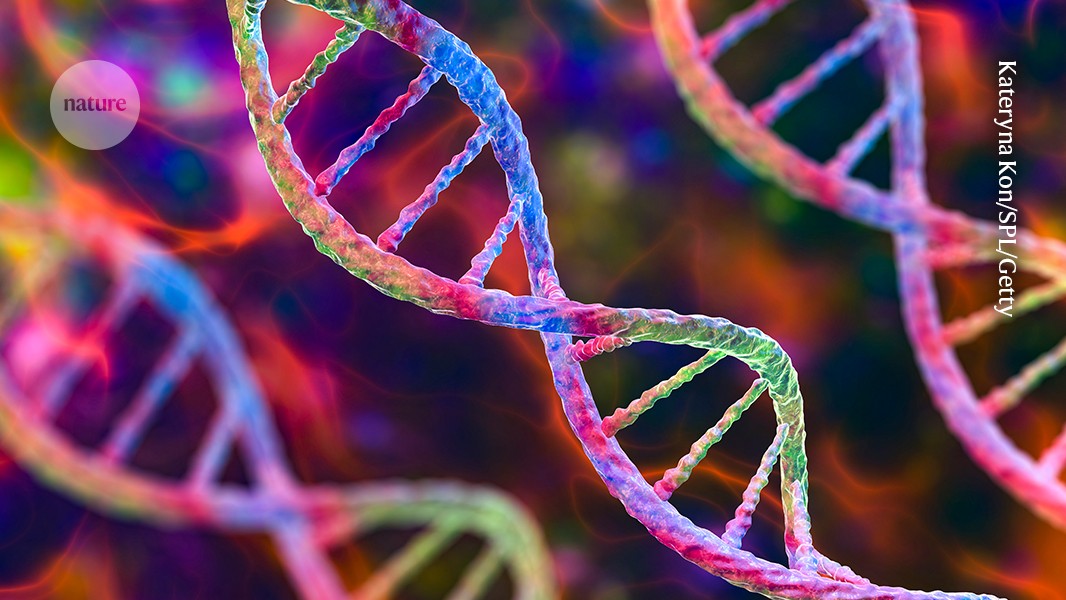
Anthropic announced the first result from its 'wet' biology lab, opened in spring 2026 in the San Francisco Bay Area: about 950 autonomous Claude-based AI agents scanned a database of approximately 1.9 billion protein clusters in 21.5 hours, finding a previously undescribed enzyme system ART in bacteriophage DNA. Structurally, it resembles CRISPR — the 'molecular archive' that made genome editing programmable — but the function of the new system has not yet been proven, and the search itself is not reproducible upon repeated runs. Today, this is not a biological discovery, but the first public precedent: agentic AI search produced a testable hypothesis for a real laboratory.

What happened
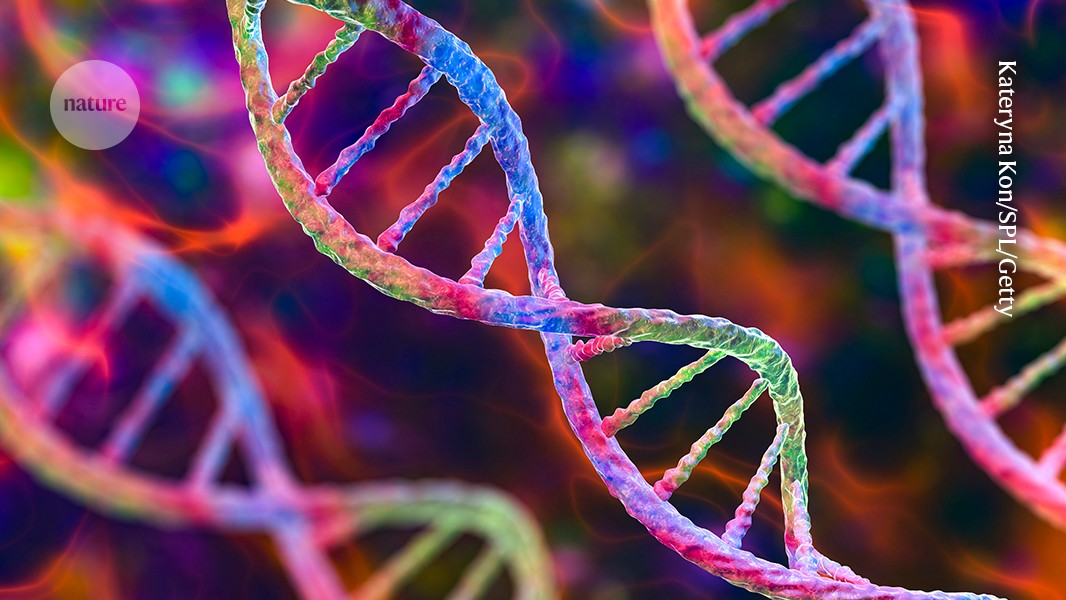
A pipeline of approximately 950 autonomous Claude-based agents processed 215.6 million tokens in 21.5 hours and went through a database containing about 1.9 billion protein clusters. In the DNA of bacteriophages — viruses that infect bacteria — the system identified a previously undescribed enzyme system called ART (array-associated reverse transcriptases). It includes a reverse transcriptase, a neighboring partner gene, and a long array of evenly repeating DNA sequences, structurally similar to a CRISPR array. A preprint describing the finding was posted on the alphaXiv platform on September 23, 2026.
Context
CRISPR became a programmable genome editing tool largely because its repeat array works as a 'molecular archive' of RNA instructions: the system memorizes fragments of genetic material from foreign invaders and uses these records to target a goal. The similarity of ART to such an array is currently an analogy at the structural level, not the functional level: behind CRISPR is proven molecular mechanics, while for ART its existence is only assumed. Anthropic's 'wet' lab was opened in spring 2026 specifically to turn such computational leads into testable hypotheses, and the ART finding became its first public result. However, a similar reverse transcriptase system was previously described by a Stanford team, so the claimed novelty shifts from biology to methodology: not the structure itself, but the fact that agentic search independently 'fished it out.'
Why this matters for the industry
For the AI industry, this is the first publicly stated case where a swarm of LLM agents in a single run found a structure in billions of protein clusters that previous research missed — that is, agentic search of genomic databases demonstrated the ability to formulate testable hypotheses for the lab, not just process texts. At the same time, the case marks the boundary of the method: the final word remains with physical experiments and independent validation by the community, and the stochastic nature of such pipelines makes reproducibility a key requirement for their evaluation. There is no ready-made product behind this yet: the pipeline is internal to Anthropic, and no public API, pipeline description, or data on cost and latency has been published, so builders only have access to the pattern architecture — massive fan-out of agents over a large corpus, structural filters, deduplication, and output of testable hypotheses.
Why this matters for users
For readers, the main point is not the finding itself, but a shift in framing: LLM swarms are publicly framed for the first time as a source of testable hypotheses for real labs, not just a tool for working with text. For those building agents and tool-use pipelines, the case provides a warning: a unique finding from a single run does not yet make the pipeline reliable, so such systems will need their own reproducibility criteria, deterministic runs, and tracking of hypotheses until lab verification. Ordinary users have nothing to change: no new drug or new genome editor follows from this result yet, and the nearest practical effect is a shift in expectations from 'AI writes texts' to 'AI proposes hypotheses that humans test.'
What is still unknown / limitations
The function of ART is not established: the paired enzyme that cuts DNA has not been found, and there is no data that the system works as immunity or a genome editor — the analogy with CRISPR is structural, not functional. In 10 repeated runs, the agentic search did not reproduce the finding even once, so the statistical reliability of the pipeline is not proven. The preprint was posted on alphaXiv on September 23, 2026, and has not undergone peer review; a similar system was previously described by a Stanford team, and the correctness of the independence claim requires cross-checking of the two works. Pipeline details, its cost, and access conditions for external researchers have not yet been disclosed, although Anthropic invites scientific groups to study ART.
Sources
- Nature news: Anthropic's AI biolab finds 'CRISPR-like' DNA in viruses. What's next? (Heidi Ledford)
- TechCrunch: Anthropic says its biology lab has already found something big
- Hacker News discussion: Anthropic's AI biolab finds 'CRISPR-like' DNA in viruses
Author
Look at AI, editorial team