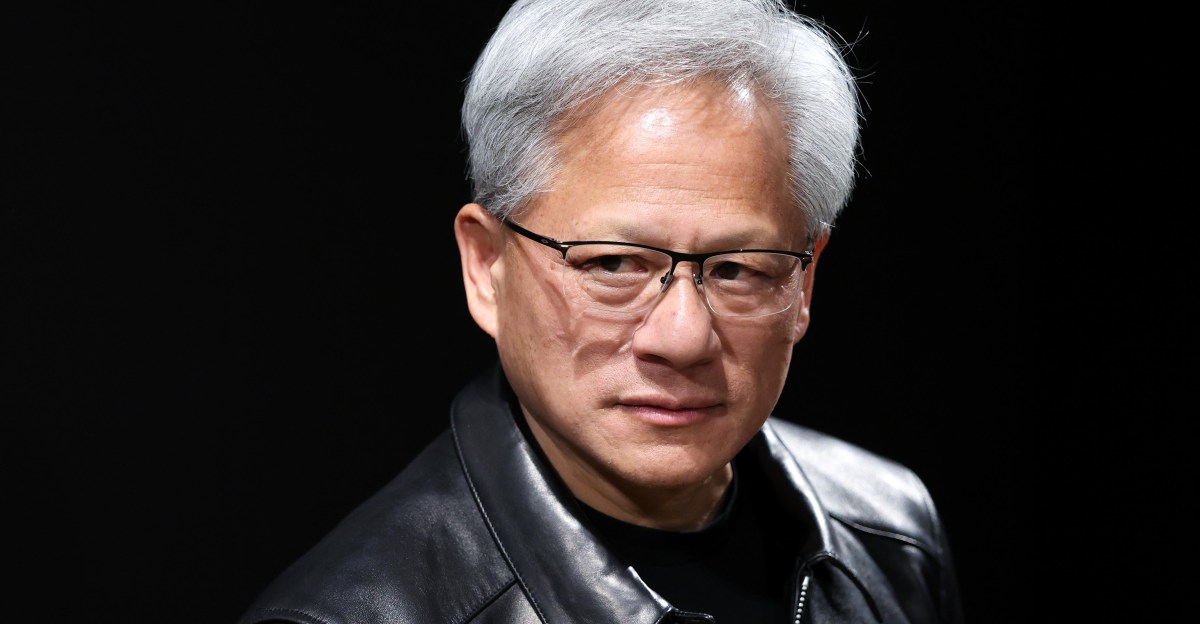
NVIDIA CEO Jensen Huang stated in The Ezra Klein Show podcast that AI is the 'best opportunity' to deal with climate change, but first the industry will cause 'enormous pain and suffering': for the next few years, data centers will have to be powered by fossil fuels. The Verge columnist Justin Calma called such logic 'supervillain' rhetoric and reminded of scientists' forecasts: up to 1,300 premature deaths and over $20 billion in healthcare costs by 2028 due to air pollution around AI infrastructure.

What happened
The New York Times published a transcript of The Ezra Klein Show podcast episode featuring NVIDIA CEO Jensen Huang on September 23, 2026. In the conversation, he linked the promised AI benefits for the climate with the admission that the transition period will be passed on fossil fuels, as there is 'simply not enough' sustainable energy. The response was quick: on September 24, The Verge columnist Justin Calma published a column comparing Huang's reasoning to Thanos's logic and characterizing it as 'supervillain' rhetoric. Huang's phrase 'in order to save you, they've got to hurt you first' was featured in the title of a separate discussion on Hacker News.
Context
The weight of the statement is set by the speaker's position: NVIDIA accelerators are in most data centers, and Huang's personal fortune is estimated at approximately $192.6 billion, meaning he directly benefits from the continuation of infrastructure growth. The Verge's critical analysis provides data contradicting the thesis of a deficit: wind and solar generation is cheaper than new gas and coal plants, meaning the 'dirty' scenario is a matter of choice, not technical inevitability. This choice is political: the Trump administration is stimulating gas and coal specifically for data center needs. The scale of the possible price of such a path was assessed by a group of researchers from UC Riverside, Caltech, and Rochester Institute of Technology, whose forecast of premature deaths and healthcare costs by 2028 is cited in The Verge column.
Why this matters for the industry
For the industry, this is a programmatic defense of the fossil fuel phase of AI infrastructure growth from the very top: the head of a company whose chips are in most data centers justifies temporary emissions growth with the formula 'first harm, then benefit.' Such rhetoric simplifies lobbying for new gas and coal capacity for data centers and simultaneously gives data center critics a ready counterargument: a dirty build-out is a government choice, not an inevitability. Practically, energy has already become an operational constraint: queues for grid connections and rising tariffs are pressuring capacity planning and inference prices, so energy costs and carbon footprint should be factored into the unit economics of AI features right now. If the build-out follows the gas-coal scenario, the industry will face by 2028 the measurement of whether health forecasts near data centers are confirmed, and by 2030 — a conflict over the Paris Agreement goal to halve emissions. The product fork is also marked: niches of data center impact transparency, carbon-aware load planning, and carbon reporting may grow, but in the published materials there is not yet a single released product or API for these tasks.
Why this matters for users
For the reader, this is a dispute over who will pay for the AI boom. Decisions on data center power directly affect electricity tariffs in the regions where they are built, the volume of local protests against new sites, and the health of people living nearby. While Huang's statement remains rhetoric rather than a completed price shift, but it is precisely such formulations from the top of the industry that become an argument in disputes over new power plants and data center grid connections. You can check the primary sources yourself: the conversation transcript is published in The New York Times, and the critical analysis is in The Verge column dated September 24, 2026.
What is still unknown / limitations
The only evidence of a sustainable energy deficit is Huang's own words; there is no independent data in the published materials confirming the inevitability of the fossil fuel phase, and The Verge provides opposite market data on the cheapness of wind and solar generation. The statement comes from a party directly interested in data center expansion, so it is correct to consider it as the position of an interested player, not an established technical necessity. The UC Riverside, Caltech, and Rochester Institute of Technology assessment is a forecast on the horizon up to 2028, not already measured damage. Open questions remain about which energy track the industry and US authorities will choose and how quickly energy consumption per request will decrease — this determines whether the 'dirty' scenario is realized.
Sources
- Jensen Huang talks about AI and climate change like a supervillain — The Verge
- Hacker News discussion: Jensen Huang says with AI 'in order to save you, they've got to hurt you first.'
Author
Look at AI, editorial team