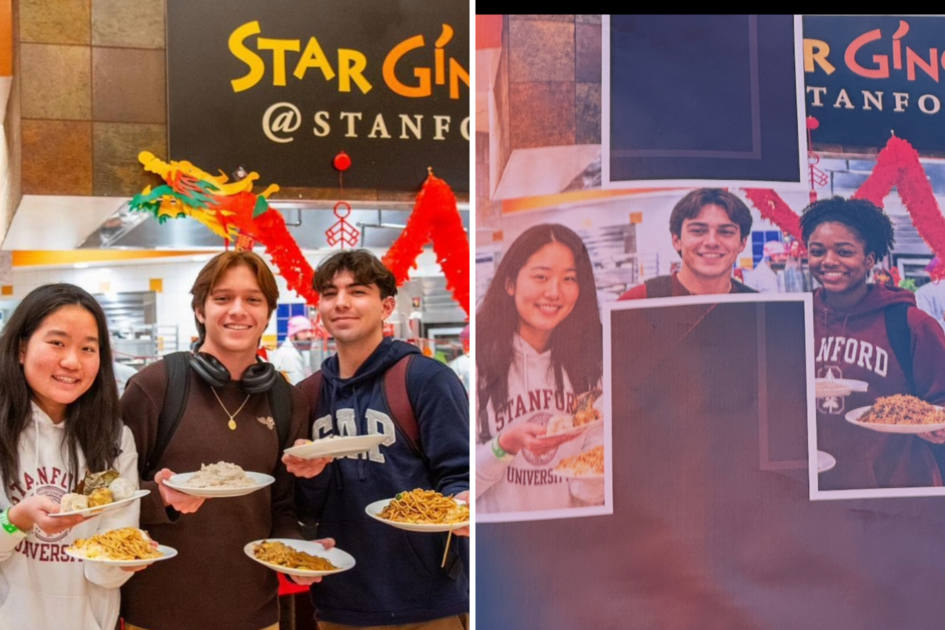
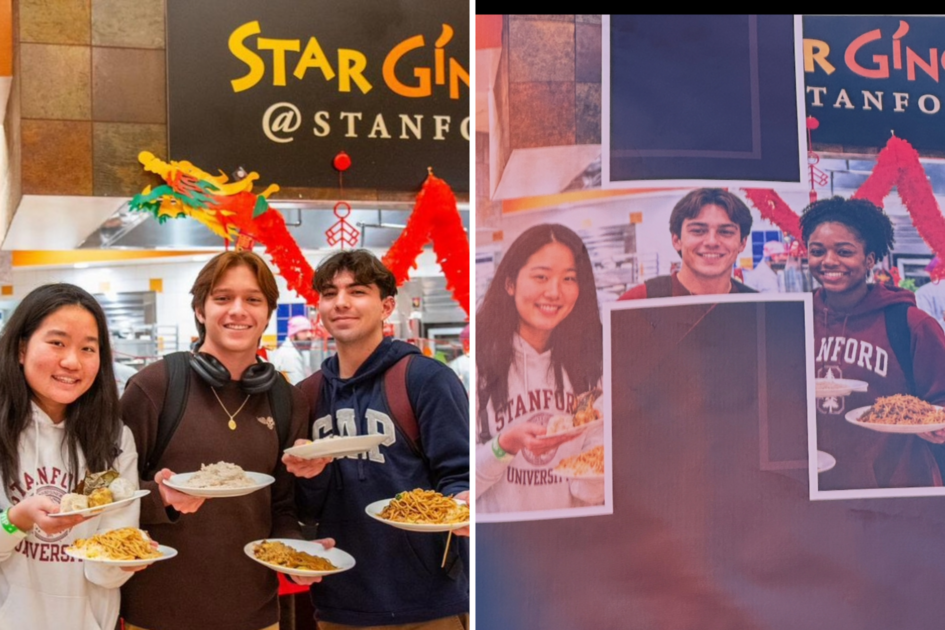
Stanford admitted that the university office Residential & Dining Enterprises used generative AI to edit a promotional photo of students for welcome banners: graduate Billy Ramirez was replaced with a nonexistent Black woman, and the faces of the other students were made 'slimmer.' The substitution was uncovered by the graduate himself, who published a comparison of the original with the fake, after which the university removed the banners and admitted to violating its own ban on AI editing of people's images.
What happened
The edit was carried out by the Residential & Dining Enterprises office, which is responsible for student dining: the original photo was taken at a Lunar New Year celebration in the Wilbur Dining Hall during Ramirez's freshman year, i.e., about three years ago, and then, without his knowledge, ended up on current welcome banners in an edited form. On September 21, 2026, the substitution was first reported by the student conservative magazine The Stanford Review, co-founded by Peter Thiel, after which Ramirez posted a comparison of the original and the edit, and it went viral on Fizz, X, Instagram, and TikTok. The university removed the banners, officially admitted that the edit violated the existing ban on AI processing of images of real people, and promised additional staff training and a review of all materials.
Context
The value of the case is not in new technology: generative editing of faces and bodies has long been possible, — this is a rare field test that showed that the editing of real people went unnoticed during normal viewing in an organization where a formal ban on such actions was already in effect. It is also noteworthy that the edit was carried out by a non-technical department, not an ML team: generative AI is already de facto built into the marketing processes of organizations at the level of ordinary office employees. Neither an automatic detector nor metadata worked: a living witness worked — a participant in the original photo who recognized himself and published a comparison. This verification channel works only as long as there are recognizable people in the photo and the original is preserved.
Why this matters for the industry
For the industry, this is a signal of a broken workflow, not just an ethical case: the generation and editing of marketing images have become almost free and are applied unnoticed even where a ban exists on paper. A policy without technical control does not leave an observable trace of a violation, so control has in fact shifted to a post-factum mode, where the only deterrent factor becomes the reputational consequences after a viral exposure. Organizations using generative AI in visual marketing should check exactly where in their pipelines AI editing takes place, who approves it, whether there is a disclosure step and an audit of already published materials; a basic minimum looks like human-in-the-loop review with logging. A likely consequence of such incidents will be increased demand for provenance metadata, checklists for verifying images of people before publication, and AI editing audit tools, although for now this is an interpretation, not an established practice.
Why this matters for users
For readers, the lesson is direct: any 'official' photos from events and from advertising can now be AI fakes, even if they are published by a recognizable institution. The edit at Stanford affected not only the replaced graduate: the faces and bodies of other students in the photo were changed without their consent, meaning anyone who ended up in the frame of a public event could be subjected to such processing. Checking details of the face, hands, and the context of the photo is becoming basic digital hygiene, and for those who recognized themselves in an edited photo, the most effective way of exposure remains publishing a comparison with the original — it was precisely this mechanism that worked in the Stanford case.
What is still unknown / limitations
From public materials, it does not follow which specific generative tool was used, who specifically carried out and approved the edit, and how it passed internal checks before publication. It is unknown whether other photos were edited and what disciplinary or procedural conclusions the university's promised review of all materials will lead to. The statement that the case indicates a systemic problem of 'cheap editing without disclosure,' not a failure of one office, remains an interpretation, not an established fact; there are no signs of the activation of technical barriers such as watermarks or provenance metadata in the sources.
Sources
Author
Look at AI, editorial team