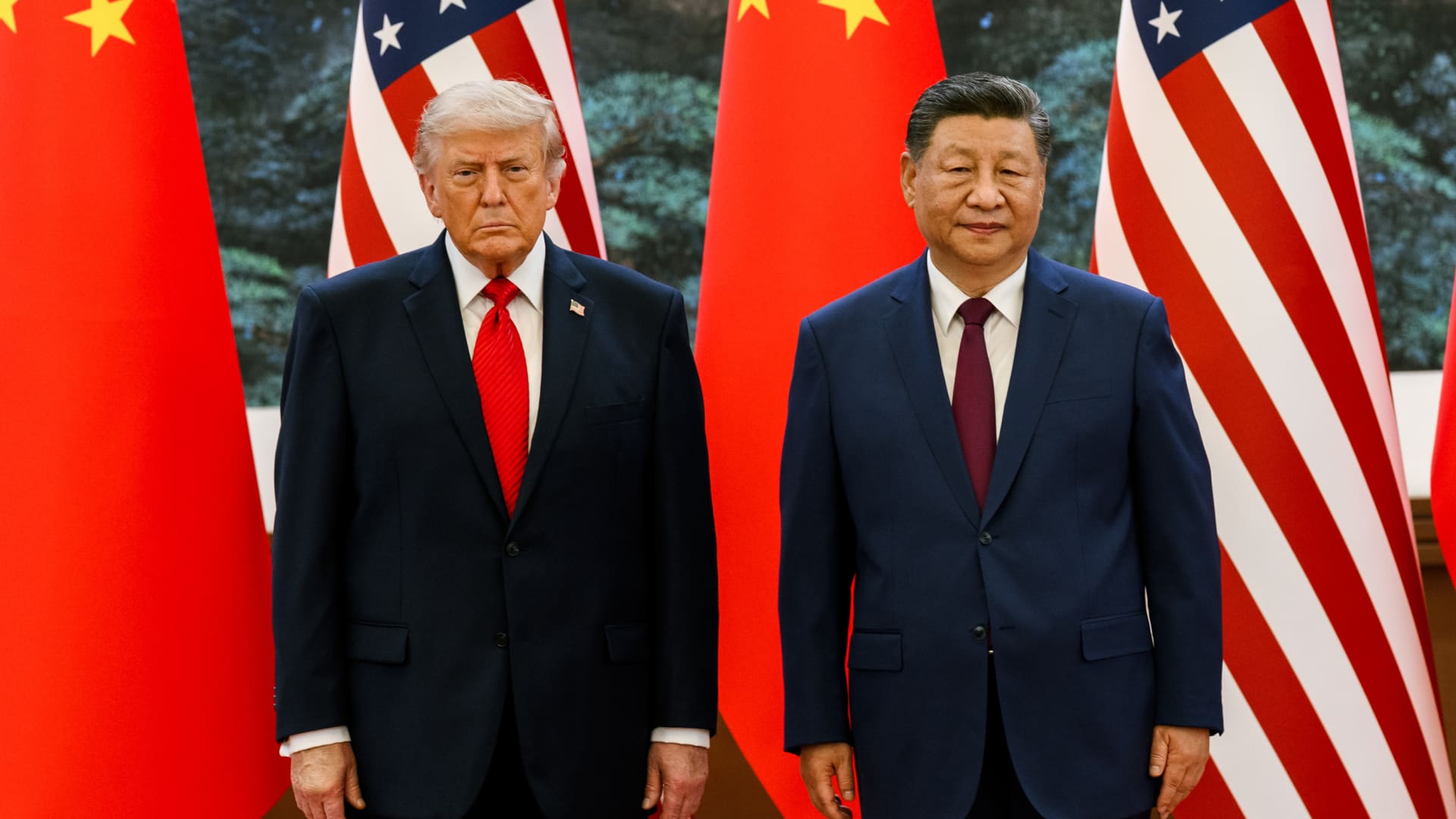
On the eve of Chinese President Xi Jinping's state visit to Washington — the first visit by a Chinese leader in more than a decade — the Donald Trump administration rejected the idea of slowing AI development, despite calls from the heads of Anthropic and OpenAI to slow the pace. According to CNBC, Washington and Beijing are discussing an “AI dialogue” with an emergency communication channel for incidents, but neither side intends to slow down. The most realistic outcome of the summit — an exchange of information about failures without commitments to a pause.


What happened
On September 12, Anthropic CEO Dario Amodei published the essay “We Must Pace the Frontier” calling for a slowdown in the development of frontier models, and Sam Altman publicly supported him. The response was the opposite: on September 13 in Ireland, Trump repeated the formula “whoever wins AI will win,” and on September 14 called fears of an AI catastrophe “harakiri,” stating that only China would benefit from a pause. Washington does not intend to restrict American laboratories. On September 23, CNBC reported that U.S. Treasury Secretary Scott Bessent and his Chinese counterpart He Lifeng discussed an “AI dialogue” with an incident communication channel up to the level of national security; CFR expert Chris McGuire calls a pause agreement “extremely unlikely.”
Context
Xi Jinping's visit is the first visit by a Chinese leader to Washington in more than a decade, and the topic of AI in it is accompanied by older points of friction. The main material one — export restrictions on advanced Nvidia chips: approximately 10 Chinese companies have been approved to purchase H200, but Chinese customs barely allows these supplies. The U.S. Treasury Department, meanwhile, accuses Chinese companies of “distillation,” that is, training models on the outputs of American ones, and remote access to computing through data centers in Southeast Asia. Against this backdrop, the call “We Must Pace the Frontier” remained a voluntary position of individual laboratories, without verifiable commitments and without a regulatory response: the pace of frontier development is viewed by the administration as a geopolitical asset, not an object of regulation.
Why this matters for the industry
For the industry, this is a fixation of the status quo: there will be no regulatory pause, frontier models will continue to be released at the current pace on both sides, which means a stable inflow of new models into the API and the possibility to build new agentic workflows now. The main operational risk, however, shifts to the computing supply chain and API terms of use. Practical steps for teams: check the ToS of your provider for restrictions on training on its outputs, review the GPU procurement plan taking into account the block of Nvidia H200 approved by Chinese customs, and design multi-provider independence from the outputs of other models. If an AI incident communication channel is formalized at the summit, corporate demand for detection, logging, and reporting tools for agents is likely to grow. If an agreement cannot be reached, fragmentation is likely: national evaluation standards and export regimes will diverge, multi-regional services will have to support different sets of models for different jurisdictions, and comparing capability claims of models from the U.S. and China without common evaluation frameworks is methodologically incorrect.
Why this matters for users
For the reader, nothing is currently prohibited or unblocked: new models will continue to appear at the same pace, available APIs will remain, and existing export restrictions on chips will remain in force, so the speed of new features in familiar services will not change. It is worth watching two specific outcomes of the summit: whether an emergency communication channel for AI incidents between the U.S. and China will appear and whether export restrictions on chips will remain — this will determine the availability of computing and models worldwide. Those working with the Chinese market or Chinese partners find computing planning difficult for now: Chinese customs barely allows already approved Nvidia H200 purchases. In the worst-case scenario, fragmentation means that different models and stacks will be available in different regions.
What is still unknown / limitations
The summit has not yet taken place, and all outcome assessments are forecasts, not results. The “AI dialogue” and incident communication channel remain a discussed option for Bessent and He Lifeng: there is no signing, mandate, or protocol in the sources. There is no confirmation from Beijing of a joint refusal to slow down, and the position of the Chinese Foreign Ministry diverges from Trump's interpretation. The mentioned “common frameworks for evaluating powerful models” are not detailed, so the comparability and reproducibility of capability claims of models from the U.S. and China are not yet ensured. It is also unknown whether Chinese customs will change its approach to already approved Nvidia H200 supplies and whether the calls of individual laboratories will be converted into verifiable commitments.
Sources
- Trump-Xi meeting puts AI safety, chips and U.S.-China rivalry in focus — CNBC
- America's AI Safety Dilemma and the Trump-Xi Summit — The Diplomat
- Trump Rejects AI Slowdown Calls, Citing China — TechJournal
Author
Look at AI, editorial team