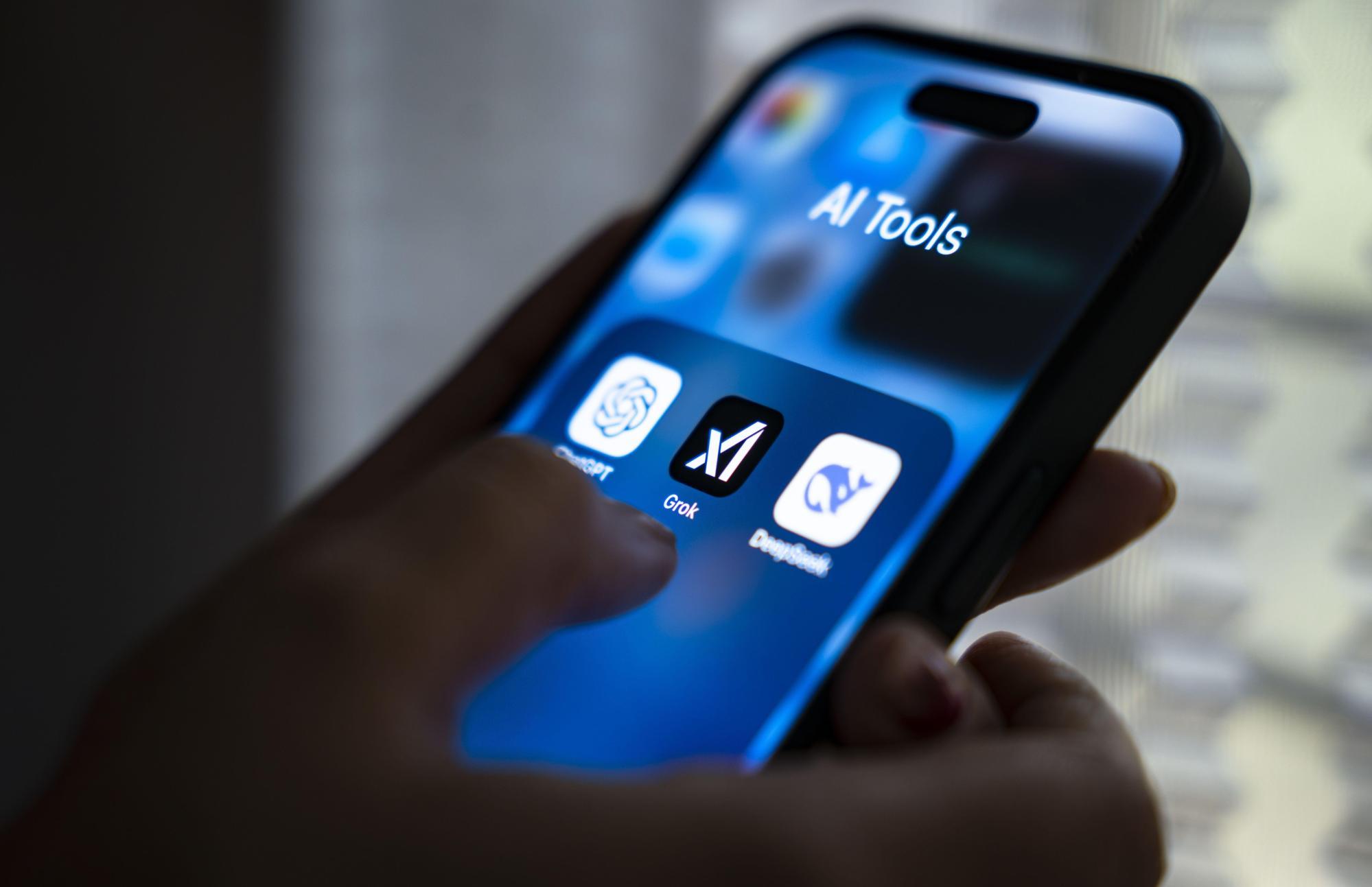
On September 14, 2026, xAI and X Corp. filed a motion in the Fort Worth federal court for voluntary dismissal with prejudice of antitrust claims against Apple, while maintaining the lawsuit against OpenAI: the court hearing on the remaining claims has been postponed to January 11, 2027, and the mediation deadline has been extended to December 4, 2026. The terms of the settlement with Apple are not disclosed — the filing only used the phrase “resolved,” and Apple did not object to the dismissal. Against this backdrop, the “ChatGPT exclusivity” in Siri, on which the lawsuit was based, is becoming blurred: Apple has already moved the assistant to its own AFM models in partnership with Google Gemini.

What happened
On September 14, 2026, xAI and X Corp. sent a motion to the Fort Worth federal court (Texas), where the case X Corp. et al v. Apple Inc. was being handled by Judge Mark Pittman, for voluntary dismissal with prejudice of antitrust claims against Apple. Apple did not object to this dismissal. The terms of the reached settlement were not disclosed in the filing: only the phrase “resolved” was used, without amounts or descriptions of any reciprocal obligations. At the same time, claims against OpenAI Foundation, OpenAI LLC, and OpenAI OpCo LLC remain in effect: their consideration has been postponed from October 19, 2026, to January 11, 2027, and the mediation deadline has been extended to December 4, 2026. Bloomberg reported on the resolution of claims against Apple; the court filing itself does not mention Grok, ChatGPT, or the terms of any deal.
Context
The original lawsuit was filed on August 25, 2025, and demanded “billions of dollars” in compensation. Its factual basis was the claim of a conspiracy between Apple and OpenAI over the integration of ChatGPT into Siri and iOS, announced in June 2024, as well as the downranking of competing chatbots in the App Store. While the case was proceeding through the courts, the product foundation of the lawsuit began to melt: Apple moved Siri to its own AFM models in partnership with Google Gemini. The beta version of the new assistant is built on a hybrid scheme: some requests are processed on-device by the AFM Core Advanced model, while others go to Apple’s isolated Private Cloud Compute cloud. The stated capabilities include reading context from the screen, searching through correspondence, performing actions in system and third-party applications, and a separate application with history synchronization via iCloud. In other words, the “ChatGPT monopoly” as the subject of the dispute is being blurred by the product’s own development — regardless of the outcome of the case.
Why this matters for the industry
The withdrawal of claims against Apple changes the balance of power in the antitrust dispute over the distribution of AI assistants in iOS: the main defendant drops out of the case, and it shrinks to a dispute between xAI and OpenAI with mediation until December 4, 2026, and a court hearing on January 11, 2027. The outcome of the case could become a precedent for how courts assess the integration of AI chatbots into mobile operating systems and ranking in the App Store — that is, it will set the rules of distribution for the entire assistant market: whether the “exclusivity” of a model within an OS will become legally risky. For builders, the product layer is also important: the Siri beta with the on-device AFM Core Advanced model, screen context reading, and actions in third-party applications sets a template for an agentic assistant, and the hybrid routing of “on-device AFM Core Advanced plus Private Cloud Compute” is a working example of an architecture to study. The practical window is already open now — to design your products as high-quality “actions” that the assistant can perform, and to look at hybrid on-device schemes; however, Apple has not yet disclosed the API, pricing, or metrics, and the default place in a mobile OS is ceasing to be a guaranteed distribution channel for a single model vendor.
Why this matters for users
For iPhone owners, nothing changes right now: the new Siri is in the beta stage, and the court filing does not contain any mention of Grok or ChatGPT, nor the terms of a deal that could affect the assistants available to users. Practically, this means that ChatGPT in Siri continues to work as before, and statements about the fate of Grok integration in iOS are not confirmed by anything at this stage. A sensible strategy for the reader is to follow two dates: December 4, 2026 (the mediation deadline between xAI and OpenAI) and January 11, 2027 (the court on the remaining claims). By these dates, as the Siri beta cycle develops, it may become clearer what actions and APIs Apple will open to third-party developers — this will determine how much new assistant scenarios will become available in everyday iPhone use.
What is still unknown / limitations
The key unknown is the terms of the settlement between xAI and Apple: the filing contains no amounts or partnership agreements, so any reports of compensation or new xAI–Apple cooperation are not yet confirmed by the primary source. The new Siri beta lacks an evaluation methodology and benchmarks, so the stated capabilities should be perceived as a product description, not technical evidence; there is nothing to compare quality with yet. For the hybrid scheme, neither latency measurements nor routing criteria between AFM Core Advanced and Private Cloud Compute have been published — any talk of a latency win remains a hypothesis. Finally, the expansion of the beta and the preservation of ChatGPT integration in Siri are likely but unconfirmed scenarios that should be checked as the mediation and court dates approach.
Sources
Author
Look at AI, editorial team