
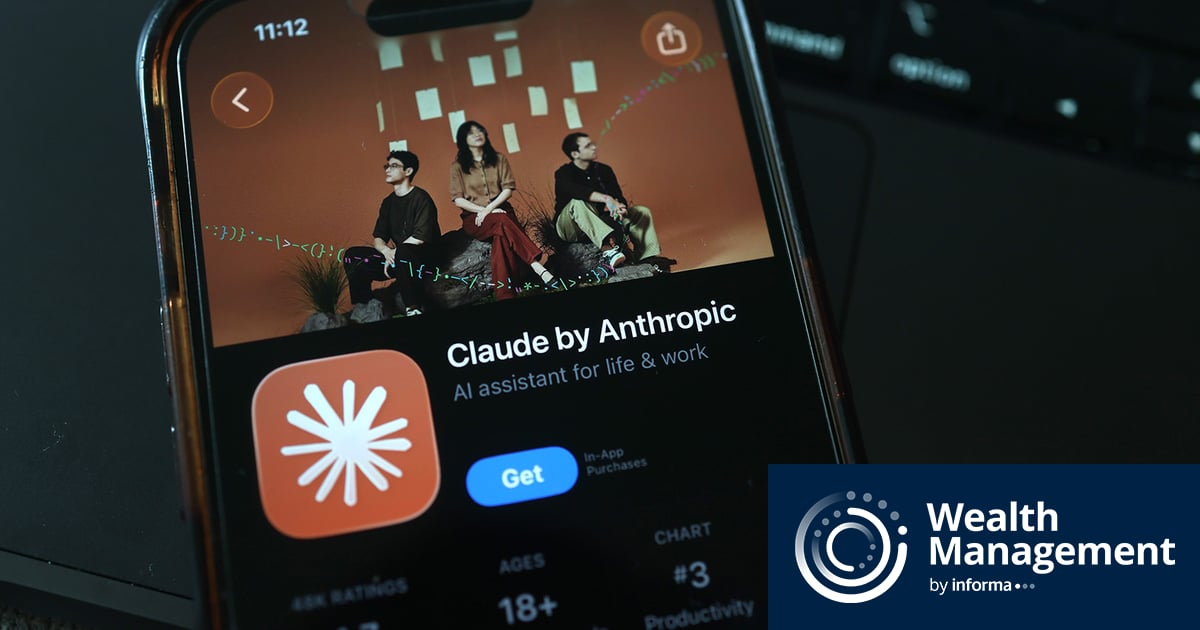
On September 14, 2026, Anthropic released Claude for Financial Advisors — a set of MCP connectors and “workflow skills” for financial advisors. The release includes no new models, training methods, or benchmarks: it is an integration layer that connects the assistant to data and typical tasks of a regulated profession, leaving client decisions to humans. The product is already available on Enterprise plans for registered investment advisers in the US.

What happened
Anthropic announced the release of Claude for Financial Advisors — an enterprise product for registered investment advisers (RIAs) in the US. It includes 11 new integrations: Charles Schwab, BlackRock, Vanguard, Addepar, Envestnet, iCapital, Orion, SS&C Black Diamond, Wealthbox, Wealth.com, and Zocks, as well as already available connections to Microsoft 365, Salesforce, DocuSign, Box, FactSet, S&P Global, and Morningstar. “Workflow skills” cover daily work tasks: meeting preparation, portfolio rebalancing review, compliance checks under the SEC Marketing Rule, estate and tax briefs, post-meeting notes with tasks for CRM, and onboarding new clients. By design, Claude prepares drafts, the advisor approves everything client-facing, and regulated actions remain under human control. Enterprise plans for RIAs include audit logs for recordkeeping; materials mention a price of $70–120 per user per month and usage credits.
Context
Claude for Financial Advisors is an engineering, not scientific, novelty: available sources do not mention a new architecture, an upgrade to the base Claude model, or any benchmarks; the entire release is about infrastructure. MCP is a protocol that allows connecting an AI assistant to external systems and data; here it links Claude to the operational systems that advisors already use, including balances, positions, cost basis, and NAV of alternative investments. RIAs are registered investment advisers in the US operating under supervision, and the SEC Marketing Rule regulates their marketing materials, making compliance checks a critical task. The product is built as a layer on top of the advisor's existing stack — client asset management systems, CRM, and compliance tools — rather than as a replacement for individual components. The release continues Anthropic's line of enterprise products after Claude Code and Cowork.
Why this matters for the industry
For the industry, the release validates vertical enterprise AI in the regulated financial sector: Anthropic enters it not as a replacement for the advisor, but as a coordination layer on top of their stack. Charles Schwab is named the first and currently only RIA custodian in the product, and its Schwab Advisor Services division works with more than 16,000 independent RIAs, giving Anthropic a direct distribution channel without its own network in the industry. The “connectors + skills + mandatory human approval” pattern sets a standard for AI in other professions with strict compliance requirements, and the $70–120 per user per month price with usage credits sets a pricing benchmark for similar enterprise subscriptions. For other LLM providers and point solutions, the product structure becomes a ready-made template that is expected to be copied, and advisor stack vendors will face pressure to expose their data via MCP.
Why this matters for users
For AI practitioners, this is a concrete, documented example of how enterprise AI is embedded into a profession: connectors to data, scenarios for typical tasks, and mandatory human involvement in the decision-making cycle. For engineers, the product serves as a reference project for MCP integrations in a regulated industry — a reproducible architecture in which the model prepares drafts and a human makes the decision. The direct practical effect for the Russian-speaking audience is limited to the US market, but the pattern itself — from document preparation to audit logs — is transferable to their own workflows and clearly shows where Anthropic is directing enterprise monetization after Claude Code and Cowork.
What is still unknown / limitations
The product's engineering parameters are not disclosed: model version, latency, API access, and monitoring tools are absent from the sources. There is also no evaluation base — no metrics for compliance check accuracy, quality of prepared documents, pilot results, or reproducible performance measurements, so the claimed capabilities are currently confirmed at the product marketing level, not by technical evidence. Independent assessments of “skills” and public error metrics have not been published as of the release.
Sources
- Claude for Financial Advisors, Anthropic official blog
- Anthropic Launches Claude for Financial Advisors, WealthManagement (Yahoo Finance)
- Charles Schwab and Anthropic to Bring Claude to Independent Registered Investment Advisors, Schwab press release
Author
Look at AI, editorial team