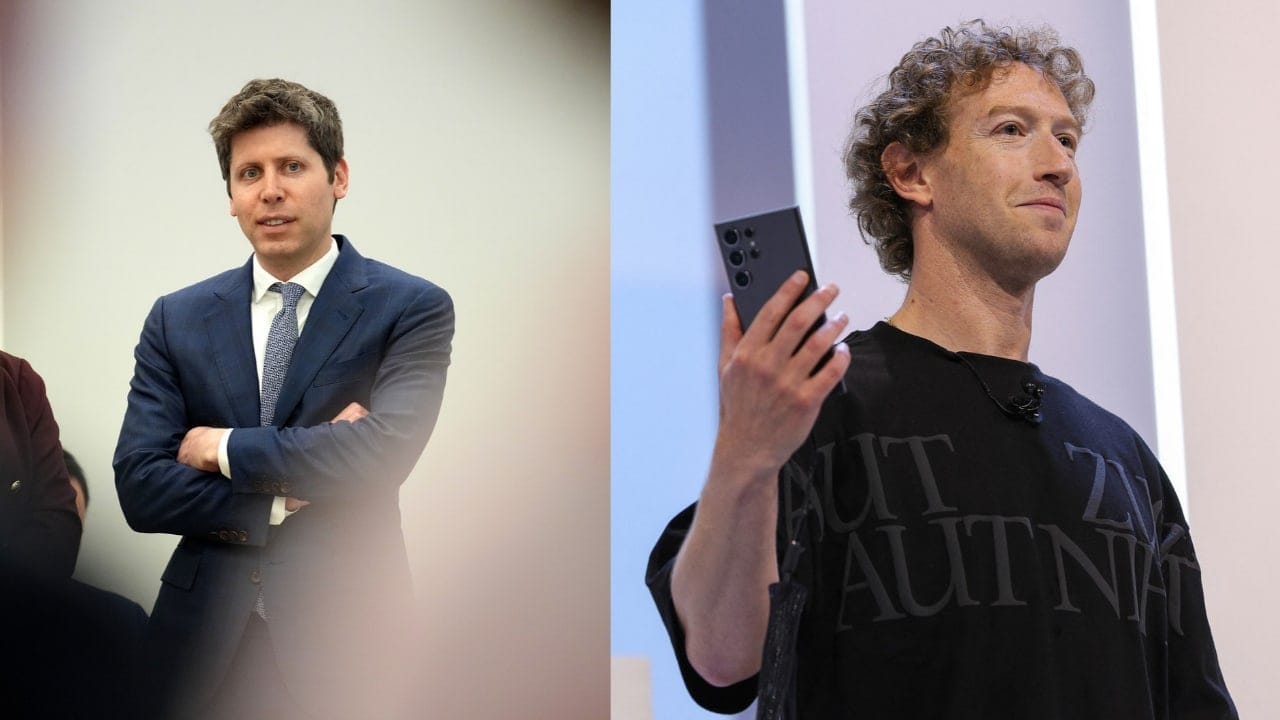
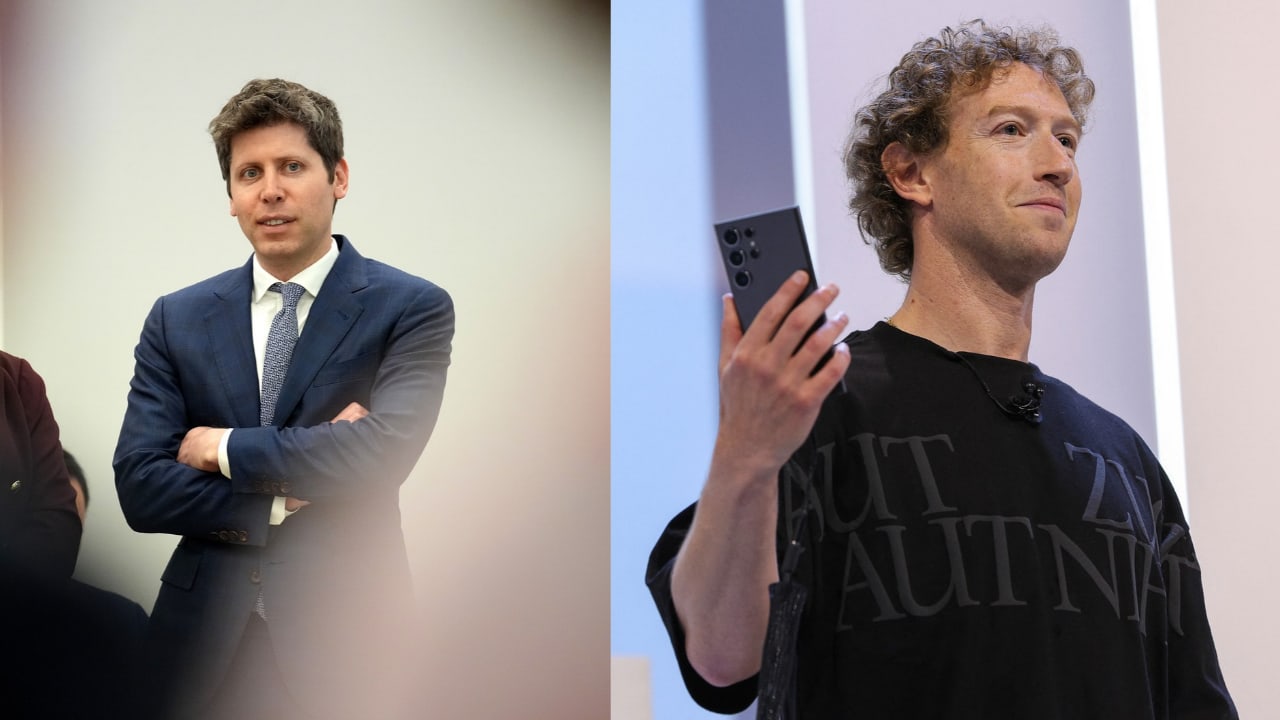
Israel's oldest English-language newspaper, The Jerusalem Post, published its annual '50 Most Influential Jews 2026' list, timed for the Jewish New Year, which falls on September 12 this year. OpenAI CEO Sam Altman shared 9th place with Meta founder Mark Zuckerberg: the editorial team combined them under the description 'tech leaders pushing AI beyond the digital world'. The trajectory of Altman himself is also notable: in the 2023 list he took first place, in last year's ranking he was not listed at all, and now he has returned to the ninth position. The list also notes other figures from the AI industry, from Wiz founder Assaf Rappaport to Anthropic's Dario and Daniela Amodei.
What happened
The editorial team explained the joint position of Altman and Zuckerberg by the fact that both, in its assessment, are taking AI beyond the digital world. In addition to them, the top 50 included: Wiz founder Assaf Rappaport (7th place), Oracle co-founder Larry Ellison (17th), Google co-founder Sergey Brin (18th), Palantir CEO Alex Karp (20th), and Anthropic leaders Dario and Daniela Amodei, who took 26th place with the description 'Jewish siblings shaping AI'. The profile of this pair, prepared by Tobias Holcman, was published on September 10, 2026. It quotes Altman's words about 'working on the singularity', OpenAI's IPO preparation, and Meta's investments of approximately $150 billion in data centers and AI infrastructure.
Context
The Jerusalem Post's '50 Most Influential Jews' list is published annually, tied to the Jewish New Year; this is an editorial choice of the most influential people of the year, not a technical assessment of the industry, so the material contains no models, benchmarks, or methodology for measuring influence. The fact itself that the leaders of OpenAI, Meta, Anthropic, Google, Oracle, Palantir, and Wiz were included in a single selection of 50 positions shows: the AI agenda has become established in the mainstream political and economic agenda, not only in tech press. The formulation about leaders taking AI 'beyond the digital world' is a narrative about 'physical AI', however in the sources themselves it is not supported by any specific product, experiment, or metric. The position in the rating, moreover, says nothing about technical progress: Altman's movement in the list over three years reflects a change in narratives around his figure, not a change in the quality of OpenAI models.
Why this matters for the industry
The news has no direct production effect: it does not announce any new APIs, models, or changes in prices or delays, so current deployments are not affected. The significance is signal: recognition of AI leaders by a mainstream publication expands attention to the industry beyond the technological audience, which indirectly facilitates sales, hiring, and attracting capital from non-technological sources. More tangible business facts recorded in the profile material: OpenAI's IPO preparation with a horizon up to 2027 and Meta's approximately $150 billion investment in data centers for AI. If these plans are confirmed by primary sources, for the industry this will be a signal of scaling capital and computing, which over time may manifest in API limits and pricing. In the horizon of a couple of years, the thesis about 'physical AI', if it moves from formulations to product releases, will create a new class of deployment tasks: edge and on-prem inference, strict requirements for latency and reliability in real time; the presence of Wiz and Palantir in the list suggests that security and data platforms will become a basic requirement for such a category.
Why this matters for users
For the reader, this is a ready-made cross-section of who is considered influential in the AI industry beyond tech press. The full list of 50 positions with links to profiles allows tracking the trajectories of specific people, for example Altman's path from first place in 2023 through absence in the 2025 list to the ninth position now, and to discover less covered names like Wiz founder Assaf Rappaport, who takes seventh place after selling his company to Google. It is important to understand the boundaries of the genre: this is an editorial assessment of influence, not a product review, so for users of OpenAI, Meta, or Anthropic services right now nothing changes, neither features, nor prices, nor availability.
What is still unknown / limitations
The selection methodology in the rating is not disclosed in the provided materials, so the criteria by which the editorial team ranked the positions remain unknown. The figure of approximately $150 billion of Meta investments and OpenAI's IPO plans are cited with reference to the profile publication, not to financial reporting, so their scale and timing require verification by primary documents. The narrative about 'physical AI' in the sources is not supported by products or metrics. Finally, from the material it is also impossible to verify that such capital investments lead to a reduction in inference costs: it contains no data on the timing, targeting, and load of these investments, and the connection of capex with inference cost depends on chip supplies, efficiency of use, and other factors.
Sources
- 50 Most Influential Jews 2026 — The Jerusalem Post
- No. 9: Sam Altman and Mark Zuckerberg: Jewish tech leaders — The Jerusalem Post
- 50 Most Influential Jews 2023 — The Jerusalem Post
Author
Look at AI, editorial team