The week has come together into a single storyline — about the price of access to cutting-edge artificial intelligence. Anthropic has postponed the start of its IPO marketing to mid-October 2026, and the listing is expected a few days before the US midterm elections in November. OpenAI has strengthened its government affairs team with three regional hires. Microsoft has released the image generation models MAI-Image-2.6 and MAI-Image-2.6-Flash in public preview, halving the price of output tokens compared to the flagship version, while GitHub has opened Project HydraFusion — an orchestrator of specialized models — to all Copilot subscribers in a research preview, which, according to reported data, saves up to two-thirds of the cost of agentic coding tasks.

What happened
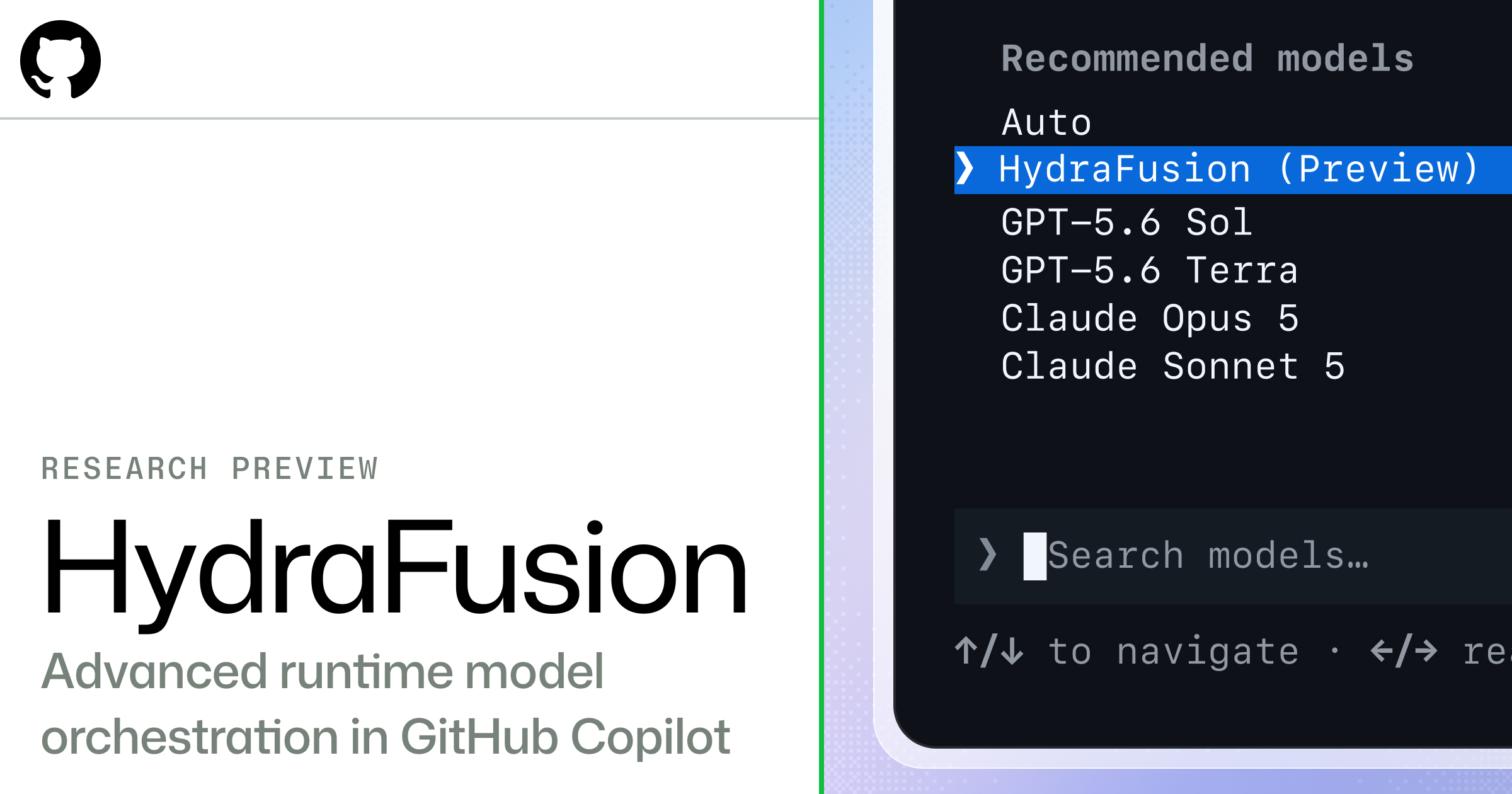
According to Reuters on September 4, 2026, Anthropic has delayed the start of its IPO marketing to mid-October: the company is finalizing its reporting, and underwriters are waiting for a more stable market; the placement is expected a few days before the US midterm elections. On September 5, OpenAI announced three hires for its government affairs team: Jessica Schumer, previously a leading Amazon lobbyist in New York, will be responsible for the US Northeast, Calder Harville-Childs, previously of Metapublic, for the Southeast, and Thomas McLean, previously of Palo Alto Networks and Symantec, for cyber defense policy; the "reverse federalism" strategy is overseen by Global Affairs head Chris Lehane. On September 4, Microsoft opened the public preview of MAI-Image-2.6 and the lightweight MAI-Image-2.6-Flash on Microsoft Foundry and in MAI Playground: multi-reference editing, web grounding, and dynamic aspects up to 1.5K are claimed, and generation is 2.8 times faster than GPT-Image-2-Medium. In parallel, GitHub moved Project HydraFusion to a research preview available to all Copilot subscribers: according to the developers, the system provides a 4.9 percentage point quality improvement over Claude Opus 5 while reducing costs by 67 percent on TerminalBench 2.1 and a 36 percent cost reduction with quality deviation within 1.5 points on DeepSWE.
Context
Anthropic's listing will be the first public stress test of the economics of frontier large language models: from the reporting of the creator of a cutting-edge model, the market will see for the first time the real ratio of revenue to computing costs. Currently, this metric cannot be assessed from the outside, so it will be used as a benchmark for valuing the entire industry. OpenAI's hires fit into the backdrop created by the federal AI regulation law stuck in Congress: companies are shifting activity to the state level, primarily New York, California, and Illinois. Microsoft and GitHub's releases continue another notable trend: inference costs are falling not only due to new architectures, but also due to the combination of cheap specialized models with task orchestration between them at runtime.
Why this matters for the industry
The industry is receiving several benchmarks at once. Anthropic's public finances will provide a basis for valuing comparable AI companies, and debates about the sustainability of frontier LLM economics will move from the realm of opinions to the realm of numbers. Regional transparency and cybersecurity norms, which states are now promoting, risk becoming a de facto industry standard: compliance will have to be built to the requirements of New York, California, and Illinois before federal rules appear. The published price of MAI-Image-2.6-Flash, if it is maintained until general release, will become a new reference level for production image generation. And the approach shown in Project HydraFusion — cheap specialized models plus routing with flagship quality — changes the economics of agentic products: market protection shifts from access to the model to orchestration, proprietary data, and distribution.
Why this matters for users
The most practical things are already available. MAI-Image-2.6 and MAI-Image-2.6-Flash can be tried in MAI Playground and on Microsoft Foundry: Flash is claimed to cost $1.75 per million input text tokens, $2.50 per million input images, and $19 per million output images compared to $38 for the flagship version — teams can prototype image generation scenarios for e-commerce, marketing, and personalization right now and recalculate the unit economics of their pipelines. Project HydraFusion is open to all GitHub Copilot subscribers and, according to the developers, works best on single-shot coding tasks — the savings can be measured on your own tasks compared to the usual work through Claude Opus 5. Teams from film, games, and agencies, Comfy offers free idea validation — the Validate phase in the Forward Deployed Creatives program. Those who follow the capital market should include Anthropic's October placement window in their observation calendar.
What is still unknown / limitations
Both technical releases are currently in preview: MAI-Image-2.6 is in public preview, HydraFusion is in research preview, so prices, figures, and model behavior may change before general release, and published comparisons do not necessarily reflect final builds. HydraFusion's benchmarks currently have no independent verification: the comparison methodology has not been published, and the figures belong to the developers. The date and terms of Anthropic's IPO may shift again — the decision depended on the finalization of reporting and the state of the market, and the final valuation will only be known at the launch of the placement. Finally, a price reduction by one vendor at the preview stage does not in itself turn image models into a commodity market: such a conclusion requires price competition among multiple vendors with comparable quality.
Sources
- Anthropic IPO launch shifts toward mid-October — Reuters/CNBC
- Pushing the quality-cost frontier with MAI-Image-2.6 — Microsoft AI
- Project HydraFusion: Frontier quality via multi-model orchestration — The GitHub Blog
Author
Look at AI, editorial team