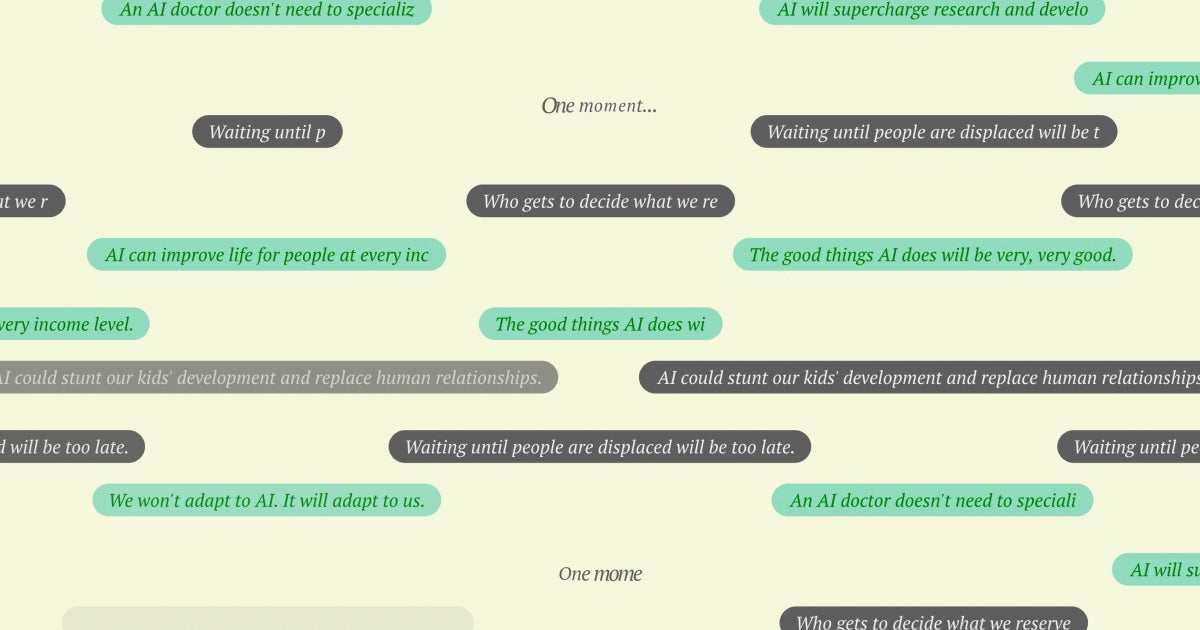
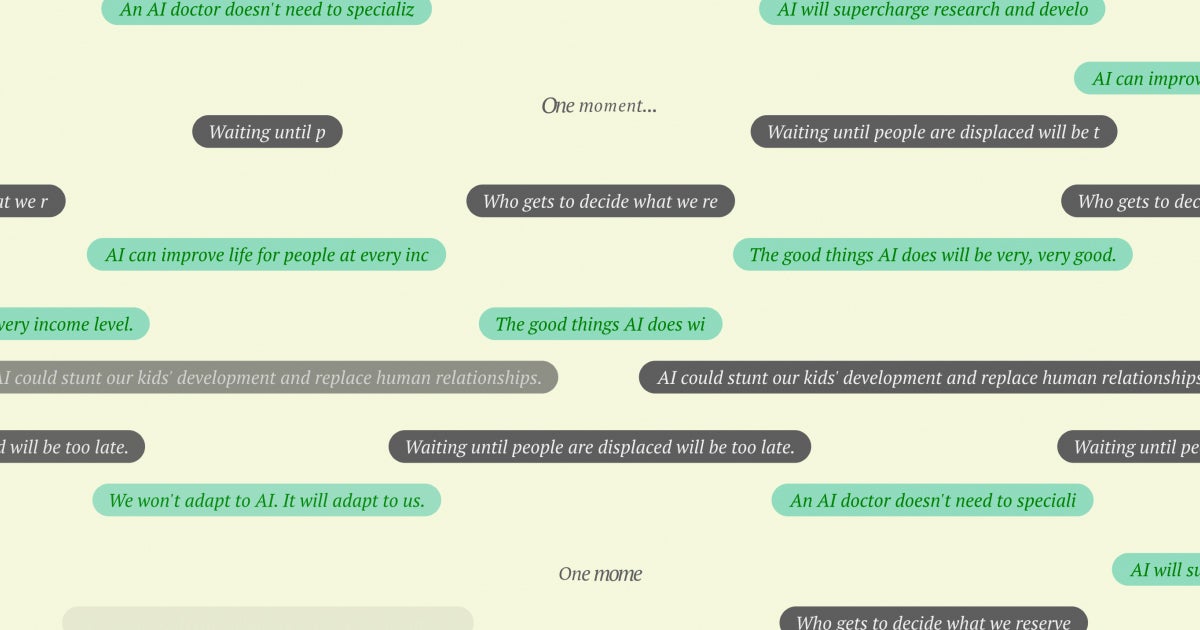
Bill Gates published a nearly 6,000-word essay, “A Turbulent AI Era and Critical Choices to Make,” on the GatesNotes blog, in which he calls the transition to the era of artificial intelligence one of the most turbulent periods in human history and acknowledges that no one has a plan to manage this transition. The author lists three main risks — to employment, cybersecurity, and youth — and proposes specific measures: new national AI agencies, an international organization, reserving certain professions for humans, and a tax on AI tokens and robots.
!image:format(webp)/nginx/o/2026/08/26/17878502t1h2eb7.jpg)

What happened
In the essay, Gates examines three main risks. First, according to his forecast, entry- and mid-level positions in sales, customer support, development, and legal practice will be hit, and by the end of the decade, “smart” robots will begin to compete with humans in construction and the food service industry. The second risk is the growth of cyber threats: attackers gain capabilities faster than defenders close vulnerabilities, and a model that finds a hole thereby helps exploit it. The third risk concerns youth: in a study by Stanford and Carnegie Mellon involving 1,131 Character.AI users, more intensive and emotionally close communication with an AI companion was correlated with worsening well-being, with critical thinking declining more sharply among the young. As countermeasures, Gates demands the creation of national AI agencies modeled on nuclear inspection regimes and international aviation rules, the establishment of an international AI organization, reserving a portion of professions for humans under the Human Reserved concept, and introducing a tax on AI tokens and robots as a mechanism for redistributing income from automation to retraining.
Context
Gates is not just a public commentator: he is one of the largest capital allocators in tech, his fund names OpenAI, Anthropic, Google, and Microsoft as partners, and he promises to spend the remaining $200 billion over 20 years with full use of AI. Details of the fund’s program are to be disclosed in the annual Goalkeepers report — this is the point where an abstract essay can turn into the allocation of money and pilots. Gates has been promoting a robot tax for some time, so the essay should be read as a programmatic document, not a one-off remark. In genre, this is a manifesto and forecast, not a scientific work: it has two empirical bases — the correlational study of AI companions “The Rise of AI Companions” (arXiv:2506.12605) and the observational employment study “Canaries in the Coal Mine.”
Why this matters for the industry
For the industry, this is a signal about the direction of money and regulatory pressure, not abstract concern, although there is nothing to implement from the essay: there are no APIs, pricing, latency data, or evals. The proposal for a tax on AI tokens and robots directly affects the unit economics of inference, and if the initiatives reach the legislative stage, a compliance surface will appear: tracking and attribution of token spending, possibly reporting on automation, meaning new B2B products. Gates’s forecast about the prioritized automation of entry- and mid-level tasks should be considered when planning hiring, cybersecurity is shifting toward agentic defense, and AI companions are facing reputational risk due to data on user well-being. Startups should check how resilient their value proposition is to such future restrictions and use the essay as an argument in pitches for support and sales automation.
Why this matters for users
The original essay can be read for free on GatesNotes. Gates’s specifics are practically useful: entry- and mid-level positions will be hit first, with a reference to the Stanford study “Canaries in the Coal Mine” on the decline in employment of young workers after the spread of generative AI: this is an argument when choosing a specialty and planning a career. Users of AI companions should consider the data cited in the essay on the link between intensive communication with a bot and worsening well-being. Finally, the concepts of “Human Reserved” and a tax on AI tokens will likely enter public debates in Gates’s original formulation, so it is useful to know their primary source.
What is still unknown / limitations
The essay is a programmatic manifesto and forecast, not a scientific work. Forecasts about the prioritized displacement of certain professions and about robots competing with humans in construction and food service by the end of the decade are not supported by published benchmarks or robotics readiness metrics: they can be evaluated based on actual deployment and cost metrics. The thesis on cyber threats is directionally plausible, but there are no quantitative measurements of the offensive-defensive balance in the material — this is an open research task. The “Canaries in the Coal Mine” study is observational data, not a controlled experiment: the link with AI is plausible but mixed with macroeconomics, and the AI companions study is correlational, relies on a sample of Character.AI users, and will likely face a wave of replications and criticism. None of Gates’s proposals has yet become an adopted regulatory decision, and details of the fund’s program are to be learned from the Goalkeepers report.
Sources
- The choices we make about AI now are critical | Bill Gates (GatesNotes)
- Bill Gates: The world is not ready for the artificial intelligence revolution (rus.postimees.ee, AFP/BNS)
- The Rise of AI Companions: Interaction with AI Companions and Psychological Well-being (arXiv:2506.12605, cited in the essay)
Author
Look at AI, editorial team