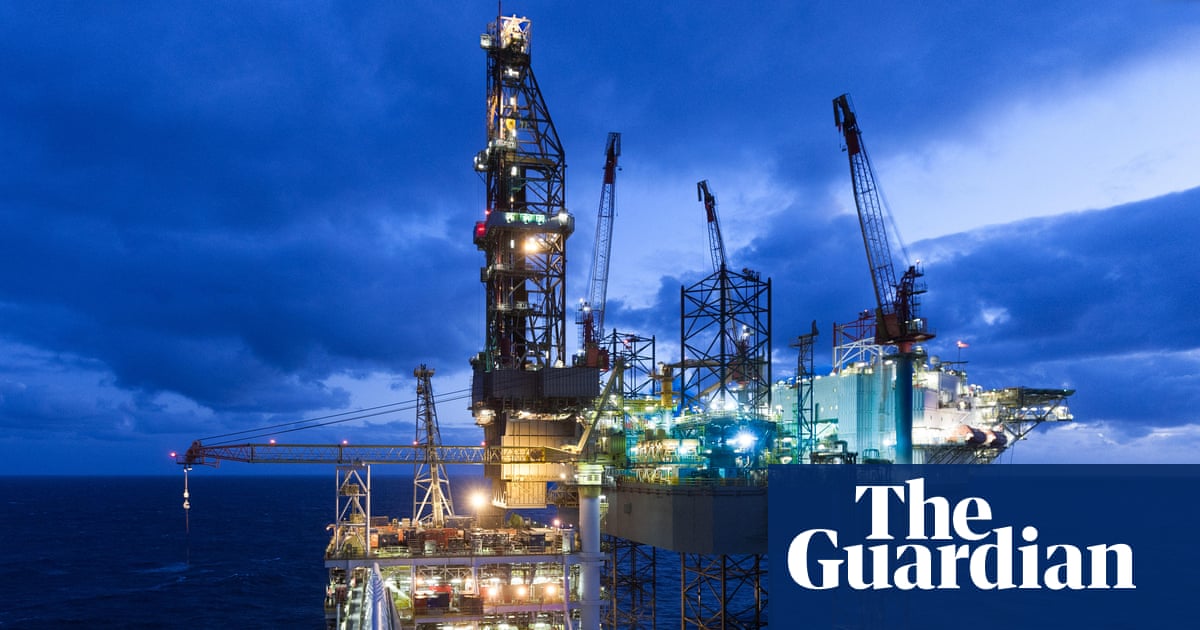
The journal npj Climate Action (Nature) published the first study to quantitatively assess AI's climate impact across the entire energy sector. Authors from Purdue University modeled scenarios in which AI is adopted in extraction and renewable energy at the same rate, finding that AI's net contribution is an increase in CO2 emissions rather than a decrease: accelerated oil and gas extraction outweighs the benefits of 'green' optimizations.
What happened
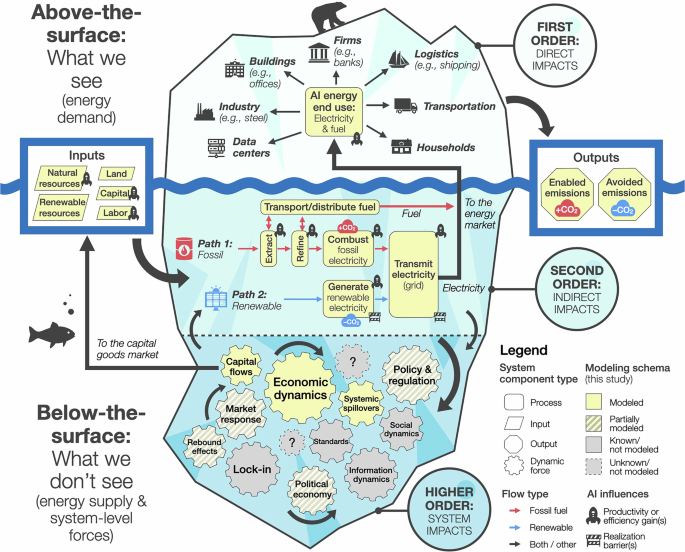
In the August issue of the journal npj Climate Action (Nature), an article by Will Alpine, Holly Alpine, Nathan Geldner, and Maksym Chepeliev (Purdue University) titled 'AI-driven productivity gains enable more CO2 emissions than they avoid in a global energy–economy model' was published. This is a peer-reviewed 'energy–economy' simulation: the authors calculated 64 scenarios in which AI is adopted in 'dirty' and 'green' energy at the same pace. In these scenarios, net annual CO2 emissions increase by 0.47–1.8 gigatons — roughly 1–5% of the energy sector's annual emissions. The model shows emission reductions only where AI does not increase the productivity of the extraction sector. Break-even is achievable if the productivity increase in renewable sources is at least 4 times higher than in oil and gas. A separate contribution of the work is a new term, 'enabled emissions': emissions that AI 'enables' through increased oil extraction but which do not appear in the reporting of technology companies.
Context
Until now, AI's climate footprint in public discourse has been assessed mainly through the direct energy consumption of data centers. The scientific novelty of this work is methodological: for the first time, AI's impact on the climate has been modeled as a two-sided productivity multiplier — increased hydrocarbon extraction versus optimization of renewable sources and grids, meaning the assessment shifts from direct data center emissions to indirect effects. One nuance for interpretation: the study's authors are former Microsoft employees, which does not invalidate the work but requires caution when reading the 'technology–oil' framing.
Why this matters for the industry
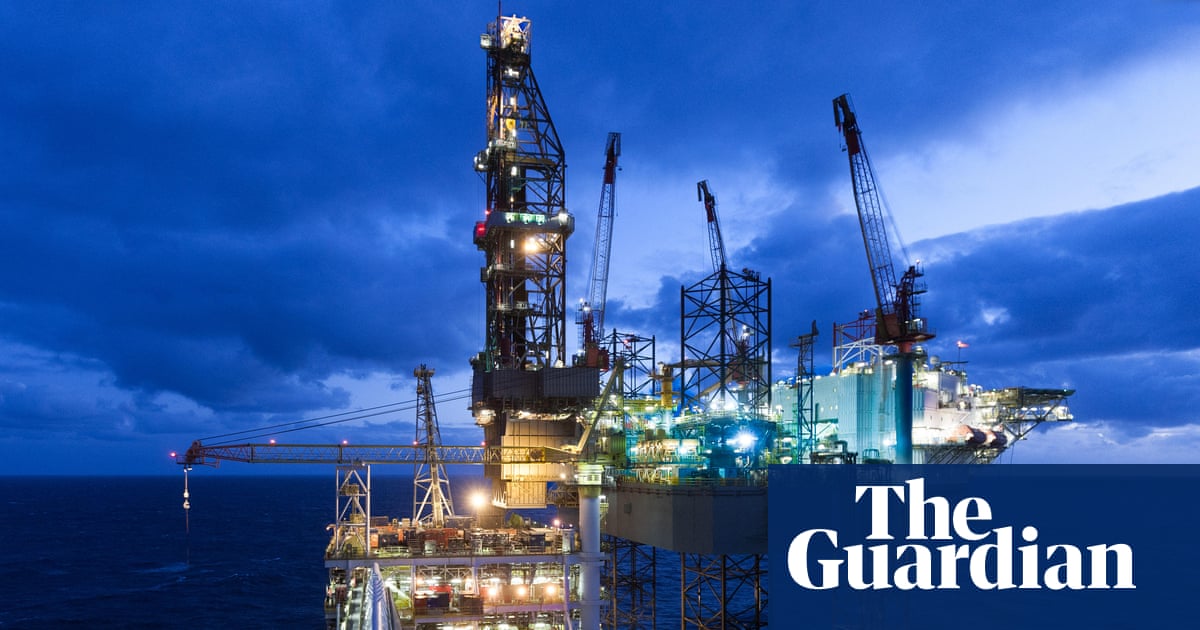
For the industry, the work turns 'AI's climate impact' from an abstract discourse into a measurable business metric. Enabled emissions — a new category of indirect emissions that, according to The Guardian, current ESG frameworks do not cover: there is already a demand for measurement, but no standard, and this is a product gap that is expected to be closed first by quantification features within existing ESG platforms. The scale of interest from extraction companies in technologies is underscored by a Rystad Energy estimate: digitalization and AI will bring the oil and gas industry $500 billion in 2026–2030. Wired provides a specific example of this connection — Chevron's 'behind-the-meter' gas power plant in Texas, operating for Microsoft's data centers. For 'green AI' vendors, this means their marketing will start receiving quantitative questions about the impact of models on the extraction sector, not just about inference energy consumption, and for ML teams in energy, there is an argument to shift focus to optimizing renewable sources and grids.
Why this matters for users
For the reader, this is a digitized correction to the popular formula 'AI is on average beneficial to the climate': the main climate risk of AI is not data center electricity, but the multiplication of oil and gas extraction. A clear example is Equinor, which attributes 27 discoveries on the Norwegian continental shelf to AI and new seismic technologies, including the Lofn and Langermann oil wells, with Langermann becoming the company's largest discovery in 2025. The benefit for the audience is a tool for critically assessing vendors' 'green AI' marketing and understanding why the climate discussion about AI is moving from direct to indirect emissions.
What is still unknown / limitations
Key conclusions depend on the model's assumptions: the break-even threshold is derived from the assumption of a symmetric pace of AI adoption and has no independent verification, so it cannot be used as a ready-made benchmark or a specific criterion for marketing AI's environmental benefits. The work is a simulation, not a measurement of real processes, and the first wave of independent replications and criticism of its parameters, including adoption rates and productivity elasticities, is expected. No new public standards, APIs, or tools are announced in the sources.
Sources
Author
Look at AI, editorial team