A Yahoo and YouGov poll conducted in May 2026 showed that only 5% of Gen Z representatives want to become full-time content creators or influencers — a sharp decline compared to the 57% recorded in a 2023 Morning Consult study.


What happened
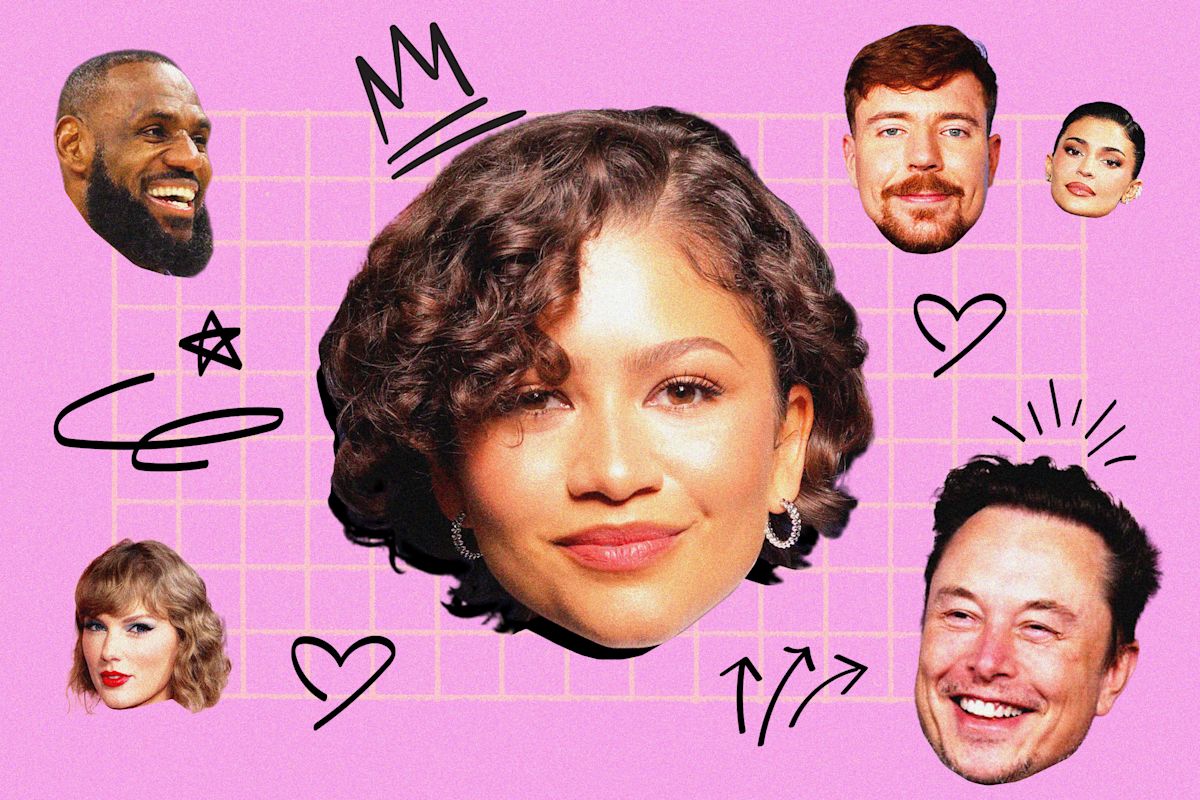
The Yahoo and YouGov study recorded details of Gen Z's career preferences: 79% of the generation's representatives prefer a private life, and only 9% want to be famous. As a role model, Gen Z chooses Zendaya (13%), while 36% refused to identify with any public figure. The top career goals were distributed as follows: a successful but not famous tech entrepreneur (18%), a respected scientist or professor (17%), a doctor (14%).
Context
The question of Gen Z's interest in an influencer career was previously studied by Morning Consult in 2023, when 57% of respondents chose this path. In September 2024, CNBC published data showing that more than half of Gen Z aspire to become influencers, while noting that this path requires constant visibility. In 2026, Yahoo Lifestyle reported that Zendaya became the most popular idol of the generation, surpassing Taylor Swift, LeBron James, and MrBeast. YouGov also published data on 2026 influencer marketing: one in four American consumers discovers new products through influencers.
Why this matters for the industry
The sharp decline in Gen Z's interest in the role of an influencer signals a structural shift in the Creator Economy. Brands building influencer marketing strategies for a young audience should consider that the next wave of authors and content creators will be significantly smaller. Developers of recommendation systems and AI moderation should account for the potential decrease in the diversity and volume of public content from Gen Z in training datasets. The market is reorienting from tools for public performance to B2B automation and enterprise AI solutions: AI agents, background automation of publications, and products with private UX.
Why this matters for users
The trend is explained by three factors: algorithmic fatigue — fatigue from the need to constantly be online and generate content, fear of the instability of internet fame, and a shift to pragmatism in the context of a complex labor market. Gen Z is not giving up work — they want to work differently: quietly, with meaning, without public performance. For readers, this means that the next tools for working with content will be oriented toward background automation, private modes, and creating content for oneself, business, and closed communities, rather than for a wide audience.
What is still unknown / limitations
Comparing the 2026 Yahoo/YouGov poll and the 2023 Morning Consult poll is methodologically problematic — different research companies, likely different samples, question wording, and survey methods. The difference between 57% and 5% requires checking for measurement artifacts. The sample size, representativeness, margin of error, and exact wording of the questions in the Yahoo/YouGov poll are not disclosed in public materials. Two figures from different organizations do not necessarily "confirm" each other — they may demonstrate how fragile measurements of intentions are when the methodology changes.
Sources
- Yahoo Lifestyle — Zendaya as a Gen Z idol
- CNBC — Gen Z's interest in the role of an influencer
- YouGov — 2026 influencer marketing data
Author
Look at AI, editorial team