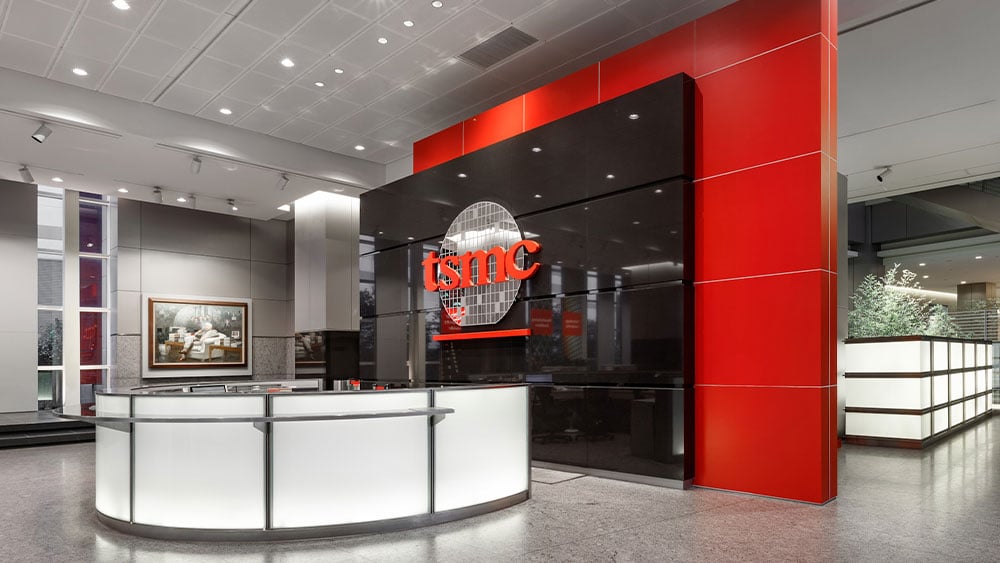
TSMC reported July 2026 revenue of NT$467.58B (~$14.5B), up 44.7% from the same period last year. Despite these figures, shares fell 0.4%, and the semiconductor sector retreated — investors believe the growth is already priced in.


What happened
High-performance computing (HPC), including AI chips, accounted for 66% of TSMC's July revenue. Its largest customers are Nvidia and Google. The company revised its 2026 capital expenditure plan upward to $60–64B and remains ahead of its annual revenue growth target of around 40%. The SOX semiconductor index retreated ~2.9% in the session amid a technical correction across the sector.
Context
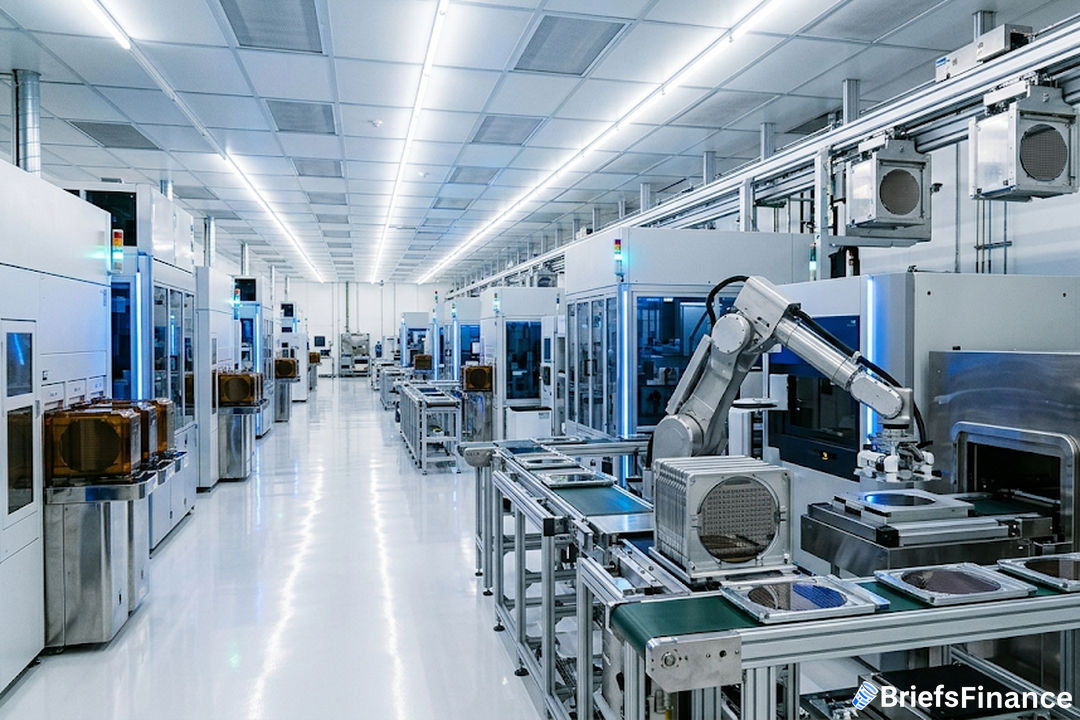
TSMC shares have risen 50% since the start of 2026, while the SOX index is up 72%. TSMC's monthly reports are considered the main public barometer of Big Tech's AI infrastructure spending: the company manufactures advanced chips for nearly all the industry's major players. The capex increase means investments in new fabs and ASML equipment for 3nm and 2nm processes, laying the production capacity foundation for the next 12–24 months.
Why this matters for the industry
An HPC share of 66% and 45% year-over-year growth confirm that AI chip demand is not slowing, and compute capacity remains the key constraint for scaling models. The elevated capex plan guarantees expanded production capacity — reducing the risk of GPU shortages in the coming quarters for cloud providers and customers. At the same time, the dominance of the TSMC–Nvidia–Google axis strengthens market concentration, creating structural barriers for startups.
Why this matters for users
For AI industry professionals, the report confirms that infrastructure for inference and training is scaling at an accelerating pace, allowing resource-intensive AI features to be included in product roadmaps without fear of compute shortages. In 6–12 months, new capacity will start delivering results — an increase in AI chip supply and a possible decline in cloud GPU instance costs are expected. Inference costs for startups will remain high in the short term, but TSMC's scaling reduces the risk of sudden GPU shortages.
What is still unknown / limitations
The report describes production volumes and capital expenditures but says nothing about the computational efficiency (FLOPS per watt) of new nodes. The real impact on inference costs, API provider latency, and cloud GPU availability for individual teams cannot yet be assessed until new chips are deployed in data centers, which will take 6–12 months.
Sources
Author
Look at AI, editorial team