New research confirms that the scaling laws principles underlying the development of large language models also work when analyzing physiological data from wearable devices. This paves the way for creating fundamental biometric models with predictable accuracy growth.

What Happened
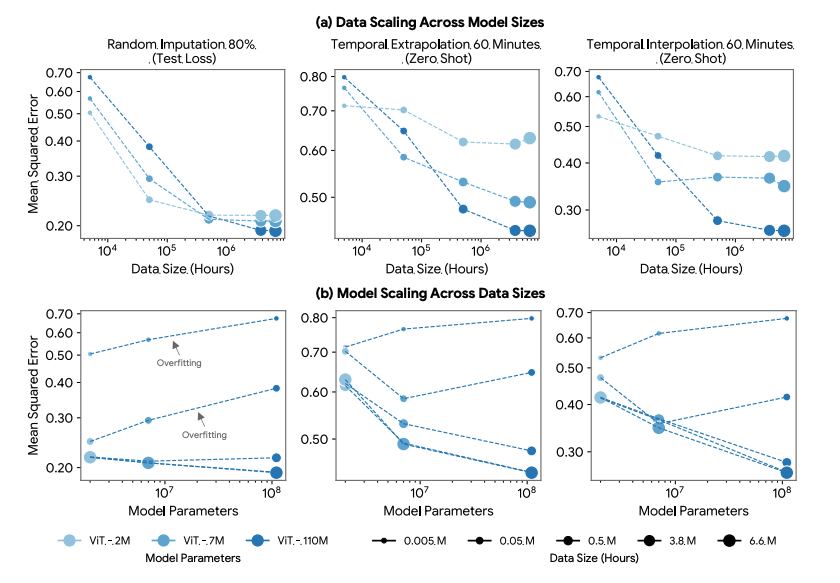
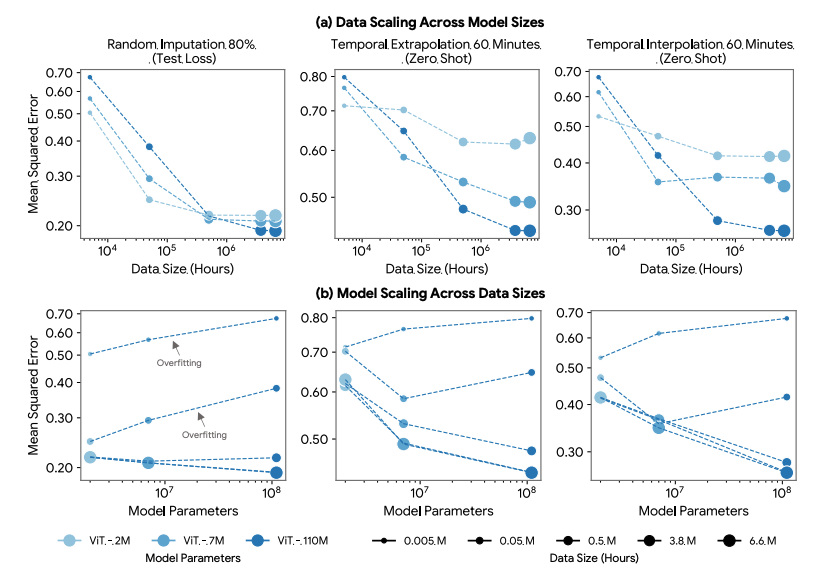
Scientists have discovered that the validation error of sensor data predictably decreases as the volume of training data (up to 40 million hours), model size (up to 328 million parameters), and computational resources increase. However, the efficiency saturation process in sensor models occurs faster than in LLMs: optimal performance is achieved with approximately 10 million hours of data and 100 million parameters.
Context
Unlike text models, which face the problem of a shortage of high-quality training data, sensor data from wearable devices is a virtually inexhaustible resource. This allows for a transition from manual hyperparameter tuning to the scalable training of specialized architectures.
Why It Matters for the Industry
This discovery confirms the possibility of creating foundation models for biometrics. This could democratize the market, lowering the barrier to entry for startups and allowing them to create high-precision AI products regardless of the current oligopoly of tech giants in the LLM space.
Why It Matters for Users
For end users, this means a qualitative leap in the development of smartwatches, rings, and other gadgets. Devices will become exponentially smarter not only through new algorithms but also due to the predictable growth in health monitoring accuracy as global datasets accumulate.
What Is Not Yet Known / Limitations
There are serious legal and regulatory risks related to data privacy (GDPR, EU AI Act) that could limit the scaling of biometric models, despite their technical potential.
Sources
Author
Look at AI, Editorial Team