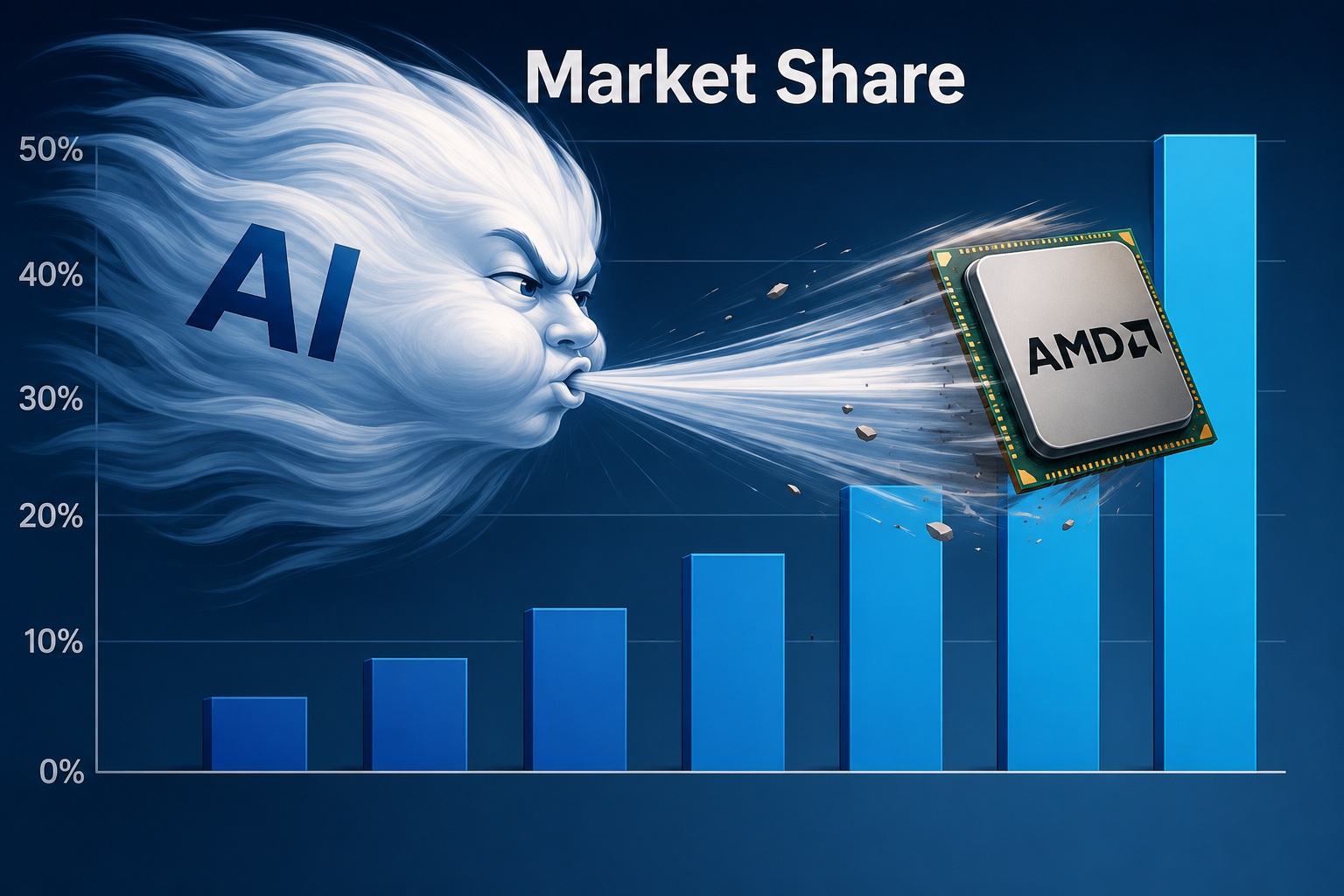
AMD is demonstrating rapid growth in the server computing segment, achieving record revenue figures and actively shaping an alternative to proprietary ecosystems for artificial intelligence development.
What Happened
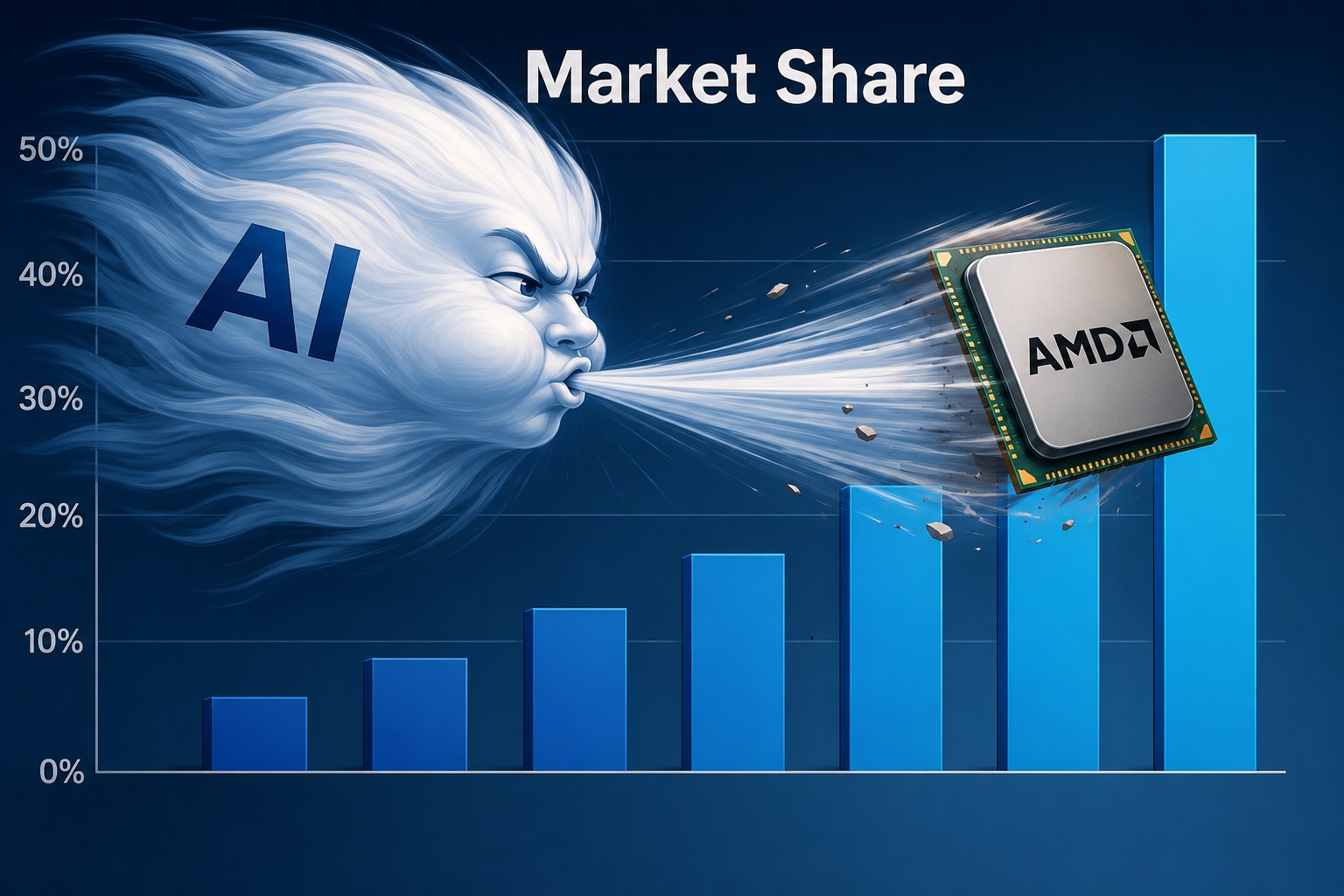
In the first quarter of 2026, AMD's revenue share in the x86 server processor segment reached 46.2%, while its unit shipment share stood at 33.2%. Data Center segment revenue grew to $5,775 million, a 57% increase compared to last year. The company is also expanding its AI presence through strategic partnerships with Microsoft and Anthropic and the development of the open software stack ROCm.
Context
AMD is shifting from competing solely at the individual chip level to a strategy of optimizing systems at the rack-level. This transition is designed to create a scalable and open infrastructure capable of supporting distributed computing for Agentic AI, undermining the traditional dominance of Intel and proprietary GPU stacks.
Why It Matters for the Industry
For the industry, this signifies a paradigm shift from the dominance of a single player to a sustainable Nvidia/AMD duopoly. The development of open standards, such as ROCm, combined with the Instinct series accelerators, creates a technical foundation for reducing developer dependency on closed ecosystems and allows companies to diversify hardware suppliers for model training and inference.
Why It Matters for Users
Users and developers gain access to high-performance solutions for RAG (Retrieval-Augmented Generation) and fine-tuning tasks through more flexible and open hardware. This could lead to lower infrastructure costs and the emergence of more production-ready pipelines optimized for the AMD Instinct architecture.
What Is Not Yet Known / Limitations
Data is missing regarding the compliance of AMD's infrastructure with specific regulatory requirements, such as the EU AI Act or GDPR.
Sources
Author
Look at AI, Editorial Team