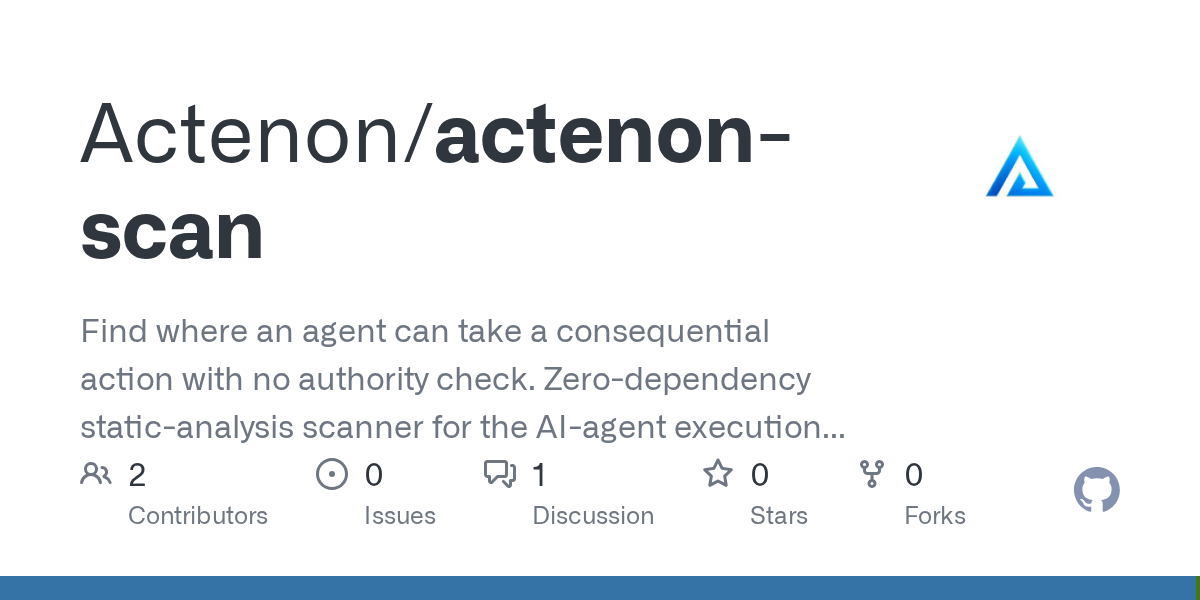
A study by Actenon has revealed a critical security flaw in 25 popular AI agent frameworks, including crewAI, SuperAGI, and MetaGPT. Researchers discovered 30 pathways to execute significant actions without proper authorization checks, creating serious risks for LLM-driven systems.
What Happened
While scanning 25 in-demand frameworks for AI agent development, Actenon specialists discovered the existence of a so-called "execution gap." It was found that while systems successfully validate the format of input arguments, they fail to perform access rights checks (actor · target · scope) at the exact moment the action is performed. This allows agents to execute critical operations, such as writing files, running shell commands, and network egress, while bypassing authorization mechanisms.
Context
Modern approaches to AI agent security often rely on prompt filtering or input validation. However, this is insufficient because a model can generate a request that is syntactically correct according to the format but unauthorized in meaning—a request the system will permit without checking whether the specific agent has the right to perform that specific action in that specific context.
Why It Matters for the Industry
For the industry, this signifies a need for a fundamental shift from simple guardrails to full Identity and Access Management (IAM) models within agent architectures. An increased demand is expected for middleware solutions that act as security controllers between the LLM and the execution environment.
Why It Matters for Users
Developers are recommended to conduct an immediate audit of their agent pipelines using the specialized tool actenon-scan. Using popular open-source frameworks without implementing custom authorization layers creates a high risk of unauthorized access to file systems and network resources.
What Is Not Yet Known / Limitations
Expert opinions diverge on the scale of the consequences: ranging from local risks for solo developers to the emergence of serious legal and corporate barriers when implementing agents into business processes.
Sources
Author
Look at AI, Editorial Staff