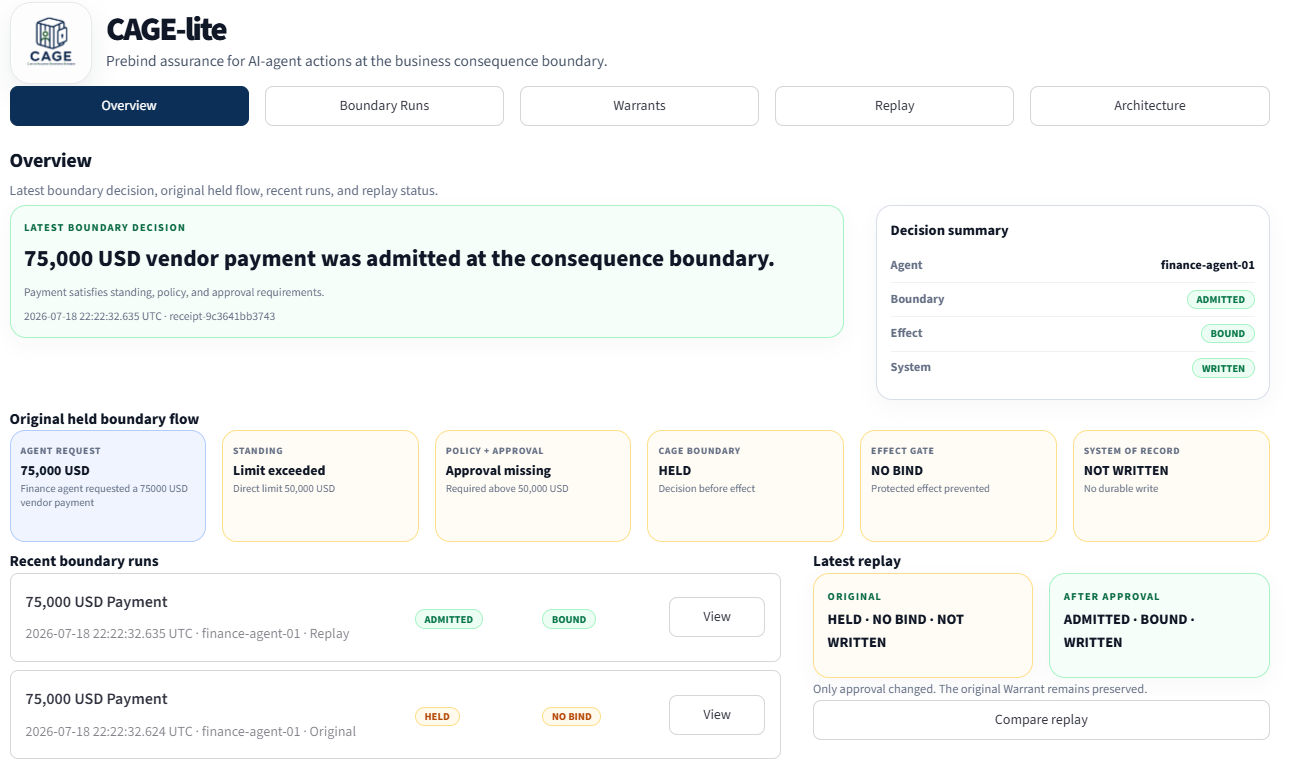
A reference implementation of the CAGE-lite framework has been introduced, implementing a Prebind Assurance mechanism to control the critical actions of autonomous AI agents.
What Happened
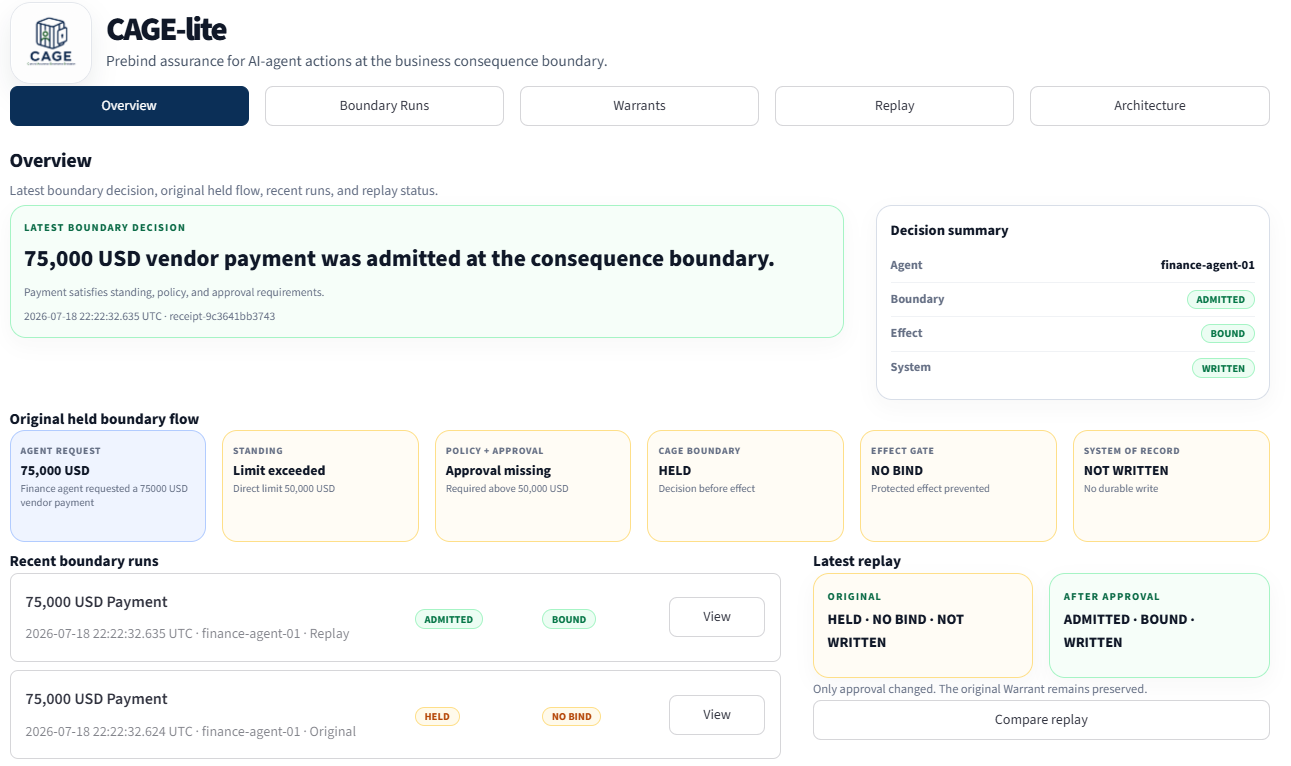
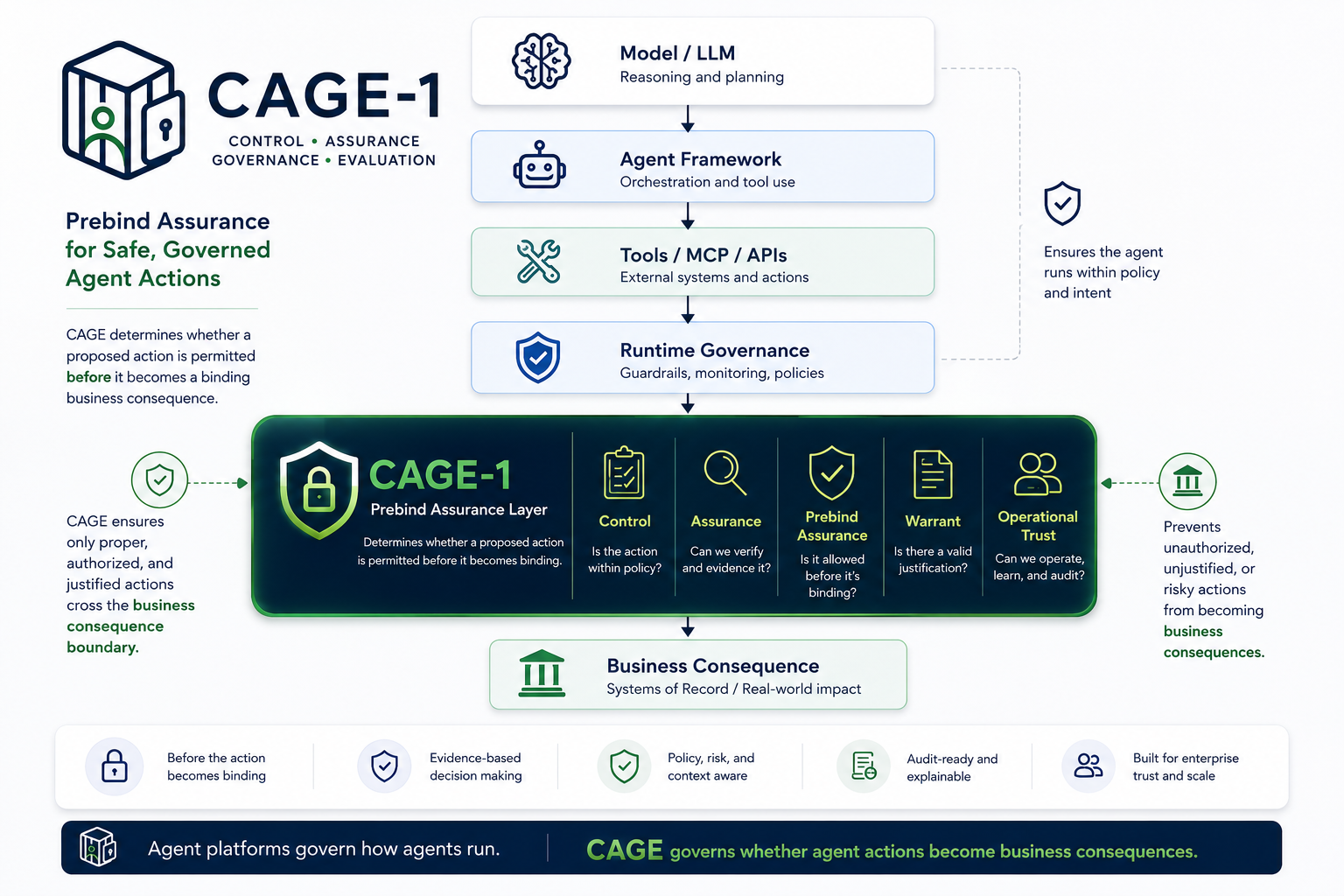
The CAGE-lite open-source project has been released, serving as a software implementation of the CAGE (Control, Assurance, and Governance Evaluation) concept. The system focuses on the Prebind Assurance stage, which verifies an agent's authority before its action leads to real-world consequences, such as financial transactions or data modifications. To record decisions, secure CAGE Warrants are used, serving as an evidentiary base of whether an action was permitted or blocked.
Context
The project is based on the theoretical principles of the CAGE framework described in the scientific paper arXiv:2607.03510. It addresses the lack of a reliable governance layer between the intellectual reasoning of a language model and the physical execution of commands in the real world.
Why It Matters for the Industry
For the industry, this represents the creation of a Trust Layer. As agents are integrated into business processes, there is a growing need for a standardized way to verify and audit their decisions. CAGE-lite allows developers to implement permission verification protocols directly into their pipelines without waiting for proprietary corporate solutions, setting a direction for the formation of industrial AI Governance standards.
Why It Matters for Users
For end users and companies, this is an important step toward the safe use of AI in finance and infrastructure management. The mechanism ensures that an autonomous agent will not perform an unauthorized transaction or a critical error without explicit confirmation or compliance with established security policies.
What Is Not Yet Known / Limitations
At the current stage, the project is a reference implementation, which implies the need for deep integration into existing workflows to ensure real-time security.
Sources
Author
Look at AI, Editorial Staff