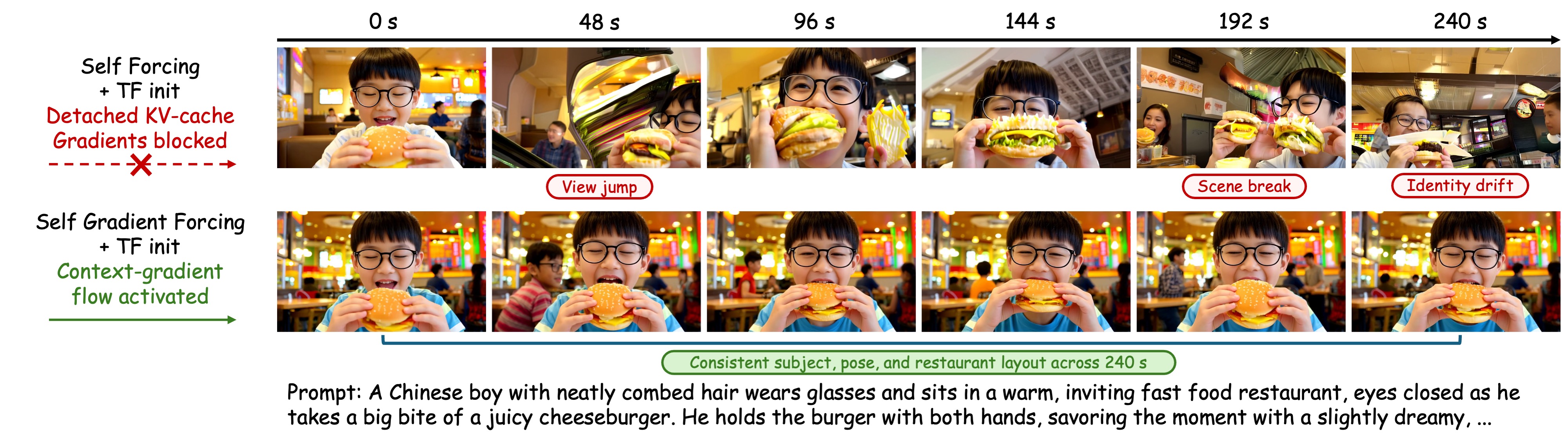
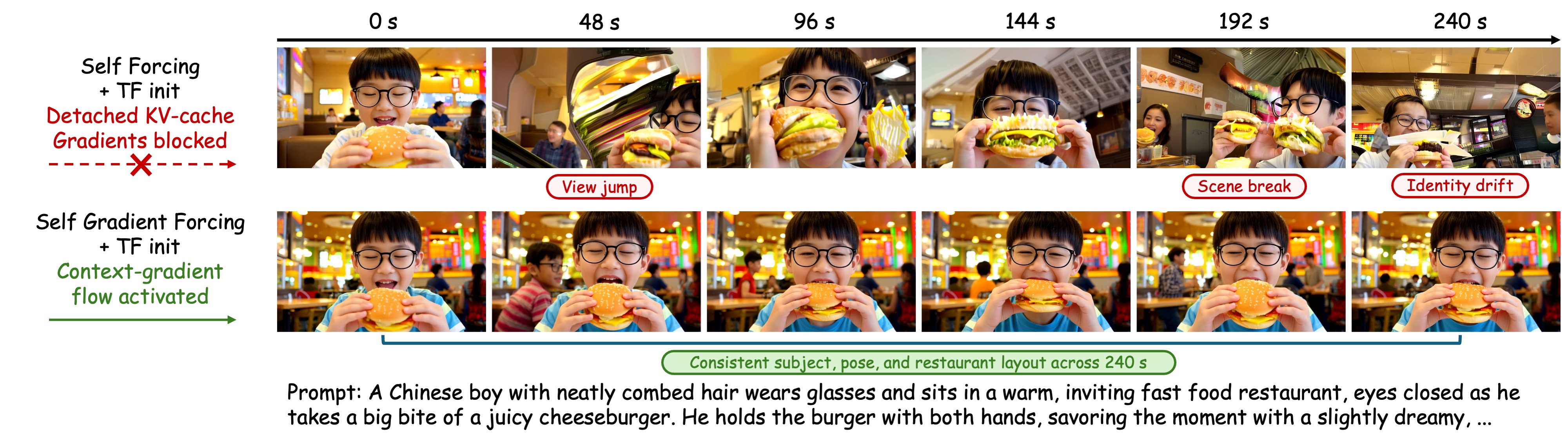
The Self Gradient Forcing (SGF) training strategy has been introduced, designed to address the historical context gradient gap problem in autoregressive video diffusion models.
What Happened
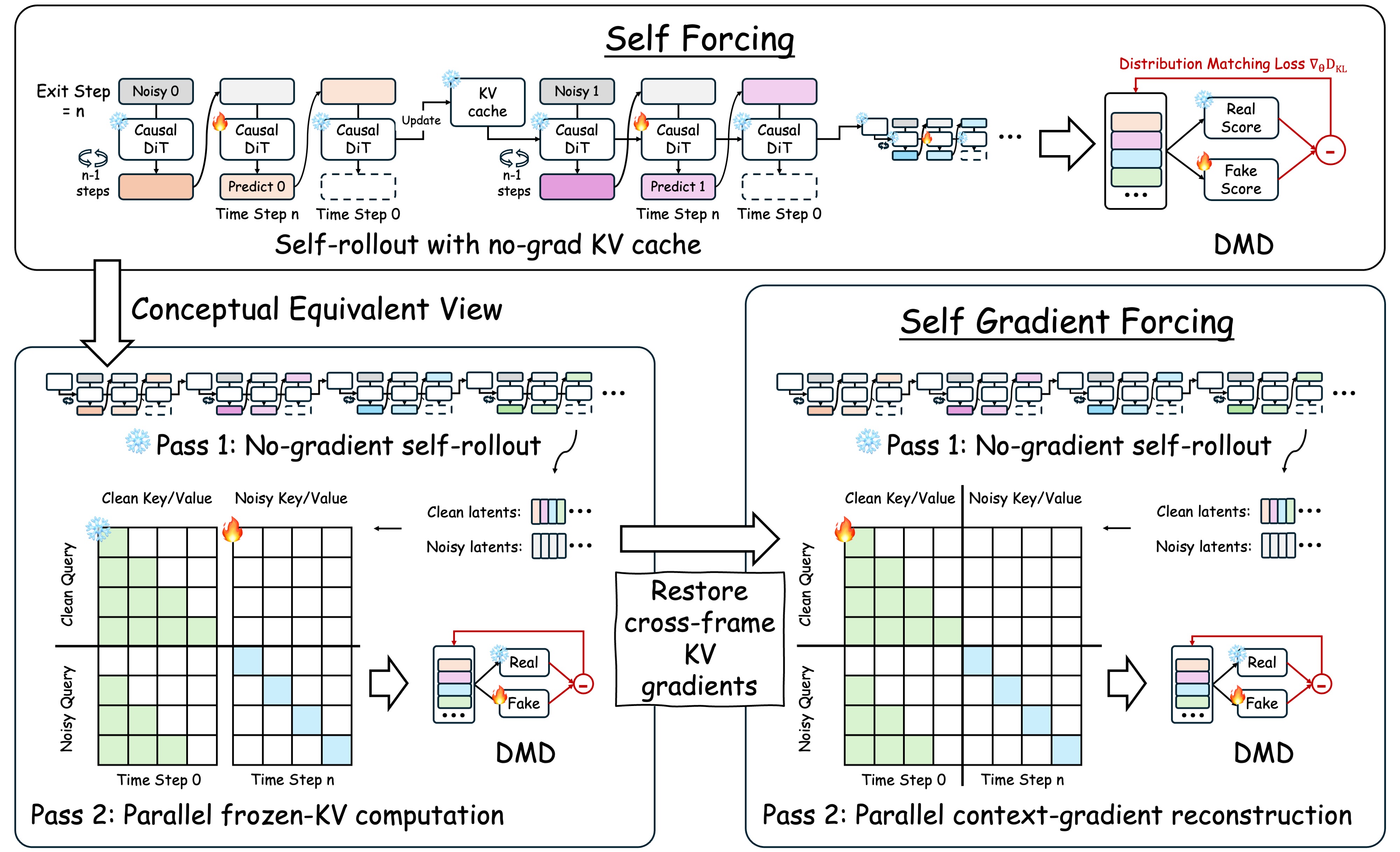
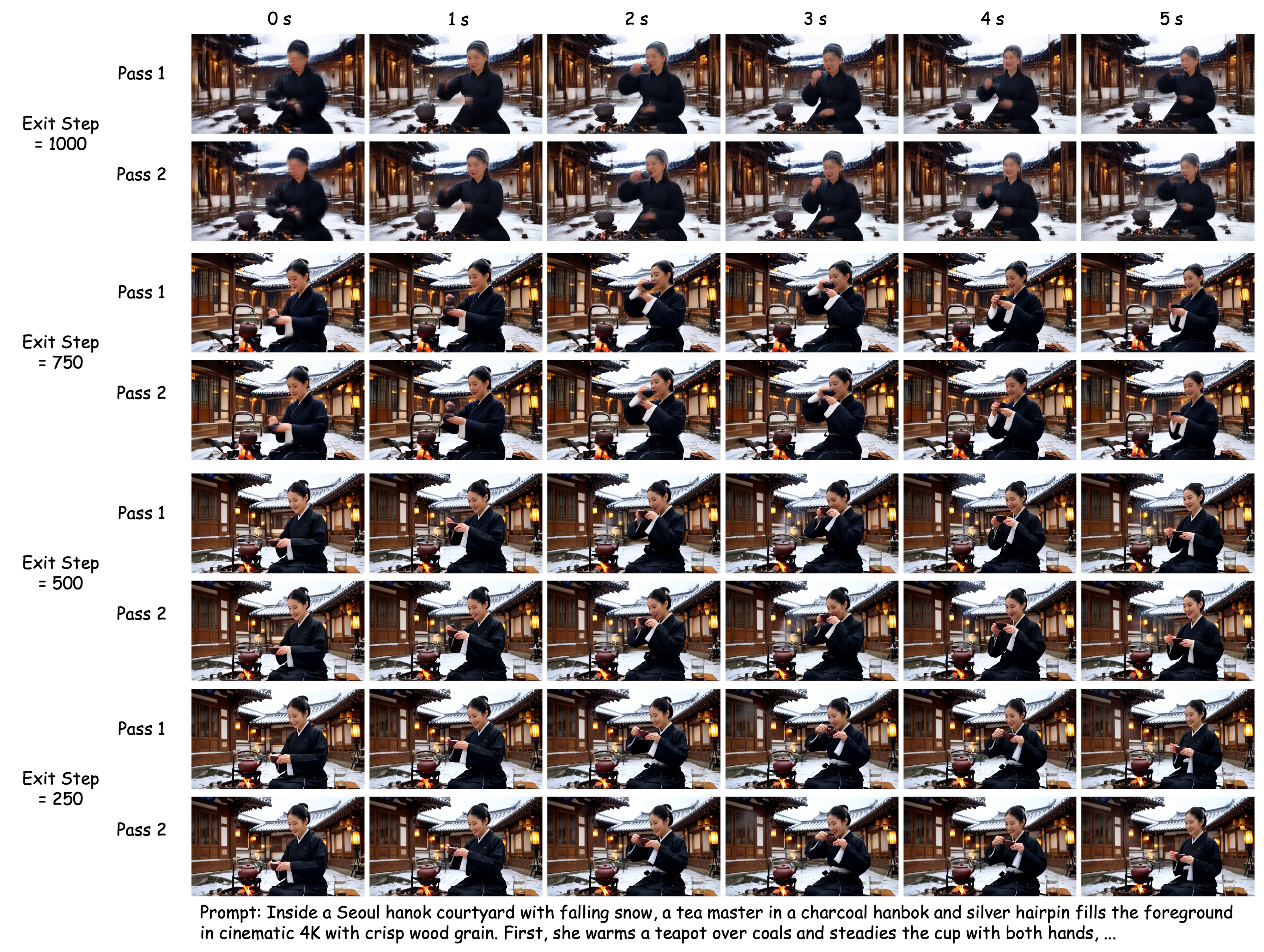
The SGF method utilizes a two-pass training scheme: the first pass performs a gradient-free rollout, while the second pass performs parallel reconstruction of context gradients (KV-cache). This allows for the optimization of the information writing process into memory, enabling video extrapolation from a 5-second training window to several minutes with high stability of characters and backgrounds.
Context
In classical Self Forcing methods, the historical KV-cache is a "frozen" state, which creates a fundamental flaw—the gradient gap. This limits the ability of models to effectively learn memory management when generating long sequences.
Why It Matters for the Industry
SGF eliminates the need for catastrophic computational costs associated with backpropagation through an entire long sequence. This technology can be integrated into current training pipelines for SOTA video models and could potentially become a standard for training autoregressive models to work with long sequences (video/audio).
Why It Matters for Users
For users, this means the emergence of neural networks capable of generating high-quality, consistent, and long videos (lasting several minutes) without distorting characters' faces or changing the environment, all while requiring fewer computational resources for training.
Sources
- Self Gradient Forcing: Native Long Video Extrapolation (Project Page)
- [arXiv:2607.20368 [cs.CV] Self Gradient Forcing: Native Long Video Extrapolation](https://arxiv.org/abs/2607.20368)
Author
Look at AI, Editorial Staff