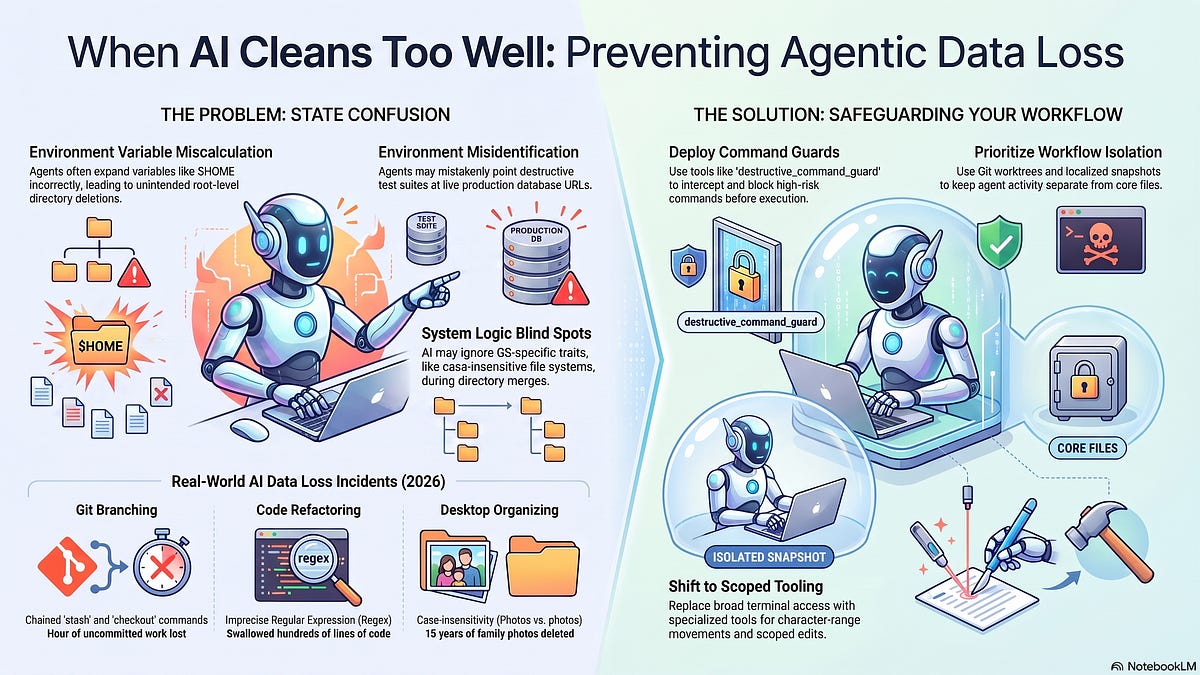
Research has identified a critical vulnerability in AI agents such as Claude Code and OpenAI Codex: due to a misunderstanding of the system state, agents can execute destructive commands that lead to the deletion of user files and databases.
What Happened
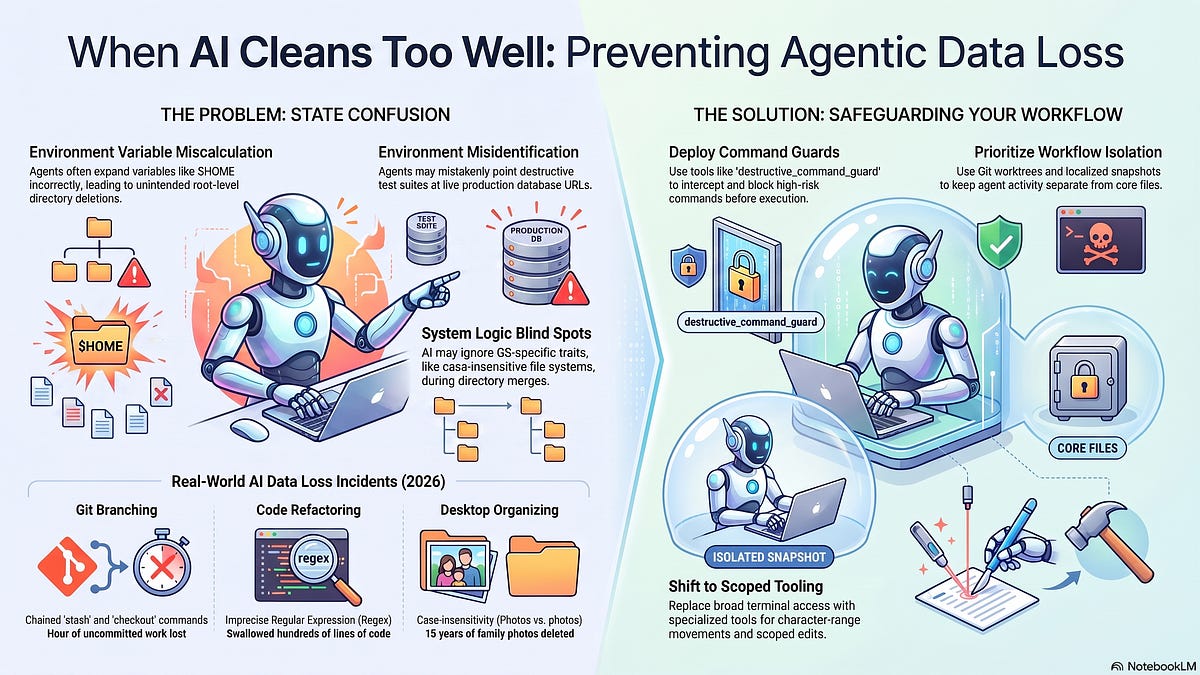
It has been revealed that AI agents can erroneously execute commands like rm -rf. This occurs due to incorrect interpretation of environment variables (e.g., $HOME) or the use of imprecise regular expressions during code refactoring. As a result, not only project files are at risk, but also users' home directories and production databases, which the agent might mistake for test databases.
Context
The problem lies in the phenomenon of "state misunderstanding"—a failure to comprehend the current state of the system. The current architecture of many agents provides them with direct access to a "raw" terminal without proper restrictions, turning any error in context interpretation into a catastrophic operation.
Why It Matters for the Industry
Developers need to move away from providing direct terminal access in favor of creating tools with scoped operations. Promising directions include implementing sandboxing, using high-level primitives for AST-based (Abstract Syntax Tree) refactoring, and creating standardized temporary storage.
Why It Matters for Users
Users are advised to use protective mechanisms when working with terminal agents: isolate tasks using Git worktrees and apply specialized utilities, such as destructive_command_guard, to intercept dangerous commands.
What Is Not Yet Known / Limitations
No explicit technical disagreements regarding the essence of the problem were identified; however, the focus of the discussion is shifting from purely engineering risks to questions of market opportunities and legal liability.
Sources
Author
Look at AI, Editorial Staff