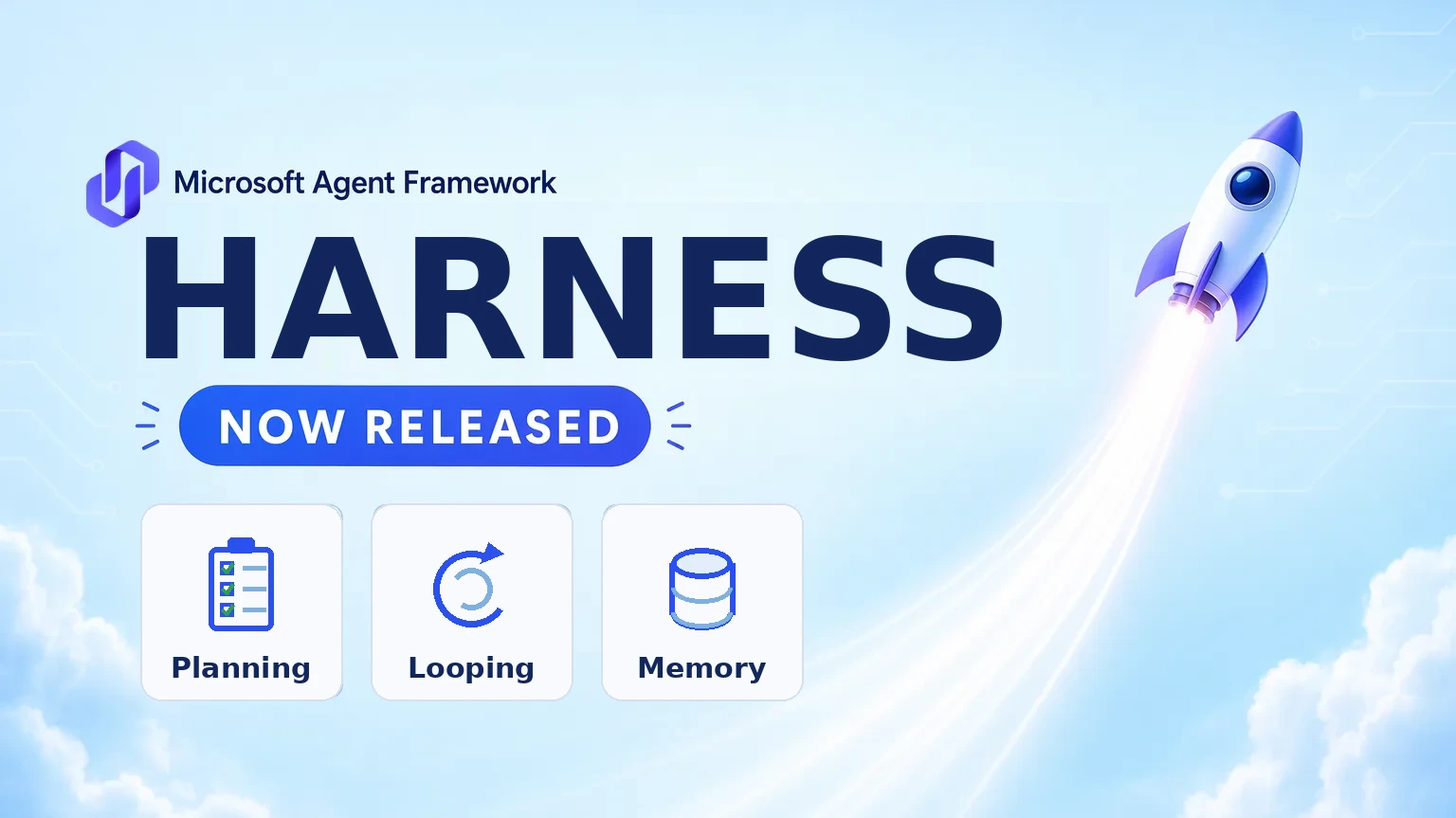
Microsoft has introduced Agent Framework Harness — a specialized runtime designed to transform Large Language Models into fully autonomous agents. The framework, available for Python and .NET, provides ready-to-use infrastructure for solving critical tasks such as state management, memory, and task planning.

What Happened
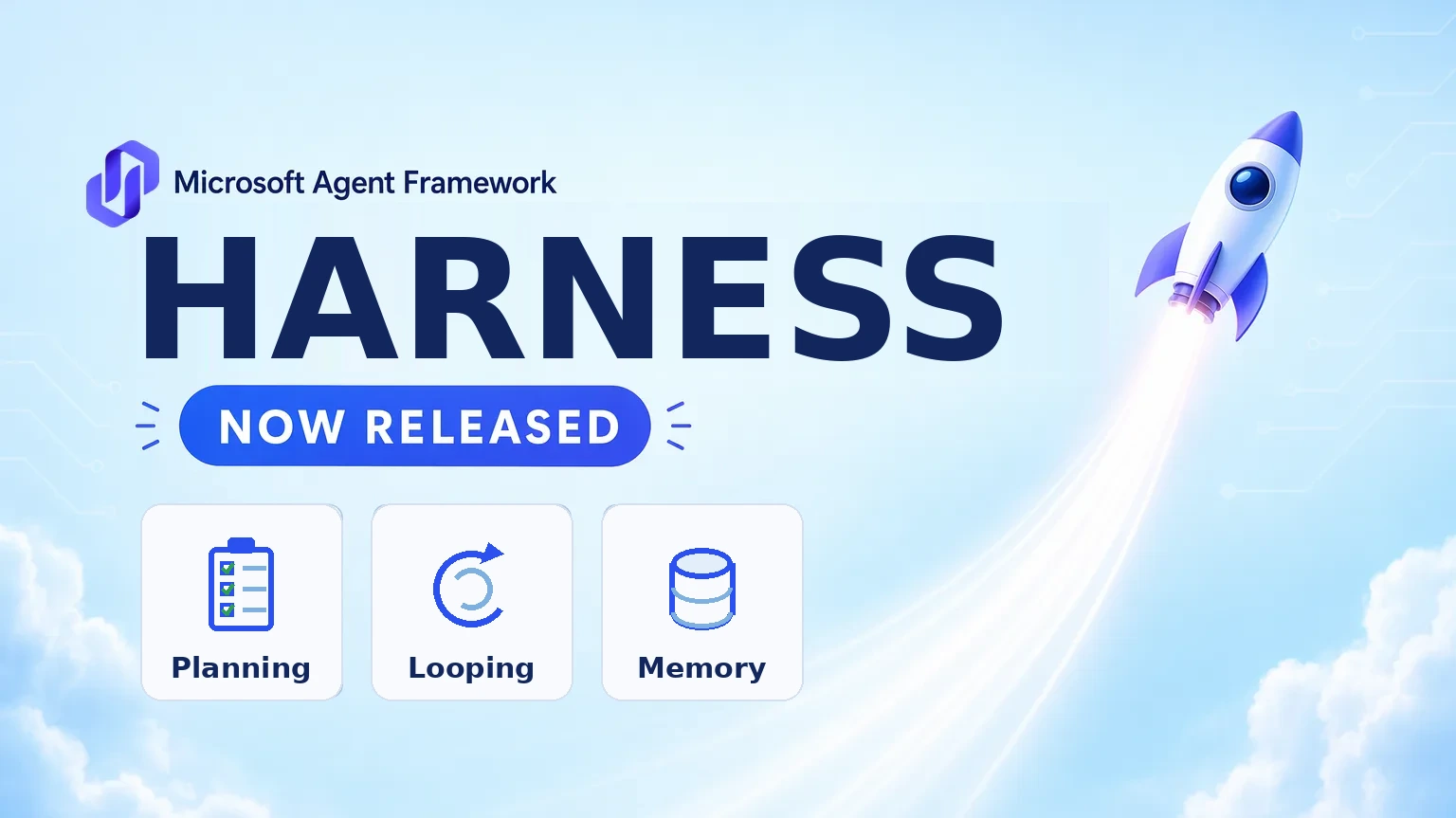
Microsoft has officially released Agent Framework Harness, offering developers a toolkit for building complex agentic systems. The solution includes built-in task planning mechanisms, memory management (including history persistence and compaction), function invocation, and web search integration. To ensure reliability, the system supports state preservation after every model call, allowing work to resume after failures, while integration with OpenTelemetry provides necessary telemetry for monitoring.
Context
Before the emergence of such standardized development environments, creating autonomous agents required engineers to manually write complex control loops, history preservation mechanisms, and error handling. The transition from simple chatbots to multi-step workflows required the creation of a robust infrastructural layer capable of maintaining context and the agent's long-term memory.
Why It Matters for the Industry
The release of Harness promotes the standardization of autonomous agent development within the industry. By providing a "batteries-included" approach, Microsoft is laying the groundwork for establishing unified patterns for building agentic runtime environments, particularly within the Python and .NET enterprise ecosystems. This could accelerate the transition from the concept of "LLM as a chatbot" to using "LLM as an autonomous service" at industrial scale.
Why It Matters for Users
Developers gain the ability to move quickly from prototyping to deploying production-ready solutions without wasting resources on implementing low-level infrastructural code. Using ready-made abstractions for managing the "thought-action" cycle and automated memory management significantly lowers the barrier to entry for developing complex agentic systems.
What Is Not Yet Known / Limitations
There are risks associated with data security and privacy when using automated tool invocation mechanisms and long-term memory storage by agents.
Sources
Author
Look at AI, Editorial Staff