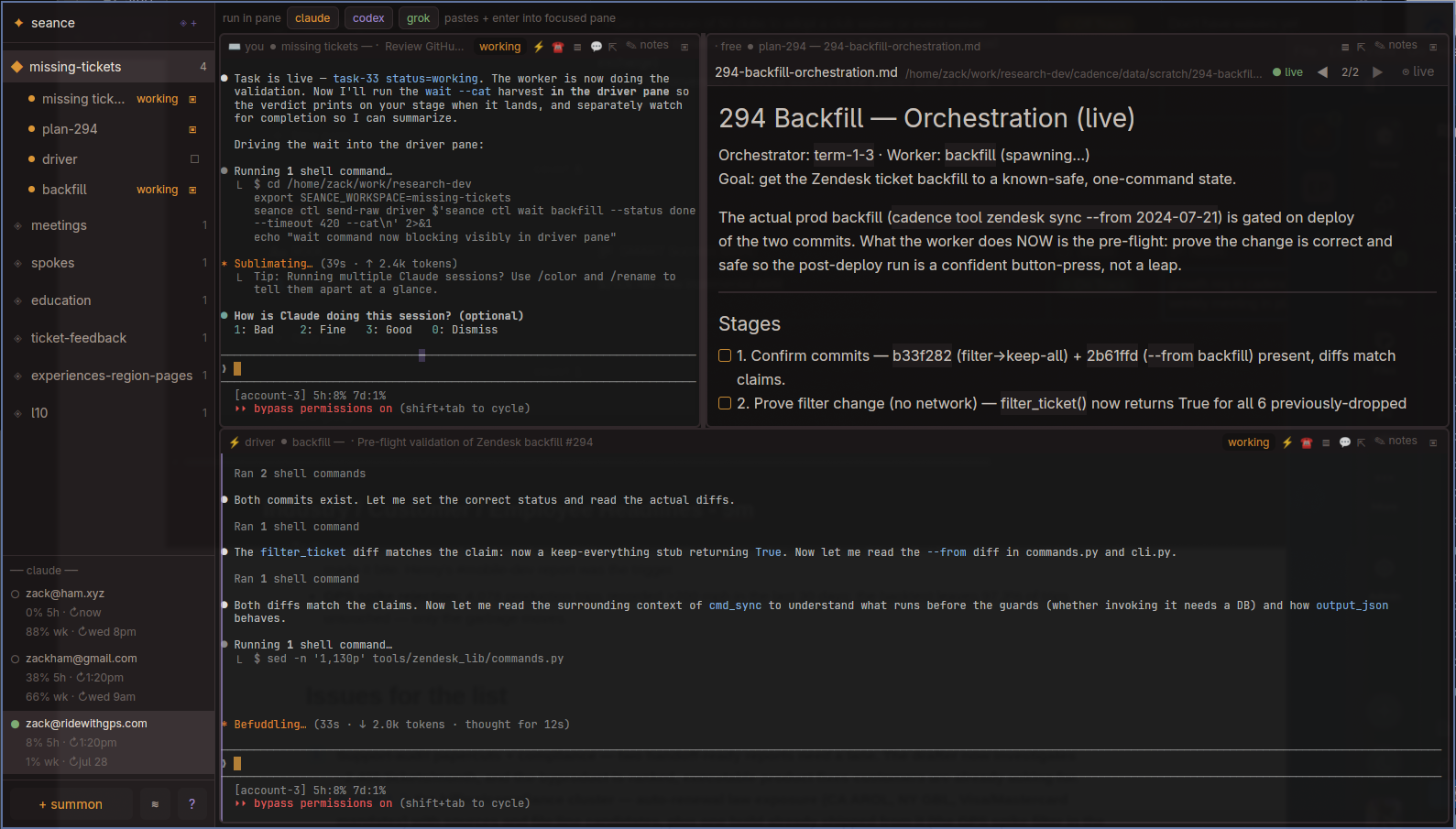
Seance has been developed—a multi-pane terminal for Linux designed to create a full-fledged collaborative workspace between humans and AI agents in real time.

What Happened
Developer zackham has introduced Seance, a tool for collaboration between humans and AI agents (such as Claude or Codex) within a single live workspace. The project is written in Rust using the GPUI framework and includes a task scheduler system (stage strip), a scratchpad system, and a control plane for orchestrating agent actions.
Context
Modern autonomous agents often operate on a "black box" model, where the task execution process is hidden from the user. Seance proposes a shift toward a "transparent co-authorship" model, where AI actions are visualized and can be controlled by a human directly during the workflow.
Why It Matters for the Industry
The project sets a new direction for autonomous agent UX by offering infrastructure for interactive engagement. This could lead to the standardization of "human-in-the-loop" interaction protocols and change the architecture of next-generation IDEs and terminals, transforming them into multimodal collaborative programming environments.
Why It Matters for Users
For developers and enthusiasts, this offers the opportunity to use AI not just as a chatbot, but as a full-fledged partner in the terminal. The tool provides safer debugging and allows for full control over processes through visual indicators and the ability to intervene instantly in an agent's actions.
What Is Not Yet Known / Limitations
Despite its fundamental potential, experts classify the project as an experimental PoC (Proof of Concept) rather than a production-ready solution, which requires caution when using it in critical workflows.
Sources
Author
Look at AI, Editorial Staff