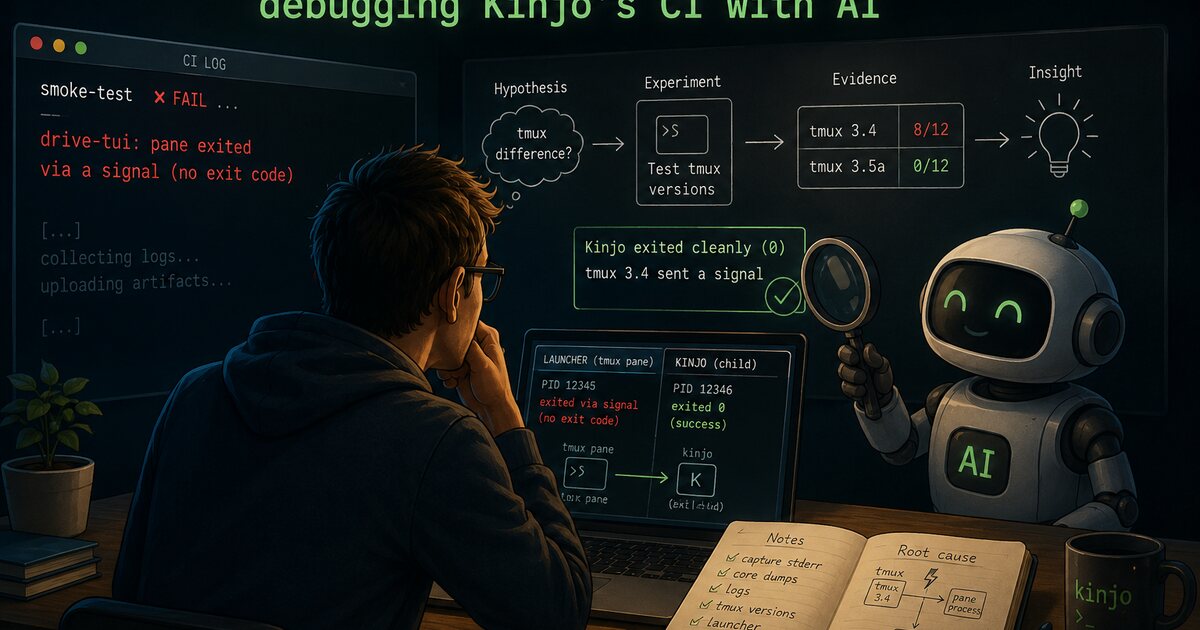
A developer from the Kinjo project demonstrated how using an AI assistant as a "force multiplier" allows for quickly distinguishing real technical failures from false signals in CI/CD pipelines.
What Happened
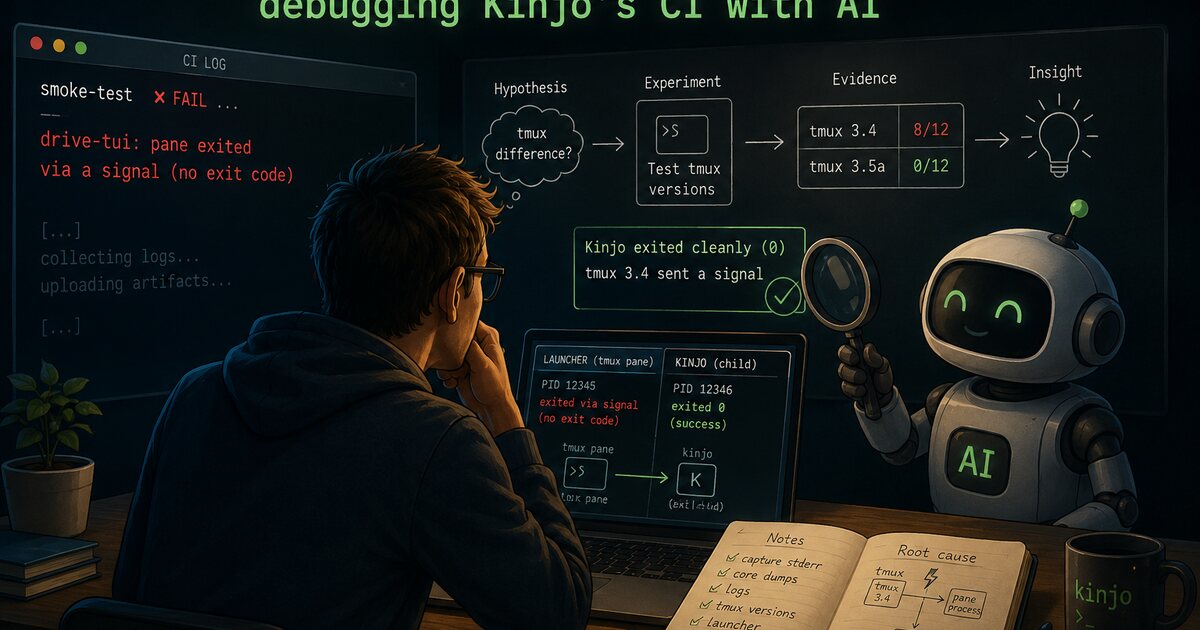
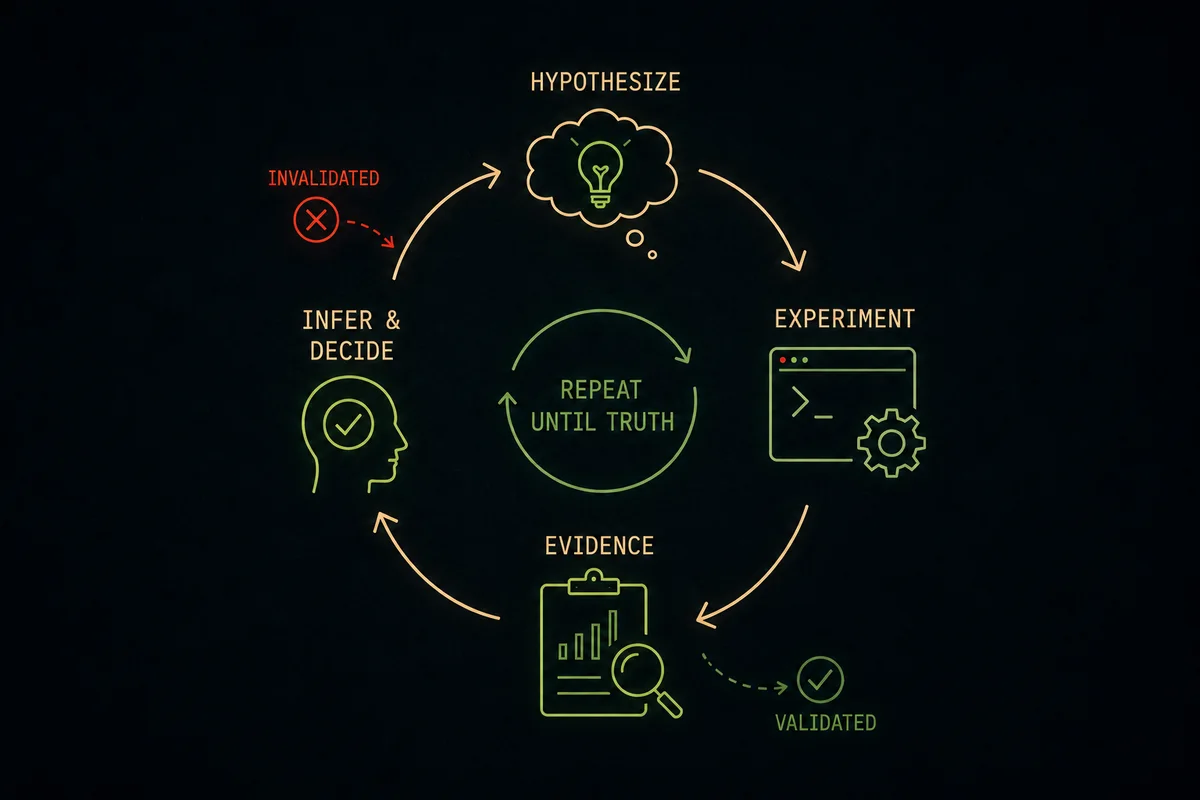
While debugging Kinjo, the developer discovered that a "crash" error in the Continuous Integration (CI) system was actually a signal from tmux 3.4 upon exiting. Using an AI assistant, the engineer rapidly conducted a hypothesis-testing loop: while the human formulated assumptions, the model automated the preparation of experimental environments and dependency bisection. The problem was ultimately resolved by updating tmux to version 3.5a. As a result of this case, new software was developed to collect diagnostic data, such as core dumps and gdb backtraces, when real crashes occur.
Context
This case illustrates the transition of AI from a simple code "advisor" to a "task executor" for intermediate tasks. The model's effectiveness lies not in independently finding causes, but in automating mechanical stages: modifying tests, preparing environments, and accelerating iterative testing, which is critical when localizing bugs in complex systems.
Why It Matters for the Industry
For the industry, this serves as an example of using AI effectively as a force multiplier. Integrating such agents directly into CI/CD tools (e.g., GitHub Actions or GitLab CI) will enable automated failure diagnostics. In the long term, a shift is expected from reactive debugging to autonomous diagnostic agents capable of performing full root cause analysis in distributed systems.
Why It Matters for Users
Developers can significantly reduce Time-to-Resolution (TTR) and Mean Time to Recovery (MTTR) when debugging pipelines. Using AI tools reduces cognitive load, allowing engineers to focus on architectural decisions by delegating routine hypothesis testing and environment management to automated agents.
What Remains Unknown / Limitations
Security experts (e.g., global_ai_ip_privacy_counsel) have expressed concerns regarding the risks of automating the collection of sensitive diagnostic data, such as core dumps.
Sources
Author
Look at AI, Editorial Staff