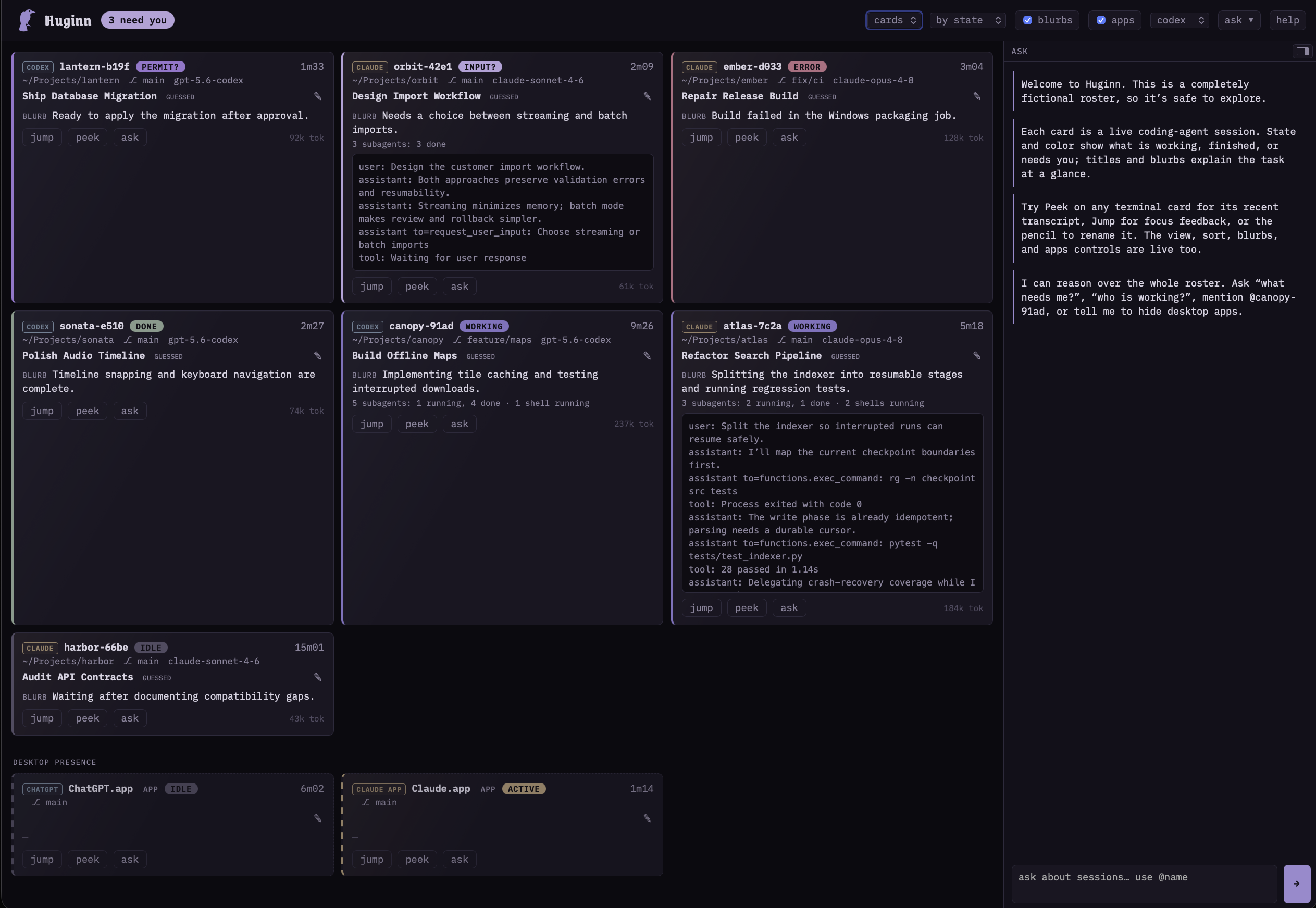
Huginn has been introduced—a specialized tool for visualizing and controlling the operation of autonomous AI agents, such as Claude Code and Codex, allowing users to transform chaotic terminal sessions into a structured dashboard.

What Happened
A developer has introduced Huginn, a local activity console that tracks terminal sessions and application states (e.g., Claude or ChatGPT Desktop). The project supports macOS and Windows, providing a unified dashboard for real-time monitoring of activity, errors, and data input requests.
Context
When using CLI agents, developers often face a "black box" problem, where it is difficult to track process states without constantly switching between terminal windows. Huginn bridges this interface gap by focusing on visualizing the lifecycle of agent processes.
Why It Matters for the Industry
The emergence of Huginn signals the formation of a new infrastructure layer: Agent Observability. This is critical for transitioning from one-off experiments to scalable management of agent fleets and the potential integration of monitoring functions directly into IDE standards and orchestrators.
Why It Matters for Users
The tool significantly improves Developer Experience (DX) by reducing the cognitive load when working with multiple AI agents simultaneously. Users can respond promptly to blocks when an agent requires permission or data input without losing work context.
What Is Not Yet Known / Limitations
There is a difference in scalability assessment: Huginn's local architecture ensures data privacy but may be limited for centralized auditing purposes in large corporate environments.
Sources
Author
Look at AI, Editorial Team