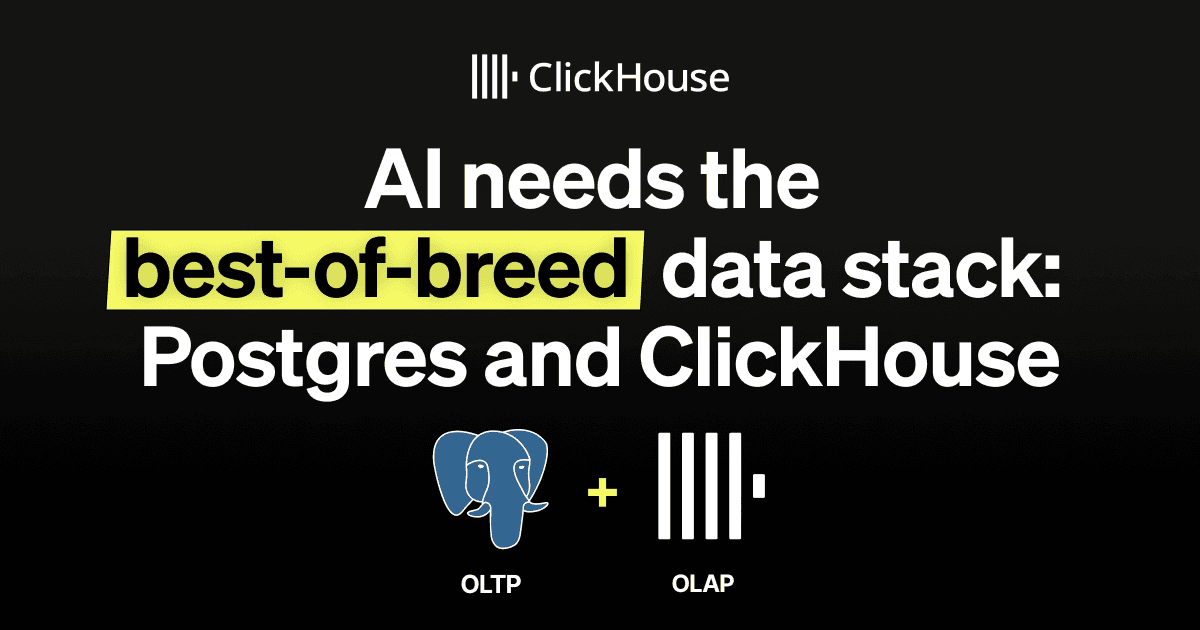
For modern AI applications, using a combined data stack that separates transactional and analytical workloads between Postgres and ClickHouse is becoming the standard.
What Happened
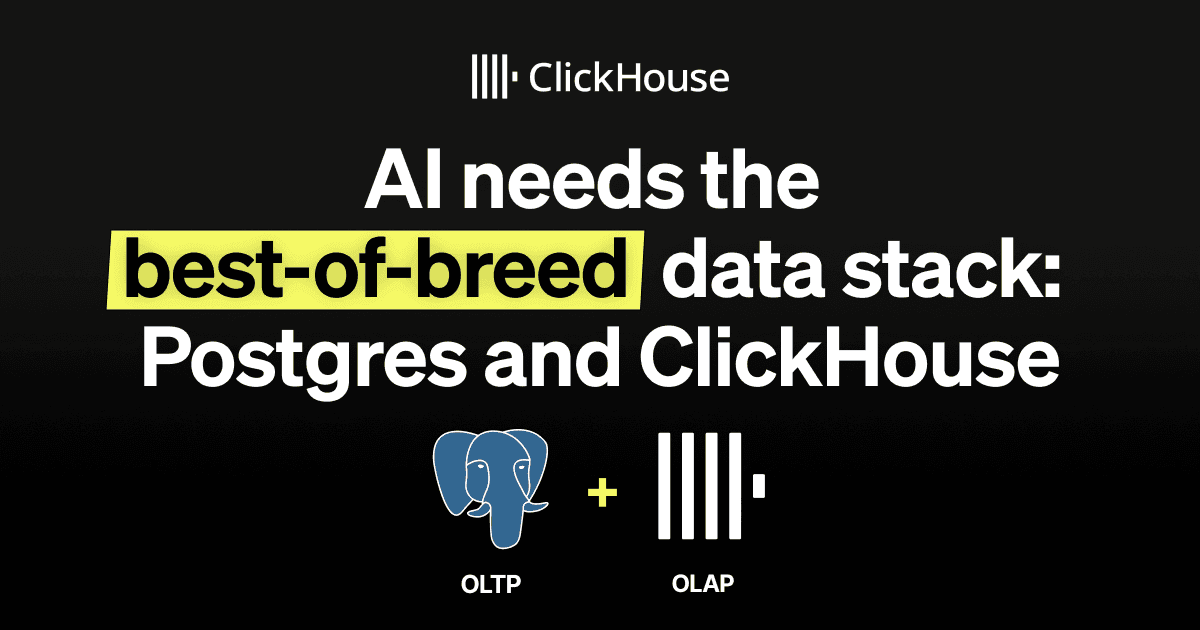
Amidst explosive data growth in AI-native environments—exceeding 1000% over the last 6 months—developers are moving from monolithic databases to hybrid architectures. Postgres is used to ensure transaction reliability (OLTP), while ClickHouse is used for high-performance analytics (OLAP). The integration of these systems is implemented through CDC tools, such as PeerDB, for low-latency replication, as well as through extensions like pg_clickhouse for query unification and pg_stat_ch for telemetry monitoring.
Context
AI agents and systems with intensive logging generate massive volumes of data, including prompts, tool calls, and operational logs. Using a single database to simultaneously record transactions and execute heavy analytical queries leads to performance degradation and unacceptable latency.
Why It Matters for the Industry
For the industry, this signifies a shift from monolithic databases to specialized data layers. Separating OLTP and OLAP workloads is becoming a critical pattern for scaling agentic systems. In the near term, the combination of Postgres + ClickHouse + PeerDB is expected to become a standardized, production-ready stack.
Why It Matters for Users
Developers of high-load AI systems need to rethink their data storage architecture by implementing hybrid schemes and CDC tools. This will allow them to simultaneously ensure transactional consistency and the ability to perform instantaneous real-time analytics on agent actions without compromising system speed.
Sources
Author
Look at AI, Editorial Team