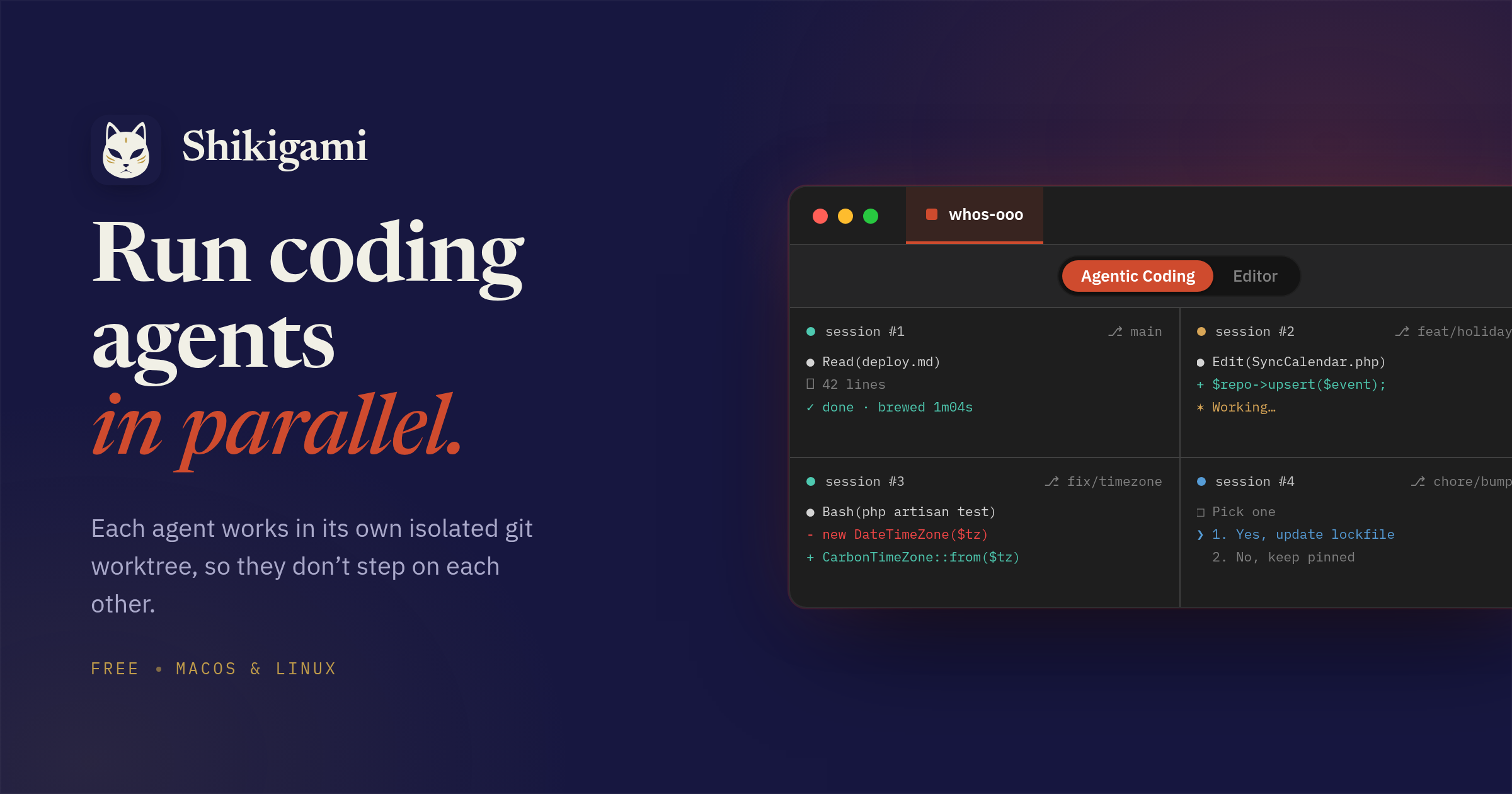
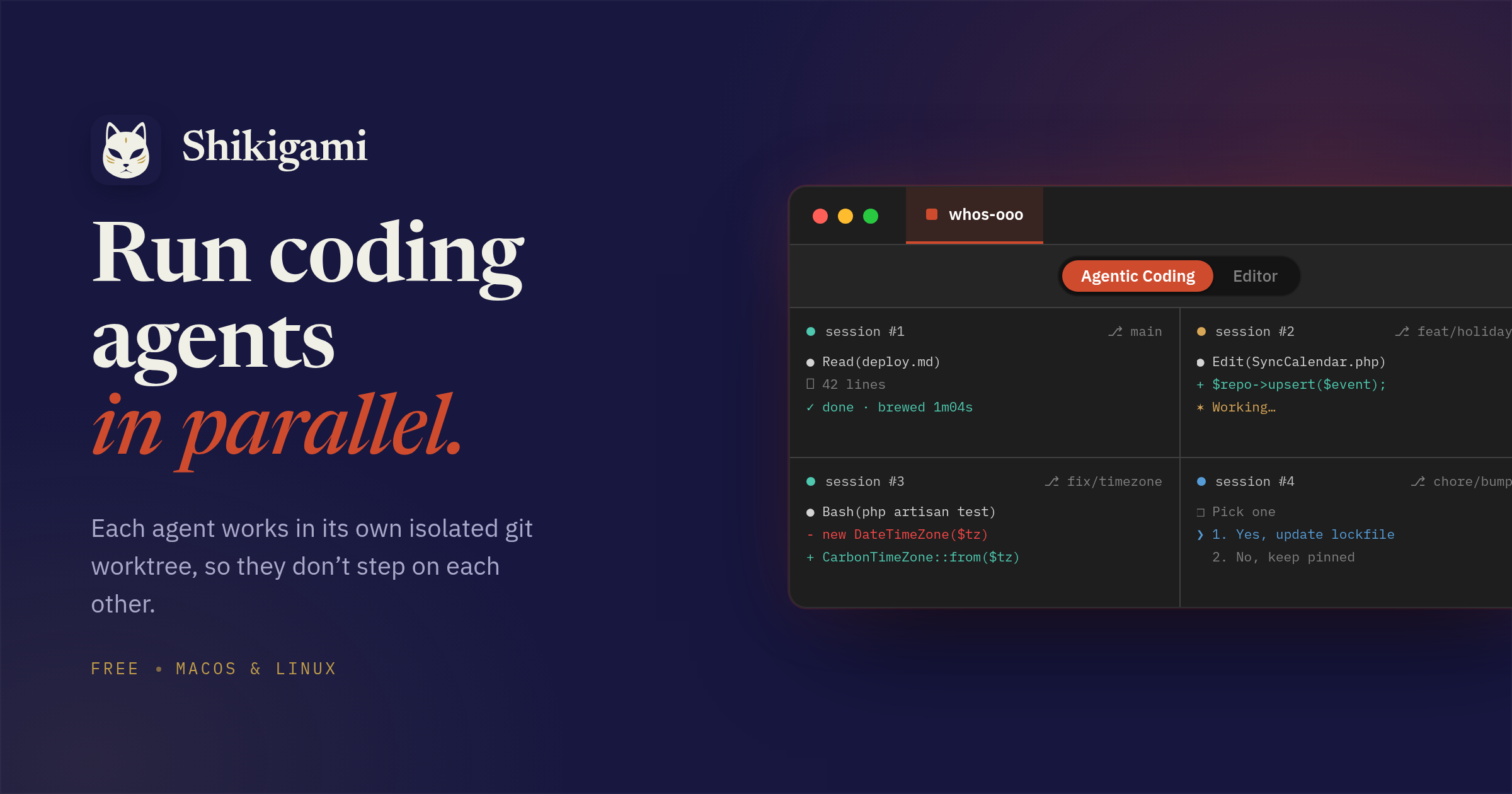
A new native desktop solution, Shikigami, has been introduced, allowing multiple AI agents—such as Claude Code or OpenAI Codex—to run in parallel on a single repository without the risk of code conflicts.

What Happened
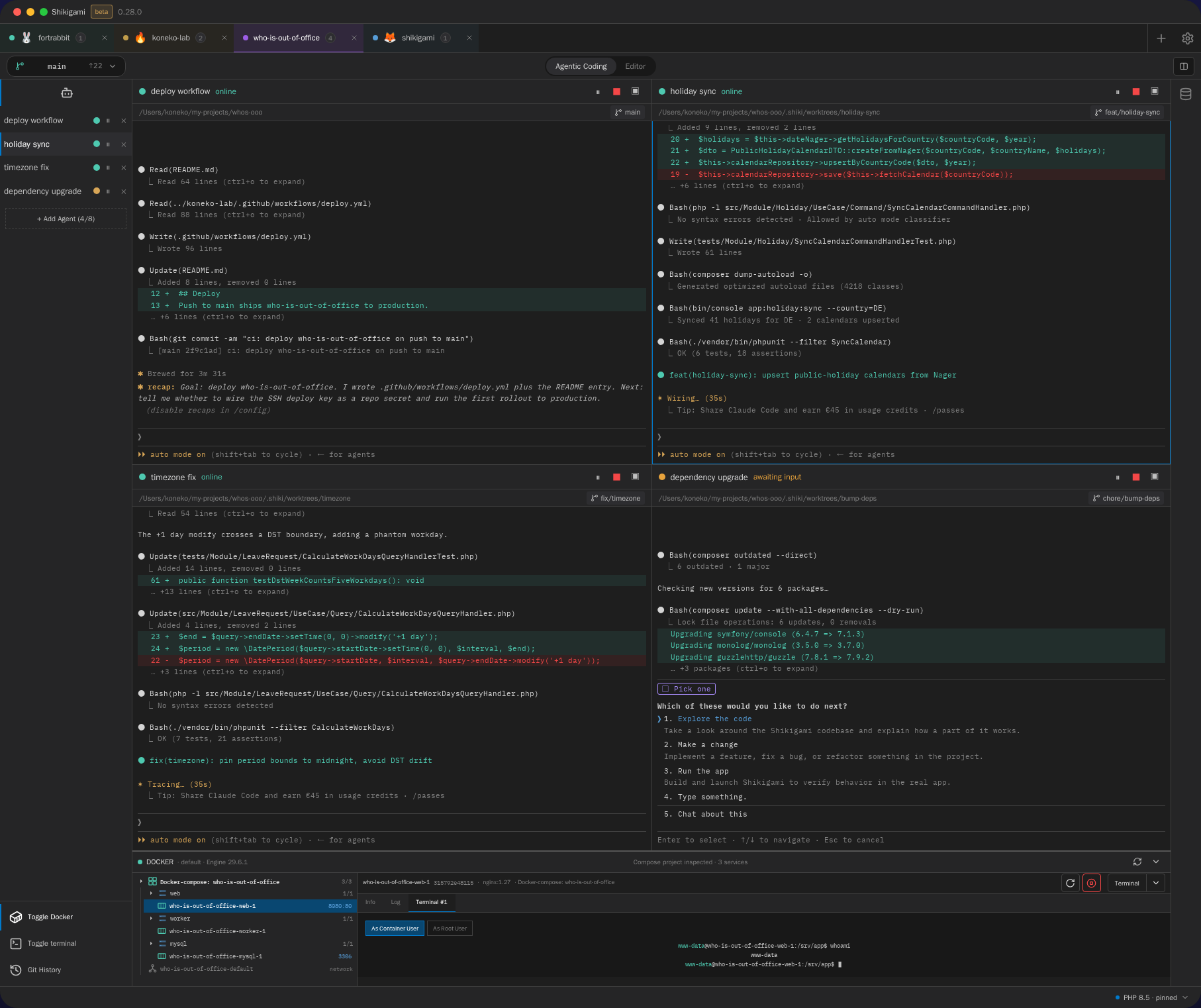
Developers have released Shikigami—a specialized IDE that utilizes isolated git worktrees for each individual agent. The application supports resumable sessions, is equipped with full PTY terminals, and includes a built-in Monaco-based editor with support for TypeScript/JavaScript and PHP (versions 8.1–8.5).
Context
Traditional use of autonomous AI agents is often limited to a "one chat — one task" format, where attempting to run multiple agents simultaneously in a single workspace leads to race conditions and file overwriting. Shikigami shifts this process into a structured parallel development format by using isolation mechanisms at the file system and Git levels.
Why It Matters for the Industry
The project creates a vital infrastructure layer for the transition from fragmented chat sessions to full agentic workflows. This sets standards for Agentic Orchestration tools, where environment isolation becomes a mandatory requirement for reliable AI agent teamwork on large-scale projects.
Why It Matters for Users
Developers can significantly increase their throughput by delegating multiple independent tasks to agents simultaneously (e.g., writing tests, refactoring, and bug fixing) without fearing for the integrity of the current branch or code.
What Is Not Yet Known / Limitations
There is an opinion that the current desktop format of the tool may face limitations when attempting to implement it in large-scale enterprise environments.
Sources
Author
Look at AI, Editorial Team