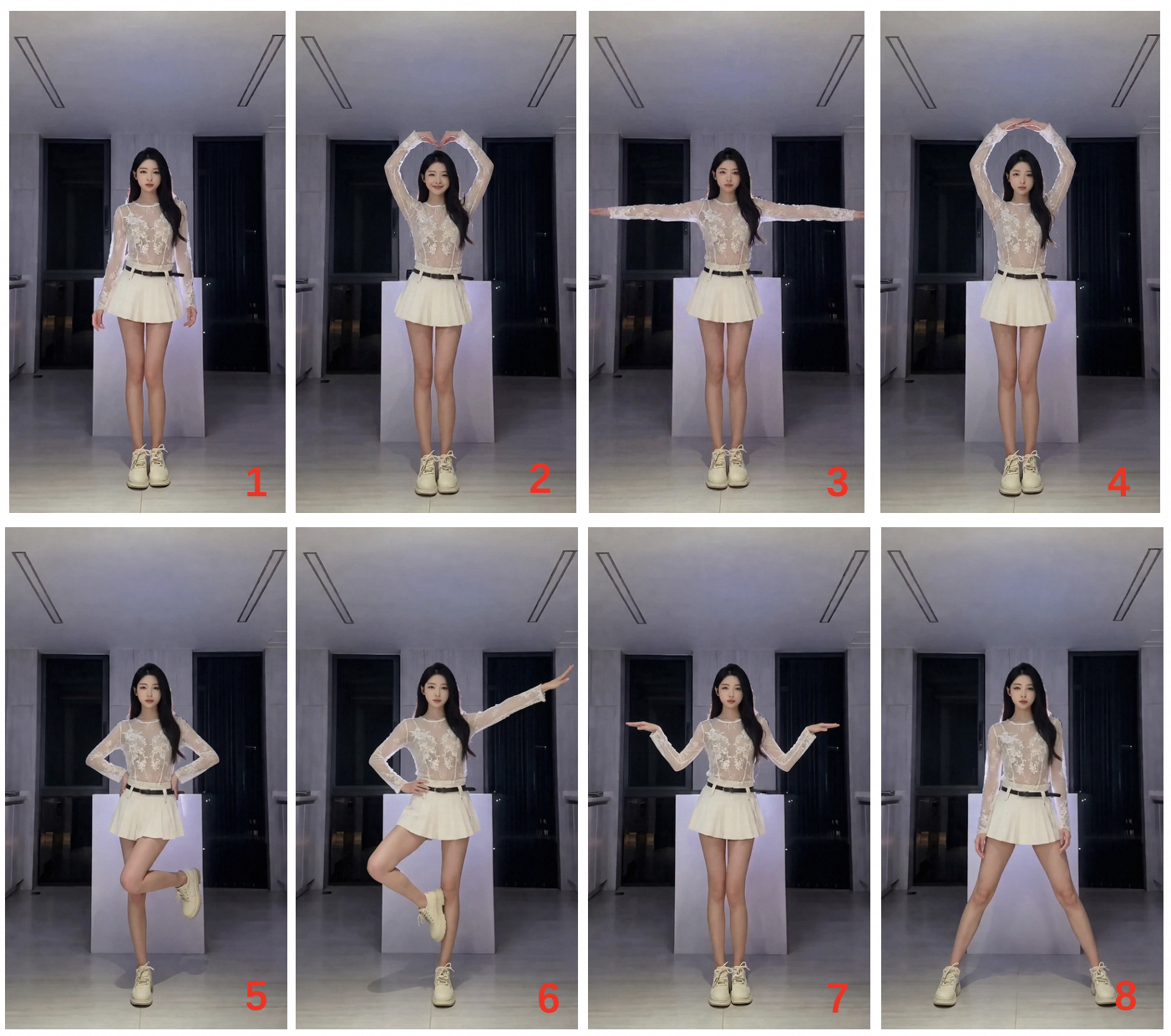
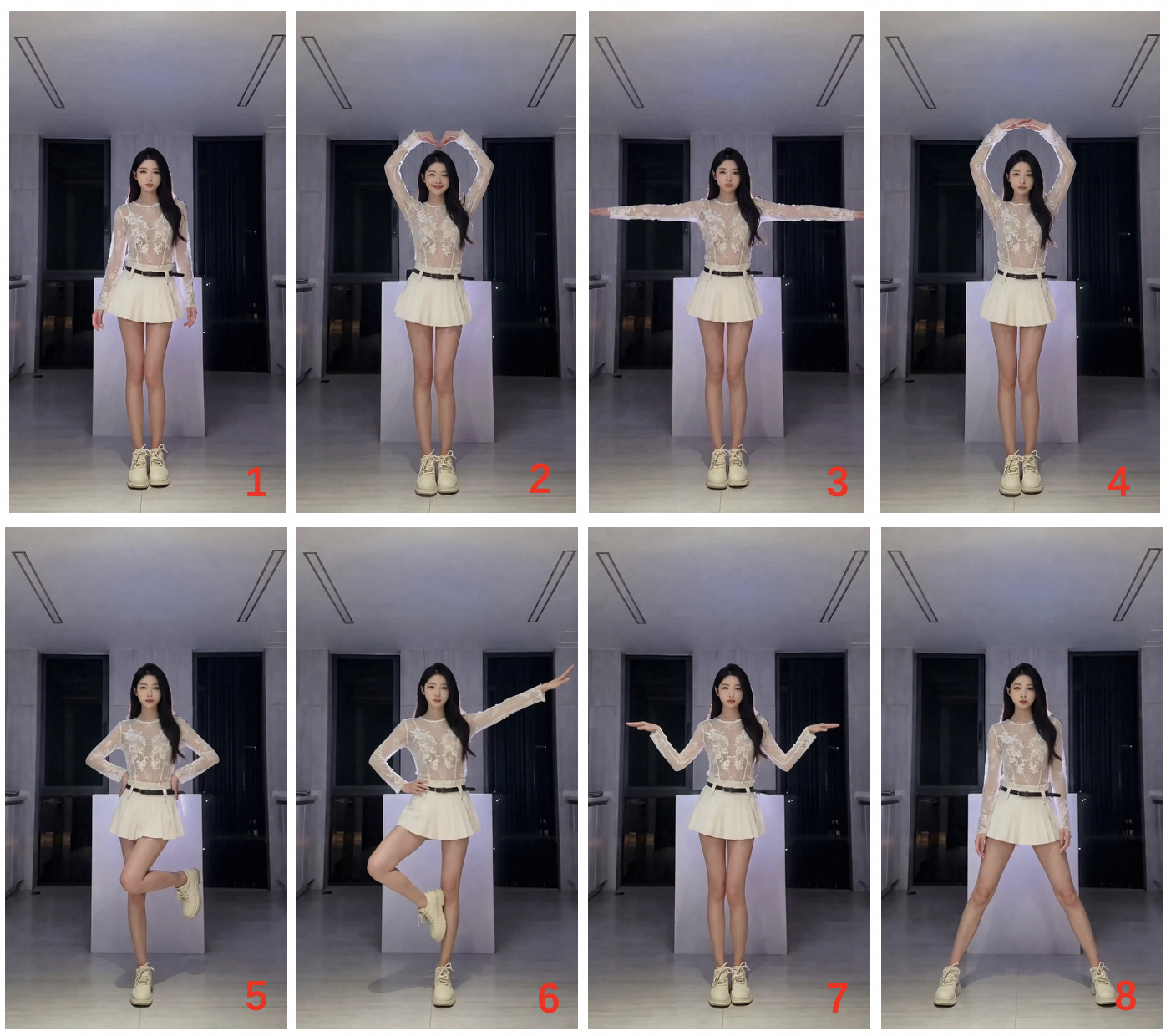
The Tongyi Lab team from Alibaba Group has introduced Wan-Dancer, a hierarchical framework capable of generating coordinated dance videos lasting over one minute based on a single photograph and an audio track.

What Happened
Wan-Dancer utilizes a two-stage process: global keyframe planning and local temporal refinement. This allows the system to maintain 720p resolution at 30 FPS and implement five distinct dance styles: Chinese classical, K-pop, street, tap, and Latin. The project is presented as a high-quality open-weight solution (14B parameters), available on Hugging Face.
Context
Most modern diffusion models are limited to generating short clips (around 20 seconds), which leads to a loss of character visual identity and temporal drift when attempting to create long videos. Wan-Dancer addresses these issues through a hierarchical structure that ensures temporal coherence and rhythmic accuracy throughout the entire duration of the video.
Why It Matters for the Industry
This technology represents a qualitative shift from generating short clips to creating long-form content, setting a new benchmark for industry tasks. However, using the model at its current stage involves extremely high computational costs: inference requires a cluster of 8 NVIDIA A800 80GB GPUs, which limits scalability for mass B2C services.
Why It Matters for Users
For content creators and enthusiasts, this opens the possibility of automated production of full-length dance videos and music videos from a single static photo. Users can obtain ready-made one-minute clips where the character maintains recognizability and follows the music rhythm clearly without "falling apart" halfway through the video.
What Is Not Yet Known / Limitations
A high barrier to entry for commercial use due to GPU costs and the project's current primarily research-oriented status.
Sources
Author
Look at AI, Editorial Team